EasyManua.ls Logo

Allweiler AEB.E Series - User Manual

Allweiler AEB.E Series
60 pages
Print Icon
To Next Page IconTo Next Page
Loading...
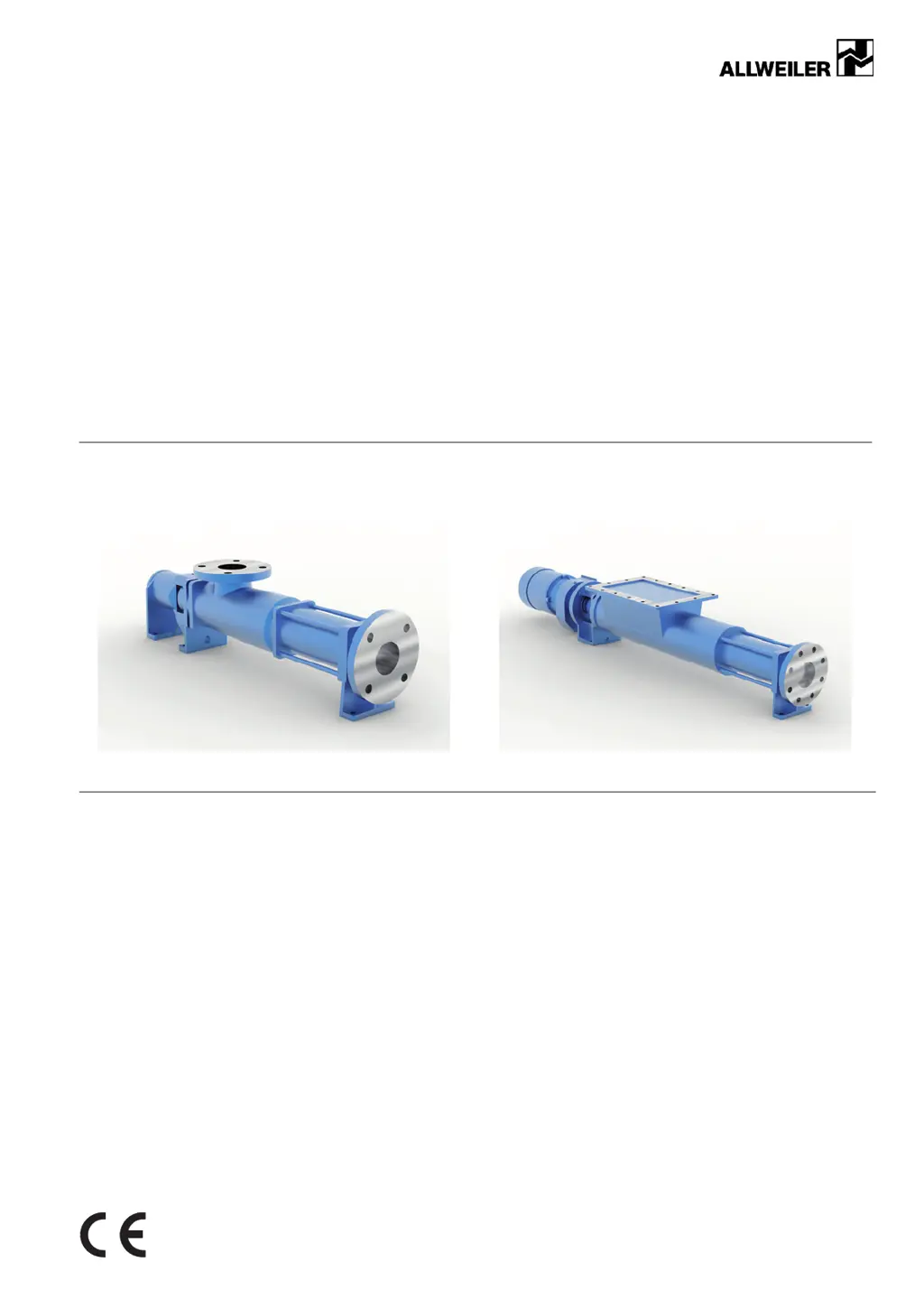
Progressive Cavity Pump
Operating instructions Series:
AE(B).E, AE(B).F, AE(B).H,
AE(B).L, AE(B).N, AE.V,
AED(B).E, AED(B).N
Designs:
DE,ID,IE,RG,ZD,ZE
Version BA-2020.05 en-US
176-982/0
ID-No. 260371
ALLWEILER GmbH
Postfach 200123
Kirchhellener Ring 77-79
46244 Bottrop
Germany
Phone: +49 (0) 2045-966-60
Fax: +49 (0) 2045 966-679
E-mail: service@allweile
r.de
Internet: http://www.all
weiler.com
We reserve the right to make techni cal changes.
Read carefully before u
se.
Retain for future use.

Table of Contents

Questions and Answers

Summary

About this Document

1.1 Target Groups

Identifies the intended audience and their responsibilities for using the manual.

1.2 Other Applicable Documents

Lists related documentation essential for pump operation and safety.

1.3 Warnings and Symbols

Explains the warning symbols and their risk levels for safe operation and maintenance.

Safety

2.1 Intended Use

Defines the proper application and limitations for the progressive cavity pump.

2.2 General Safety Instructions

Provides essential safety guidelines for operating and maintaining the pump safely.

2.3 Specific Hazards

Details particular risks associated with the pump's operation and environment.

Layout and Function

3.1 Labels and Pump Identification

Describes nameplates and pump type codes for identifying pump specifications.

3.2 Pump Layout Variants

Illustrates the physical configuration of different pump designs like AE, ID, and RG.

3.3 Pump Functionality

Explains the operating principles, stages, and media transport capabilities of the pump.

3.4 Shaft Seal Types

Details the different types of shaft seals used, including packing glands and mechanical seals.

3.5 Bearings and Lubrication

Covers the bearing types, lubrication points, and methods for different pump designs.

3.6 Auxiliary Systems

Describes optional sealing, heating, and cooling systems for enhanced pump performance.

3.7 Pump Setup Types

Outlines the possible physical configurations for installing the pump unit.

Transport, Storage, and Disposal

4.1 Pump Transport

Provides guidelines for safely transporting the pump, including unpacking and lifting.

4.2 Treatment for Storage

Details measures for protecting the pump from damage during storage periods.

4.3 Pump Storage Guidelines

Specifies conditions and procedures for storing the pump to prevent material damage.

4.4 Removing Preservative

Explains the process for removing protective coatings before pump installation.

4.5 Pump Disposal

Advises on the safe and compliant disposal of the pump and its components.

Setup and Connection

5.1 Preparing for Setup

Covers initial steps for setup, including determining type, checking conditions, and site preparation.

5.2 Foundation Installation

Details procedures for placing and securing the pump unit on a foundation.

5.3 Motor Installation

Guides on installing the motor for different pump configurations like stub shaft or coupling.

5.4 Piping Planning

Addresses requirements for pipe design, supports, diameters, and lengths for optimal flow.

5.5 Connecting Pipes

Explains how to clean and connect piping to the pump, ensuring stress-free connections.

5.6 Electrical Connection

Outlines the procedure for safely connecting the pump's electrical components.

5.7 Coupling Alignment

Describes how to precisely align pump and motor couplings to prevent damage.

5.8 Motor Alignment

Details the process for aligning the motor to achieve precise coupling alignment.

5.9 Safety Guarding Installation

Covers the installation of safety guards for couplings and belts for operational safety.

Operation

6.1 Initial Start-up Preparation

Guides on identifying the pump type, removing preservative, and preparing auxiliary systems.

6.2 Pump Start-up Procedures

Details the steps for safely switching the pump on and off, including initial checks.

6.3 Pump Shut-down Procedures

Explains how to safely shut down the pump for prolonged periods or dismounting.

6.4 Start-up After Shutdown

Outlines procedures for restarting the pump after extended periods of inactivity.

6.5 Stand-by Pump Operation

Provides guidance on the proper operation and maintenance of stand-by pumps.

Maintenance

7.1 Inspections

Defines the intervals and points for regular inspection of the pump during operation.

7.2.1 Antifriction Bearing Lubrication

Covers the grease lubrication requirements for antifriction bearings in specific pump designs.

7.2.3 Spur Gear Lubrication (RG Design)

Details the oil change intervals and procedures for the spur gear in RG design pumps.

7.2.5 Packing Gland Maintenance

Explains how to adjust and replace packing glands, including leakage rate checks.

7.2.6 Mechanical Seal Maintenance

Describes the maintenance-free nature of mechanical seals and replacement due to wear.

7.3 Dismounting Procedures

Provides safety guidelines and steps for safely dismounting the pump and its components.

7.4 Installation Procedures

Details the correct procedures for reinstalling components and installing the pump into the system.

7.5 Ordering Spare Parts

Provides information on what details are needed when ordering replacement parts for the pump.

Troubleshooting

8.1 Pump Malfunctions

Lists common pump malfunctions, their causes, and recommended remedies for quick resolution.

Appendix

9.1 Sectional Drawings and Parts

Presents detailed diagrams of pump components with part numbers and designations for repair sets.

9.2 Technical Specifications

Provides detailed technical data including ambient conditions, lubricants, and operating parameters.

9.3 Declaration of Harmlessness

Form for declaring the pump's condition regarding hazardous substances before return shipment.

9.4 Declaration of Conformity

Formal declaration confirming the pump's compliance with EC Machine Directive standards.

Allweiler AEB.E Series Specifications

General IconGeneral
TypeCentrifugal Pump
SeriesAEB.E
Max Pressure10 bar
Max TemperatureUp to 120 °C
Speed2900 rpm
Protection ClassIP55
Insulation ClassF
Housing MaterialCast iron
Shaft MaterialStainless steel
Mechanical SealSilicon carbide/silicon carbide
Connection TypeFlanged
Voltage230/400V

Related product manuals