
 Need help?
Do you have a question about the B. Braun Perfusor compact and is the answer not in the manual?
Details on who can perform service tasks and required training and knowledge.
Obligation to perform TSC and manufacturer recommendations for training and adherence to standards.
Defines manufacturer's responsibility, authorized persons, and quality management certifications.
Guidelines on authorized repairs, observing ESD standards, and preventing component damage.
Instructions for using original spare parts and calibrating test equipment.
Explains the use of notes, cautions, and warnings for clear communication.
Information on contacts for technical training, spare parts, and service hotline.
Contacts for the safety officer and translation services.
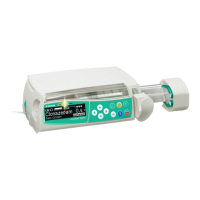
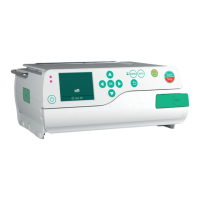
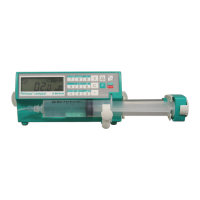
Describes the compact, portable, lightweight design and its key physical features.
Explains the electronic components and their interconnections in a block diagram.
Lists optional accessories for the Perfusor compact with their respective order numbers.
Details software and hardware revision levels displayed during unit startup.
Explains how to view software/hardware versions and extended details during startup.
Lists LC-display error codes and descriptions for function and control processors.
Lists compatible software and interface cables; introduces program usage and keyboard functions.
Guide for installing, uninstalling, and configuring the Service Program on a PC.
Procedures for adjusting unit settings, saving data, and performing calibration.
Information on default data file and when unit calibration is required.
Guidance on resolving common problems encountered while using the service program.
Overview of service program menus (File, EEPROM) and data operations.
Details on serial number, length, pressure calibration, overload checks, and parameters.
Options for selecting syringes and modifying settings via Modes menu.
Details on the service interval timer and its reset function.
Procedures to verify serial number, basal rate, and bolus rate after service.
Steps to test staff call function, alarm tones, and LED indicators.
Procedures for testing syringe selection, recognition, and table readability.
Initial steps for connecting to PC and preparing for unit calibration.
Specific procedures for length and pressure calibration, and serial number input.
Performing an overload test to detect potential drive damage after a drop or impact.
Guidelines for battery handling, fitting screws, and general repair precautions.
Steps for opening the unit and accessing core modules like the A-Module.
Procedures for replacing syringe table, guide, and holder.
Procedures for replacing battery cover, snap-in clip, and related components.
Detailed steps for exchanging A, E, and N modules, including connectors and nuts.
Instructions for replacing the carrying handle and the complete drive unit.
Instructions for exchanging the drive board and axial positioner.
Procedures for exchanging the drive head and its housing components.
Procedure for replacing the housing bottom part and type plate.
Checklist for visual inspection and electrical safety tests.
Specific mechanical checks and switch-on test procedures for unit functionality.
Testing operational flow, pressure cut-off, and syringe recognition.
Procedures for testing pre-alarm, end alarm, and detailed electrical safety measurements.
Mandate for a TSC every 24 months to verify operational capability.
Comprehensive checklist for visual, functional, pressure, and syringe safety checks.
Procedures for electrical safety tests and optional rate/bolus limitation checks.
Detailed steps for performing a thorough visual inspection of unit components.
Step-by-step guide for functional inspection and operational tests.
Procedures for testing pressure cut-off, syringe recognition, and electrical safety.
Details the version, approval date, and major changes in the service manual.
Notes on a specific issue with the drive arm and the availability of a straight pin lock.
Explains the need for syringe holder modification for improved recognition of larger syringes.
 General
| Manufacturer | B. Braun |
|---|---|
| Model | Perfusor compact |
| Accuracy | ± 2% |
| Battery Operation | Yes |
| Power Supply | 100-240 V AC, 50/60 Hz |
| Alarms | Occlusion |
| Syringe Compatibility | 20 ml, 50 ml |



 To Next Page