04/03 347 LB 444
3
2.3 The Principle of Measurement
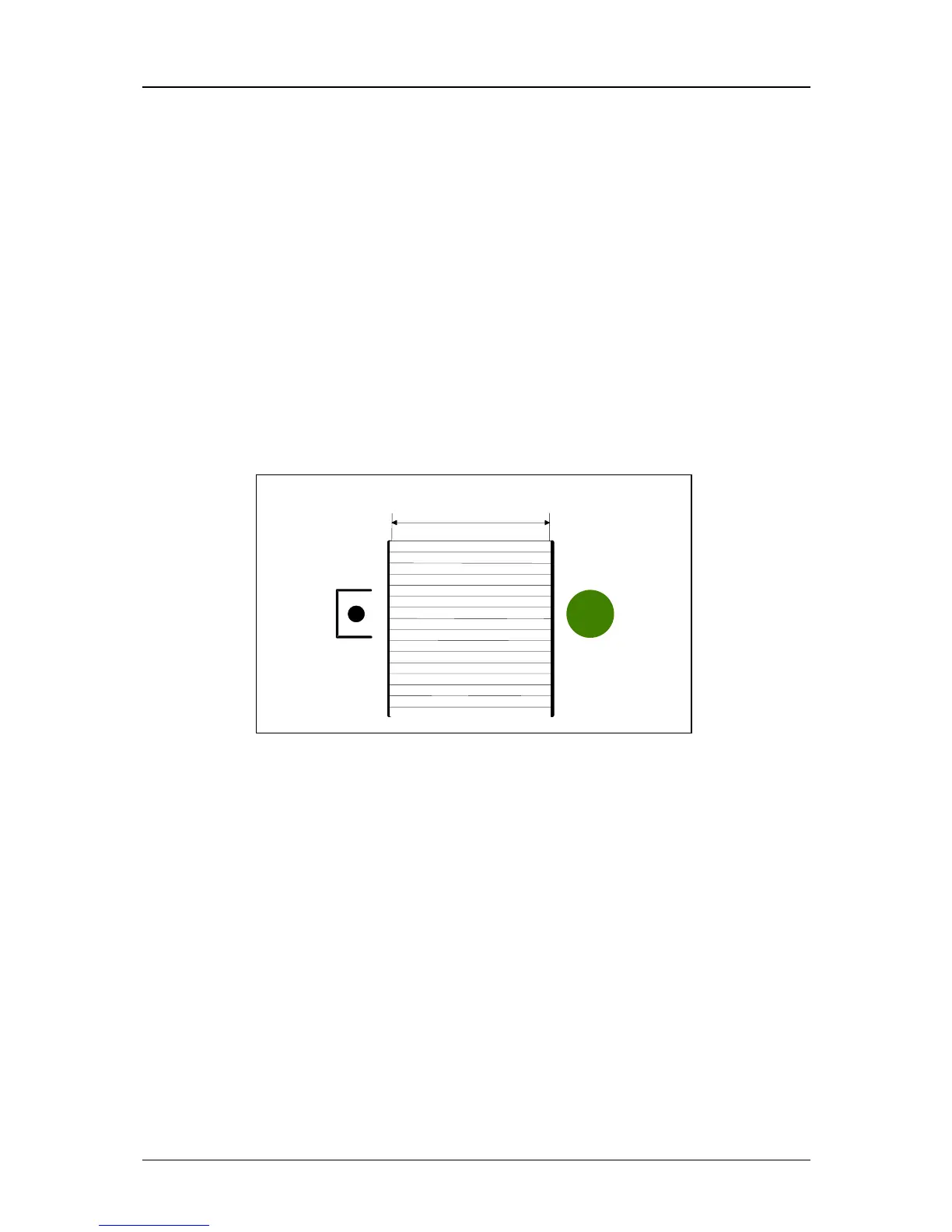
The density measurement is based on the irradiation method. It utilizes the physical law
of the attenuation of gamma radiation passing through the product being measured. The
resulting measurement effect is the ratio I/I
0
between the untenanted radiation I
0
and
the radiation I which is attenuated by the product being measured. The remaining radia-
tion picked up by the detector (scintillation counter) represents the density of the product
being measured. Figure 1 illustrates the principle of measurement. The radiation is at-
tenuated according to the following formula:
I = I
0
* e
- µ' * ρ * d
I = Radiation picked up by the detector
I
0
= Untenanted radiation
µ = Mass attenuation coefficient (absorption coefficient) in cm
2
/g
ρ = Density of absorbing material in g/cm
3
d = Thickness of absorbing material in cm
Figure 1: Principle of measurement
The intensity of the radiation picked up by the detector is also dependent on the distance
between source and detector. As in the case of light, the function involved is a square
function, i.e. doubling the distance reduces the radiation intensity to ¼ if all other condi-
tions remain unchanged.
Assuming a constant distance between source and detector and a fixed measuring path,
the radiation picked up by the detector is only dependent on the density of the material
being measured.
Contamination of the product being measured or the pipeline wall by gamma radiation is
not possible at all.
d
Io
I
Source
Detector



 To Next Page