/Concentration
c
a
b
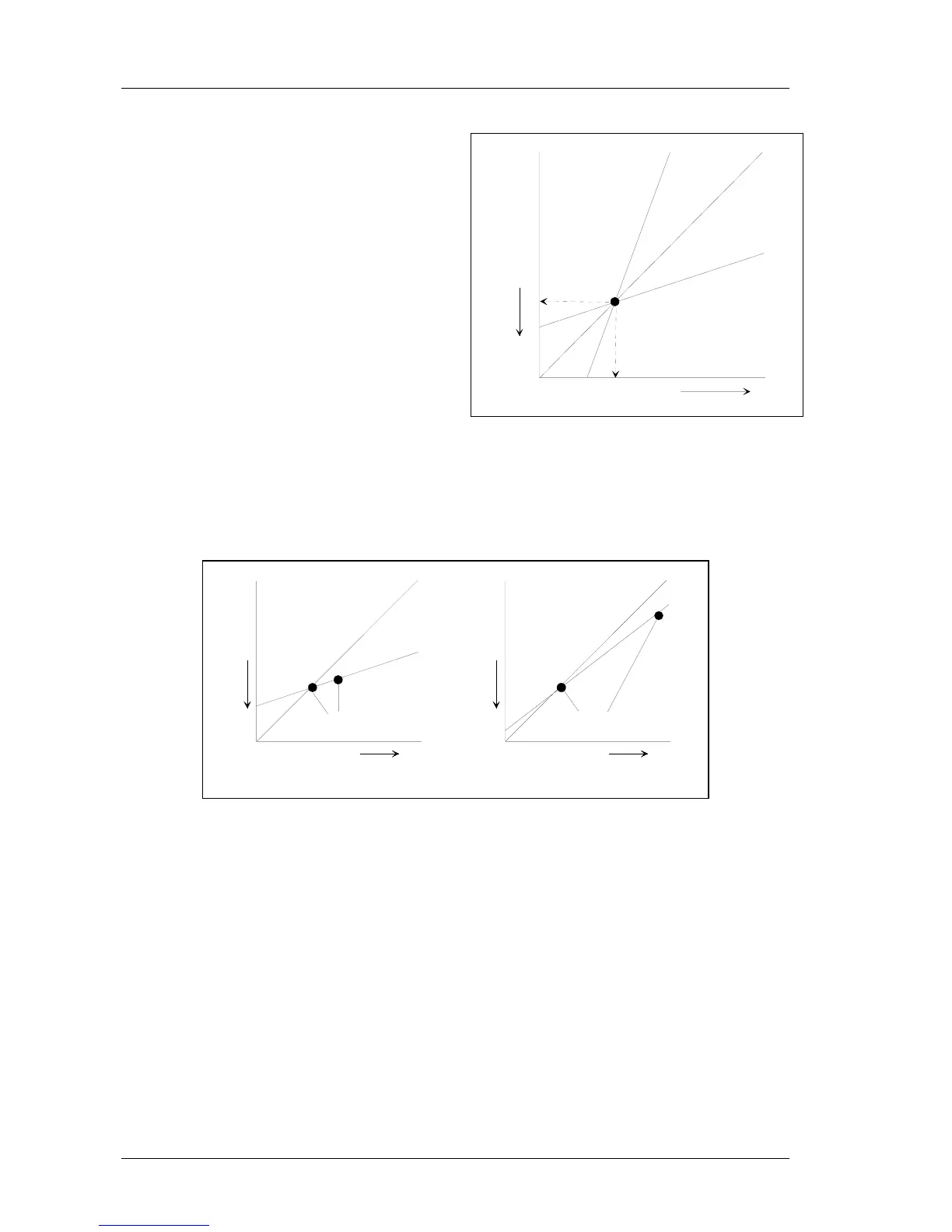
Line a: absorption coefficient correct
Line b: absorption coefficient too small
Line c: absorption coefficient too big
The curve obtained with one-point calibra-
tion always passes through the calibration
point. The gradient of the curve is deter-
mined by the entered absorption coeffi-
cient and may therefore be somewhat in-
accurate.
One-point calibration is also advisable if
only calibration points with very minor
density differences can be recorded, for in
this case minor errors in the lab or during
sampling will significantly affect the curve.
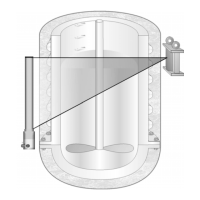
One-point calibration may later be supple-
mented and improved by additional cali-
bration points.
Figure 25:
Influence of absorption coefficients on one-
point calibration
cps
a
b
Calibration points
Densit
/cm
3
Figure 26: One-point calibration with additional calibration points
How to proceed for one-point calibration is described in chapter 6.2.2 Calibration.



 To Next Page