Chapter 6 Creating Labels Using the DataComm & T-Block Menu
Patch Panel Labels
Note: See
DataComm & T-Block Menu Selections for a list of the high-level DataComm
& T-Block Menu selections, their default values, and the corresponding softkeys.
This example outlines the functionality required to create a Patch Panel using the DataComm
& T-Block menu. It assumes use of a dedicated Patch Panel part, either ½" or ⅜" in width.
To create a Patch Panel label:
Step 1. Insert a dedicated part (XC-375-422, XC-500-422, or continuous B412 parts in .375" and
.5" widths). The printer reads the smart-cell settings and automatically displays the screen
allowing you to choose between the General ID Menu and DataComm & T-Block Menu.
Upon selecting the DataComm & T-Block Menu, the following datacomm menu options
appear above the softkeys:
P-PNL, T-BLK, DESI, 110BLK, 66BLK, BIX.
Note: To escape to the General ID Menu screen press
FUNCTION + CLEAR/ESC.
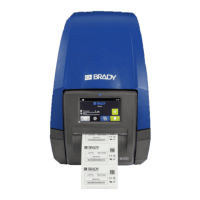
Step 2. Press the P-PNL softkey. The default Patch Panel information automatically appears on
the display screen as shown below (width in inches or millimeters, depending on your
settings*):
*See
Setting Units on page 36 for instruction on setting
units to inches or millimeters.
Step 3.
Step 4.
To set or accept the width, do one of the following:
• Press the
ENTER key to accept the default, or
• Press the
WIDTH softkey, enter a new width, and press ENTER.
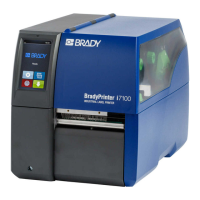
The separator attribute defaults to LINE, but you can change this by pressing the
SEP
softkey. If this is done, the following screen appears:
Step 5. Press the desired separator type softkey (
NONE, TIC, or LINE) and then press ENTER to
confirm. The editor display screen appears with the datacomm label type title in the upper
left corner. One zone (or port) is viewed at a time (see next page).
User Manual 23


 To Next Page