44
Air which enters through the air jet mixes with the gasoline from the main jet in the needle jet and it is
atomized when mixed with the main air flow and flows into the engine.
(4) Float Chamber
The carburetor makes a proper gasoline/air mixture according to the throttle opening and engine speed. To
create this proper gasoline/air mixture, the supply of gasoline must remain constant. The float chamber
supplies a constant flow of gasoline to the carburetor.
Gasoline flows from the tank through the pipe to the carburetor banjo bolt and between the valve seat and
valve to enter the float chamber. When gasoline enters the float chamber, the float moves up to stay on top
of the gasoline and pushes the valve closed with the valve arm. When the valve touches the valve seat, the
flow of gasoline stops. When gasoline in the float chamber is consumed and the level lowers, the float moves
down and the float arm no longer presses against the valve, allowing it to move away from the valve seat
and gasoline to enter the float chamber between the valve and valve seat. These procedures are repeated
and a constant level of gasoline is kept in the float chamber.
B. Functions of Various Parts:
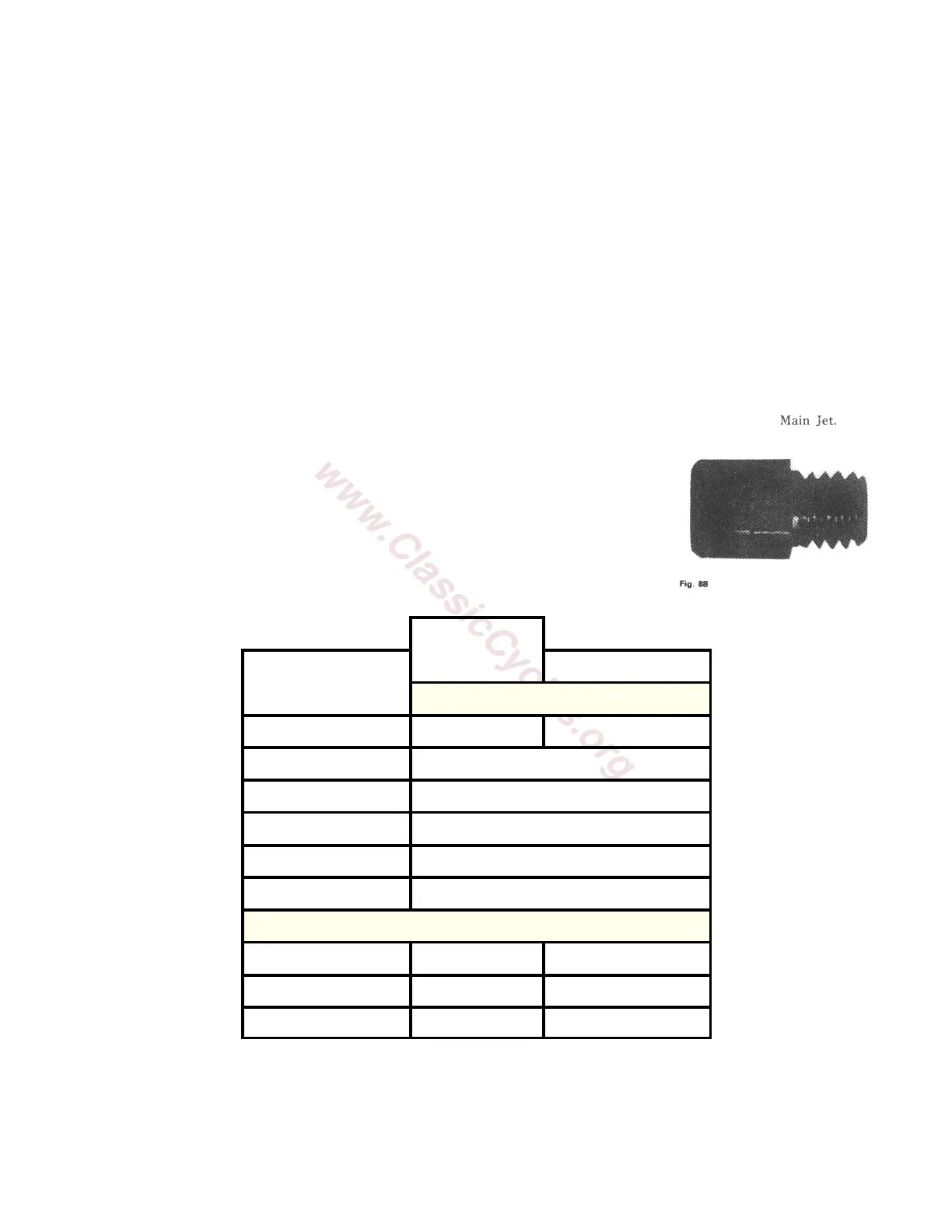
(1) Main Jet
The main jet controls the fuel supply when the throttle is more than
threequarters open, but at smaller throttle openings although the fuel passes
through the main jet the amount is diminished by the tapered needle jet.
Listed below are the carburetor main jet sizes that are used as standard
equipment on the Bridgestone rotary valve models. Also listed are other sizes
that are available.
ORIGINAL
EQUIPMENT
MODEL
AVAILABLE
Main jet number
15mm Carburetor 110 100
56-60 Sport 100
90 before 12N 130
90 12N and after 120
90 Trail 130
90 Mountain 130
17mm Carburetor
90 Sp before 14L 95 Set of 5 (110-150)
90 Sp 14L and after 100 Set of 5 (110-150)
175DT 100 Set of 5 (110-150)
(2) Air Jet



 To Next Page