Chapter 1– Introduction
How the Analyzer Works
BB0955-13
3
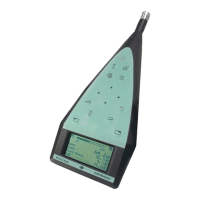
Modular Precision Sound Analyzer Type 2260
User Manual
Portable Yet Powerful
Experienced users and beginners alike will appreciate having
the powerful hand-held Modular Precision Sound Analyzer
Type2260 both for outdoor field work and back at the labora-
tory. In short, the Modular Precision Sound Analyzer Type2260
provides easy-to-use solutions for the most complex applica-
tion problems.
1.2 How the Analyzer Works
A Dedicated Sound and Vibration Analysis Platform
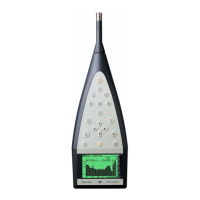
Modular Precision Sound Analyzer Type2260 (see block dia-
gram in Fig.1.2) is a programmable platform for a dual-channel,
real-time, hand-held analyzer. With one of its installed software
applications active, it takes input from the acoustic or vibra-
tion front-end (and/or from the input sockets on its base) and
sends the 2 input signals through filters to an A/D converter.
The application software processes the digital signal and sends
output signals to a wide variety of output devices. Directly to,
for example, the 192
´ 128pixel LCD screen or, via the D/A
convertor, to one of the output or interface sockets.
Data Storage and Transfer
Data can be stored and transferred onto credit-card sized PC-
MCIA memory cards for storage or transfer to computer. Data
can, of course, also be transferred to a computer via the serial
interface.
Post Measurement Software for a Computer
Once measured, data is transferred to a computer. One of
Brüel&Kjær’s Windows
Ò
-based software packages can be used
for post-processing and reporting (Noise Explorer™ Type7815
for data management and reporting, Evaluator™ Type7820 for
Community Noise calculations, Qualifier™ Type7830 for Build-
ing Acoustics measurement or Protector™ Type7825 for cal-
culating Personal Noise Exposure). Alternatively, data can be
exported to other standard software packages such as word-
processors and spreadsheets.
bb095513.book Page 3 Tuesday, April 9, 2002 1:42 PM


 To Next Page
 Loading...