©2020 CAE 905K640152 v1.1 55
Using Ares
USING ARES
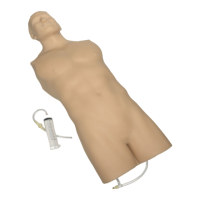
Once the simulator is assembled, the Ares manikin is ready learners to practice and master new
competencies, interventions, and skills during clinical scenarios.
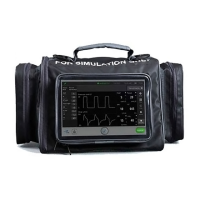
To create a fully immersive simulation experience with advanced intervention capabilities and
realtime data feedback, all configurations of the Ares simulator utilize instructor-led software with
programming capabilities.
Note: CAE recommends keeping the simulator plugged into a power source while it is in use to
extend the longevity of the battery life. To optimize battery life, only remove the power plug during
simulations where the patient will be moved or transferred as part of the scenario. For further
information, refer to the Storage section of this guide.
Neurologic System
The clinical features that can be controlled from the Neurologic view are:
• Blood temperature
• Body temperature
• Intracranial pressure
• Loss of consciousness
Users can also control the eyes and speech from the instructor-led software
For more information, see the Maestro for Ares User Guide.
Neurologic System Controls
The clinical features for the Neurologic system are controlled manually, through the software, or
both.
Neurologic System Controls
Anatomy,
Physiology and
Clinical Signs
Clinical Interventions, Patient
Monitoring and Scenarios.
Software Control Manual
Control
Intracranial
Pressure
The intracranial pressure of a patient
can be an indicator of patient’s con-
dition.
Tap Neuro and tap ICP
to adjust.
None.
Eyes Eyes can be used as indicator of a
patient’s condition and/or conscious-
ness during an assessment.
Tap Eyes on Run
screen and tap desired
status.
Rotate
tristate eyes
(Base).



 To Next Page