Calibration of the SAILOR 900 VSAT
98-133966-G1 Chapter 6: Configuration 6-7
6666
Configuration
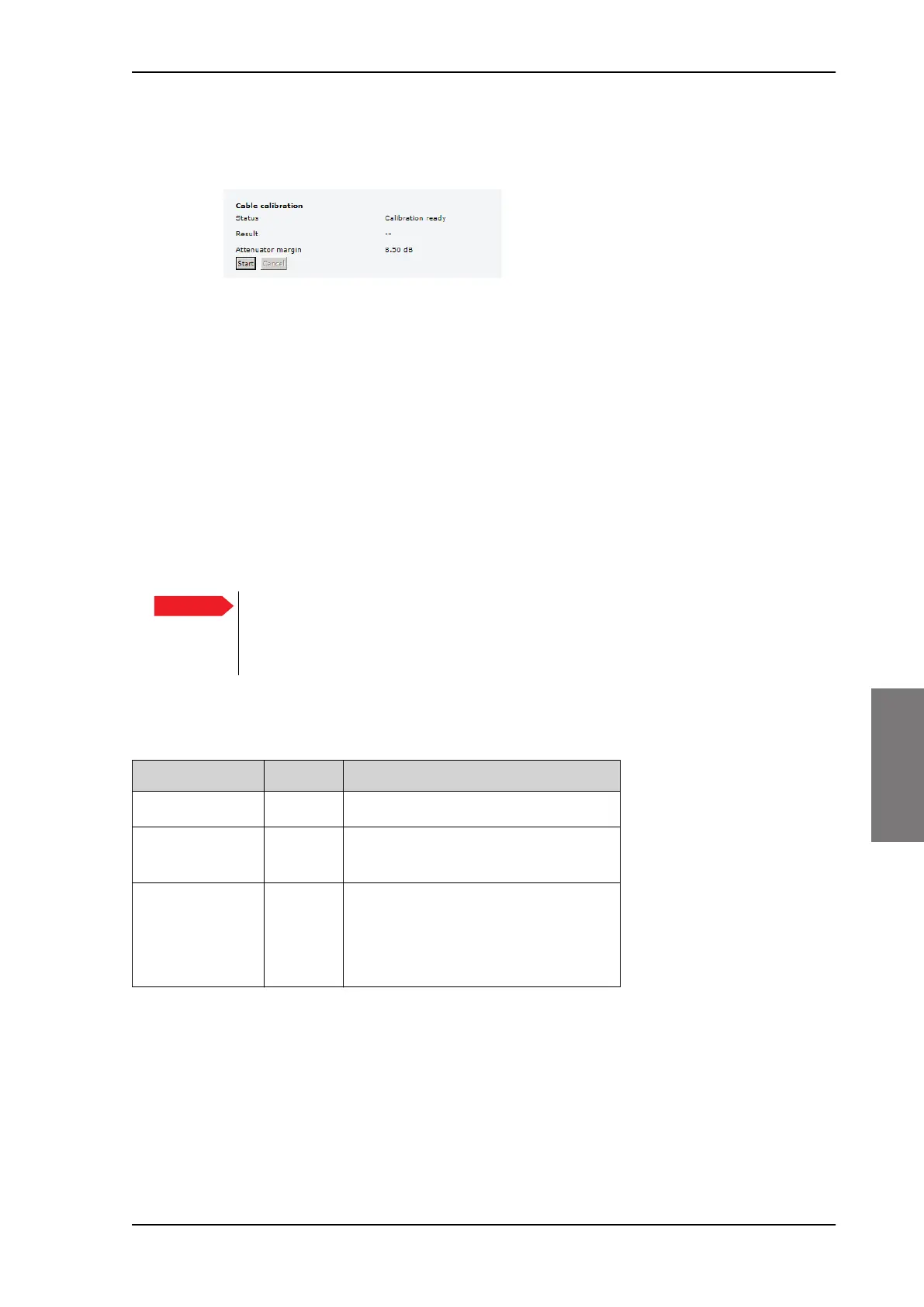
This screen shows how much attenuation margin that is left for the
antenna cable. This indicates whether the antenna cable and connectors
are in good condition and well crimped.
It is recommended to make a cable calibration when servicing the
system to check if the antenna cable is still in good order. If the
attenuator margin changes by 2 dB or more after a cable calibration,
it is recommended to do a 1 dB compression measurement to verify
that the VAST modem configuration is correct.
To make an azimuth calibration with user defined input, do as follows:
1. Select User defined in the Satellite drop down list.
2. Type in the longitude and polarisation skew of the satellite. The
polarisation skew is provided by the satellite operator, it is typically 0
degrees. For satellite data see DVB-S satellites on page E-1,
www.lyngsat.com.
3. Select the polarisation of a transponder and type in its frequency and
symbol rate.
4. Select which satellite identifier to use for identification of the signal.
5. Click Start and wait typically 5 minutes for the calibration to finish. A
progress bar is shown during calibration and a message is displayed
when the calibration has completed. In case of failure, see the table in
Figure 6-5: Web interface: SERVICE, Calibration, cable attenuator margin
Important
The calibration function is not able to verify the
correctness or precision of the supplied longitude. It is
therefore important to supply the correct longitude
including the first decimal.
Satellite identifier NID value Description
NID 0 Satellite identifier is not used.
NID 1–65535 Supplied NID is matched against
Network ID broadcast by the satellite.
Orbital position n.a. Supplied longitude is matched with
orbital position broadcast by satellite.
Not all service providers broadcast the
orbital position.
Table 6-2: Satellite identifier and NID values
SAILOR900TM.book Page 7 Monday, September 16, 2013 11:01 AM



 To Next Page