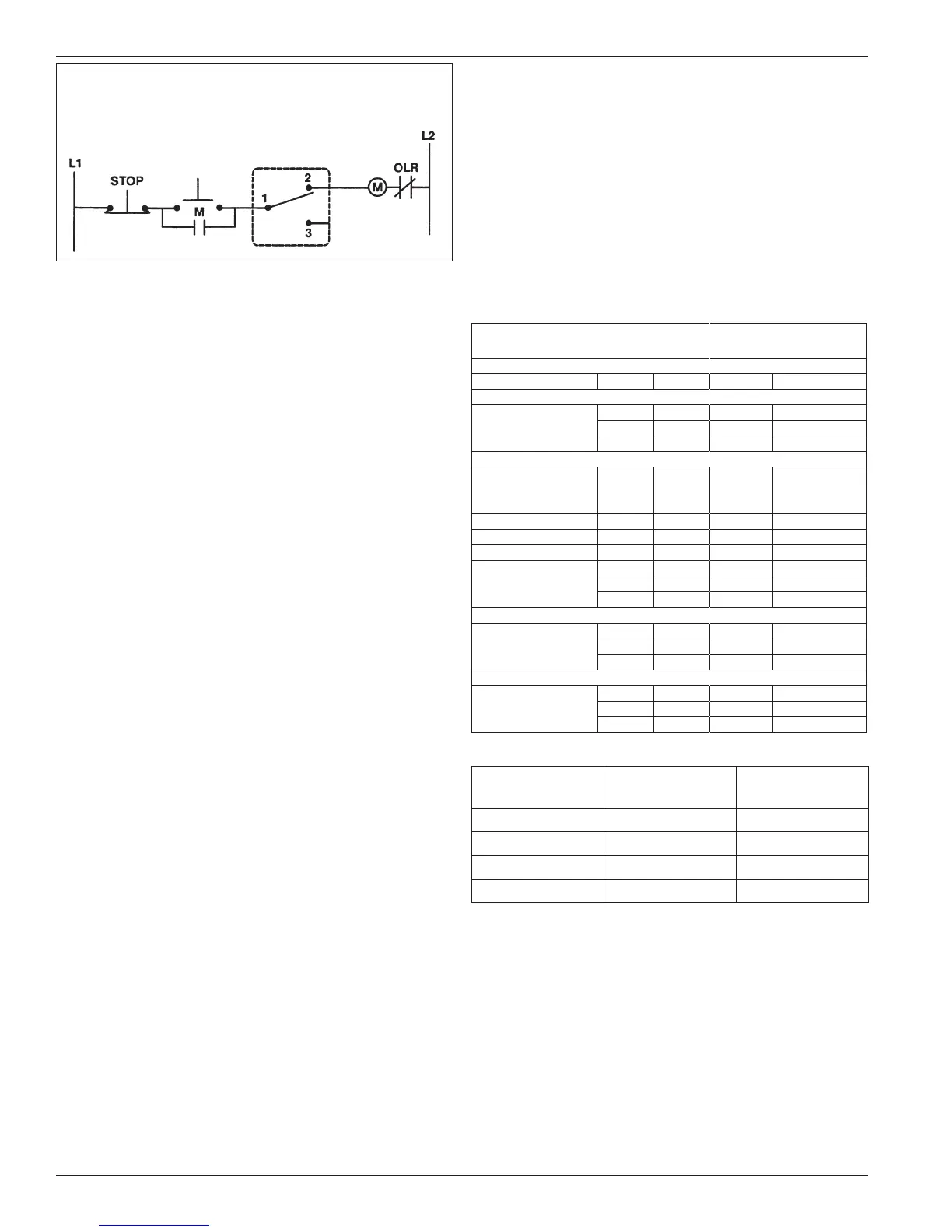
Typical Float Switch Wiring Diagram
1 = Common, black
2 = Normally closed, blue
3 = Normally open, red
Figure 2.4B: Typical float switch wiring diagram.
NOTE: The level switch MUST be removed from
the trap before grounding any welding devices to
the trap or associated piping! Failure to do so will
damage the switch contacts.
If your compressor is equipped with a liquid trap
of other than Corken manufacture, make sure it is
of adequate size to thoroughly remove any liquid
present in the suction stream.
2.5 Driver Installation / Flywheels
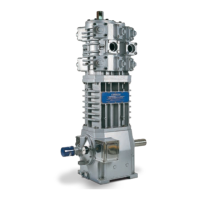
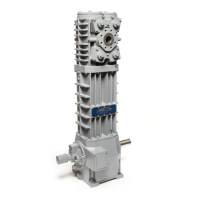
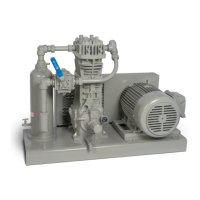
Corken vertical compressors may be driven by either
electric motors or combustion engines (gasoline, diesel,
natural gas, etc.). Corken compressors are usually V-belt
driven but they are also suitable for direct drive applications
as well. Direct drive applications require an extended
crankshaft to allow the attachment of a rigid metal coupling.
Note: Flexible couplings are not suitable for reciprocating
compressors. Never operate a reciprocating compressor
without a flywheel.
Drivers should be selected so the compressor operates
between 350 to 825 RPM. The unit must not be operated
without the flywheel or severe torsional imbalances will result
that could cause vibration and high horsepower requirement.
The flywheel should never be replaced by another pulley
unless it has a higher WK
2
value than the flywheel.
A humid climate can cause problems, particularly in
explosion proof motors. The normal breathing of the
motor, and alternating between being warm when running
and being cool when stopped, can cause moist air to be
drawn into the motor. This moist air will condense, and
may eventually add enough water inside the motor to
cause it to fail. To prevent this, make a practice of running
the motor at least once a week on a bright, dry day for an
hour or so without the V-belts. In this period of time the
motor will heat up and vaporize the condensed moisture,
driving it from the motor. No motor manufacturer will
guarantee their explosion proof or totally enclosed
(TEFC) motor against damage from moisture.
For installation with engine drivers, thoroughly review
instructions from the engine manufacturer to assure the
unit is properly installed.
2.6. Crankcase Lubrication
Non-detergent oil is recommended for Corken vertical
compressors. Detergent oils tend to keep wear particles
and debris suspended in the oil, whereas non-detergent
oils let them settle in the bottom of the crankcase.
When non-detergent oils are not available, detergent
oils may usually be successfully substituted, although
compressors handling ammonia, amine, or imine gases
are notable exceptions. These gases react with the
detergent and cause the crankcase oil to become
corrosive and contaminated. Figures 2.6A and 2.6B show
recommended oil viscosities and crankcase capacities.
Acceptable Crankcase Oil Products
for Corken Compressors
Constant Weight - Non-Detergent - R&O Inhibited
Oil product ISO VI SAE Ambient Temp.
Exxon
®
TERESSTIC
100 95 30 65° – 100° F
68 95 20+ 45° – 70° F
46 95 20 35° – 50° F
Mobil
®
RARUS 427
Reciprocating
Compressor Oil
100 95 30 65° – 100° F
DTE Oil Heavy Medium 68 95 20+ 45° – 70° F
Dectol R&O Oil 46 95 20 35° – 50° F
Conoco
®
Dectol R&O Oil
100 98 30 65° – 100° F
68 97 20+ 45° – 70° F
46 99 20 35° – 50° F
Texaco
®
Regal R&O Oil
100 92 30 65° – 100° F
68 97 20+ 45° – 70° F
46 102 20 35° – 50° F
Sun
®
SunVis 900 Oil
100 100 30 65° – 100° F
68 100 20+ 45° – 70° F
46 100 20 35° – 50° F
Figure 2.6A: Oil selection chart.
Compressor
Model
Approximate
Quarts
Capacity Liters
91 0.9 0.8
291 1.5 1.4
491 3.0 2.8
691/891 7.0 6.6
Figure 2.6B: Oil capacity chart.
Synthetic lubricants are generally not necessary. Please
consult your lubricate supplier if you are considering the
use of synthetic oil. To add oil, remove the name plate
and pour through the opening.
General Notes on Crankcase Oil
Corken gas compressors are used for a wide variety of
gases in a multitude of operating conditions. They are
used in all areas of the world from hot dusty deserts, to
humid coastal areas, to cold arctic climates. No single
crankcase oil or maintenance schedule is right for every
compressor installation. Availability of brands and grades
12


 To Next Page