Greater than the normal operating pressure for the
compressor.
Less than 90% of the relief valve set point pressure.
Less than the maximum operating pressure of the
compressor.
Midpoint of the pressure switch range.
5. Vibration Switch: Shuts down the unit if vibration
becomes excessive. Recommended for units mounted
to a portable skid.
Chapter 3—Starting Up Your
Corken Compressor
NOTE: Before initial startup of the compressor be
sure the principal of using a compressor for liquid
transfer by vapor differential pressure is understood
(see section 1.1). Read this entire chapter, then
proceed with the startup checklist.
3.1 Inspection After
Extended Storage
If your compressor has been out of service for a long period
of time, you should verify the cylinder bore and valve areas
are free of rust and other debris (see chapter 5 of this IOM
manual for valve and/or cylinder head removal instructions).
Drain the oil from the crankcase and remove the
nameplate and crankcase inspection plate. Inspect the
running gear for signs of rust and clean or replace parts
as necessary. Replace the crankcase inspection plate
and fill crankcase with the appropriate lubricant. Squirt
oil on the crossheads and rotate the crankshaft by hand
to ensure that all bearing surfaces are coated with oil.
Rotate unit manually to ensure running gear functions
properly. Replace nameplate and proceed with startup.
3.2 Flywheel and V-belt Alignment
Before working on the drive assembly, be sure that the
electric power is disconnected. When mounting new
belts, always make sure the driver and compressor are
close enough together to avoid forcing.
Improper belt tension and sheave alignment can cause
vibration, excessive belt wear and premature bearing
failures. Before operating your compressor, check alignment
of the V-grooves of the compressor flywheel and driver
sheave. Visual inspection often will indicate if the belts are
properly aligned, but use of a square is the best method.
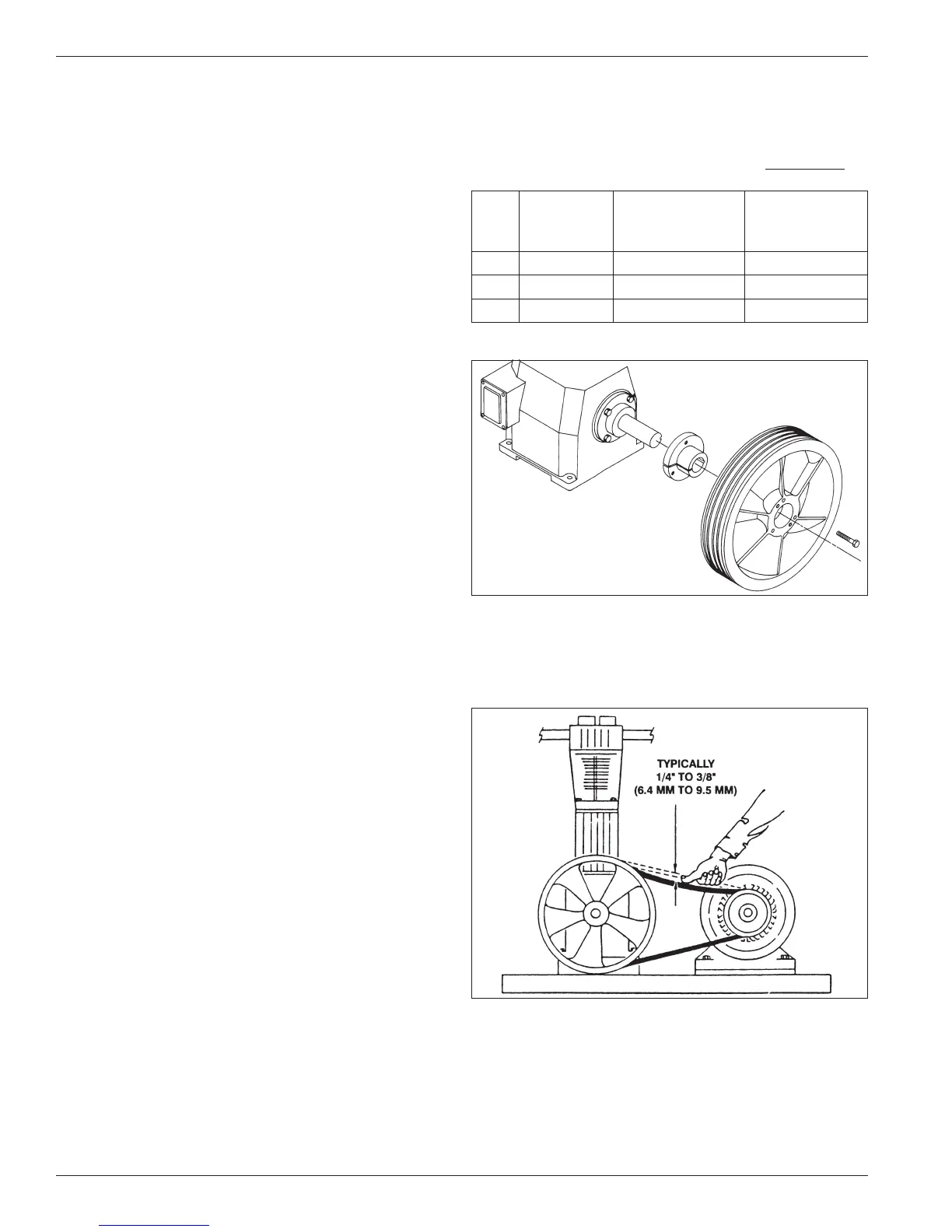
The flywheel is mounted on the shaft via a split, tapered
bushing and three bolts (refer to figure 3.2A). These bolts
should be tightened in an even and progressive manner until
torqued as specified below. There must be a gap between
the bushing flange and the flywheel when installation is
complete. Always check the flywheel runout before startup
and readjust if it exceeds the value listed in Appendix B.
Hub
Size
Diameter
in. (cm)
Bolt Torque
Ft-lb (kg-meter)
Set Screw
Torque Ft-lb
(kg-meter)
SF 4.625 (11.7) 12-18 (1.7–2.5) 22 (3.1)
E 6.0 (15.2) 30-36 (4.1–4.9) 22 (3.1)
J 7.25 (18.4) 75-81 (10.3–11.1) 10 9 (15.1)
Figure 3.2A: Flywheel installation.
Tighten the belts until they are taut, but not extremely
tight. Consult your V-belt supplier for specific tension
recommendations. Belts that are too tight may cause
premature bearing failure. Refer to figure 3.2B.
Figure 3.2B: Belt tension.
3.3 Crankcase Oil Pressure
Adjustment
Corken compressor models 291 through 891 are
equipped with an automatically reversible gear type oil
pump (if your compressor is the splash lubricated Model
16


 To Next Page