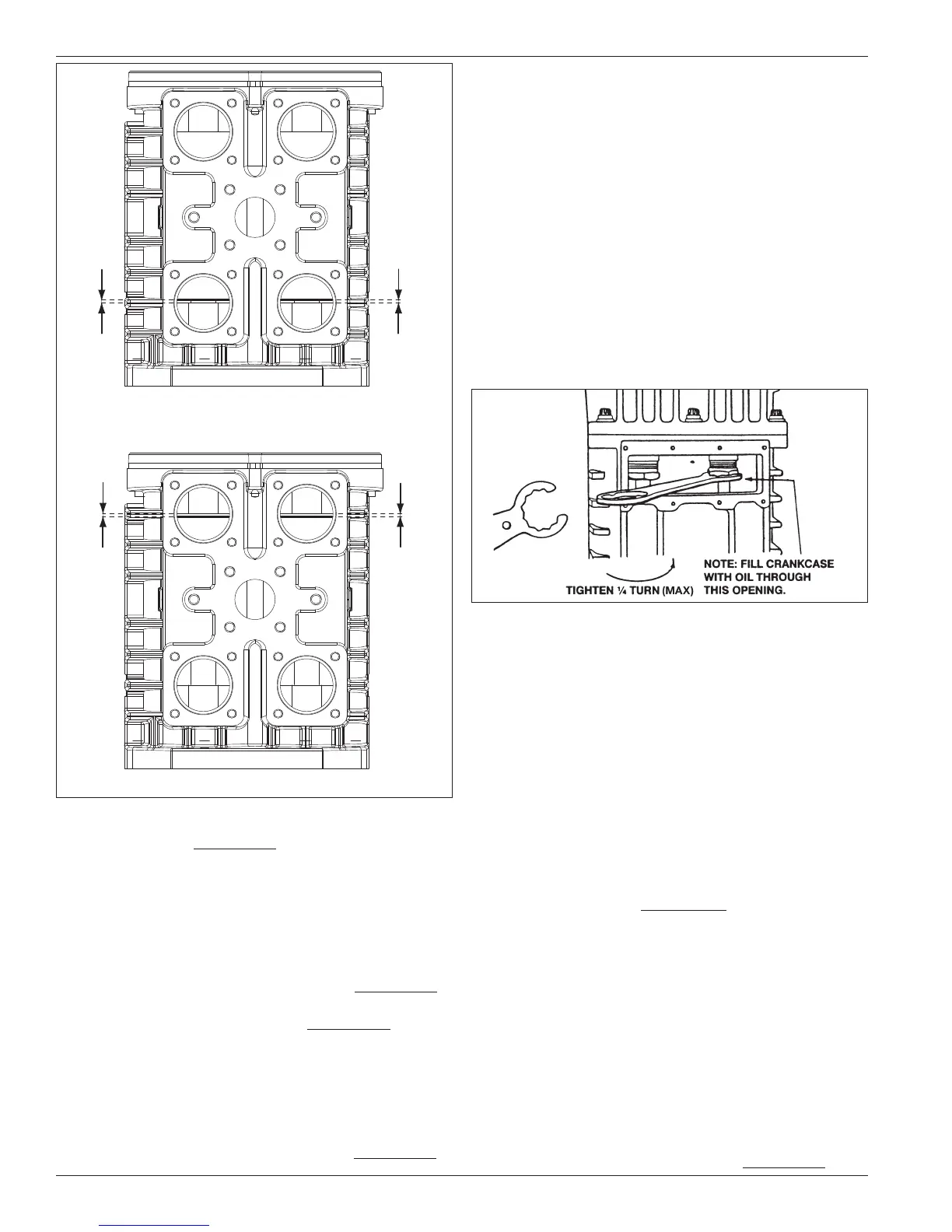
Piston top dead center
Piston
Piston
(
X
) (
X
)
Piston bottom dead center
Piston
Piston
(
Y
) (
Y
)
10. When the piston is properly shimmed, tighten the lock
nut as shown in Appendix B.
11. Replace the piston cap with the same thickness of
shims as before.
12. Reinstall the piston cap and cylinder head.
13. Now remove an upper valve and measure dimension
“X” at the top of the piston shown in Appendix E—
Piston Assembly Details. If this measurement does
not fall within the tolerances in Appendix E, remove
the cylinder head and piston cap and adjust the shims
as necessary. Repeat the steps and measure the “X”
dimension again.
14. When the piston cap is properly shimmed, tighten the
socket head bolts in an alternating sequence. Torque
socket head bolt to the values listed in Appendix B.
15. Replace the previously removed valves. Best results
will be obtained if new valve gaskets are used.
16. Follow standard startup procedures.
5.5 Piston Rod Packing
Adjustment
Piston rod packing should be adjusted or replaced
whenever leakage becomes noticeable. Typically, it is a
good idea to replace piston rod packing and piston rings
at the same time. For instructions on replacing the piston
rod packing, see section 5.6.
NOTE: Packing that cannot be adjusted should be
replaced.
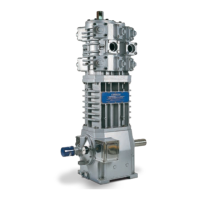
Figure 5.5A: Packing adjusting nuts.
5.6 Cylinder and Packing
Replacement
Cylinders very seldom require replacement if the
compressor is properly maintained. The primary
cause of damage to cylinders is corrosion and the
entry of solid debris or liquid into the compression
chamber. Improper storage can also result in corrosion
damage to cylinder (for proper storage instructions
see chapter 6).
If the cylinder does become damaged or corroded, use
a hone to smooth the cylinder bore and then polish it
to the value shown in Appendix B. If more than .005
in. must be removed to smooth the bore, replace the
cylinder. Cylinder liners and oversized rings are not
available. OVERBORING THE CYLINDER WILL RESULT
IN GREATLY REDUCED RING LIFE.
Many compressor repair operations require removal of
the cylinder. While the compressor is disassembled,
special care should be taken to avoid damage or
corrosion to the cylinder. If the compressor is to be left
open for more than a few hours, bare metal surfaces
should be coated with rust preventative.
When reassembling the compressor, make sure the bolts
are retightened to the valves shown in Appendix B.
22


 To Next Page