58
7.8 ZONE SHEAR TESTING USING THE ZONE SHEAR TABLE
As mentioned in the previous section Zone shear testing can only be performed
using the designated zone shear table and the 80Kg-work holder.
The test is set up in the same manner as a high speed shear test and as always care
must be taken to ensure that no collisions can occur.
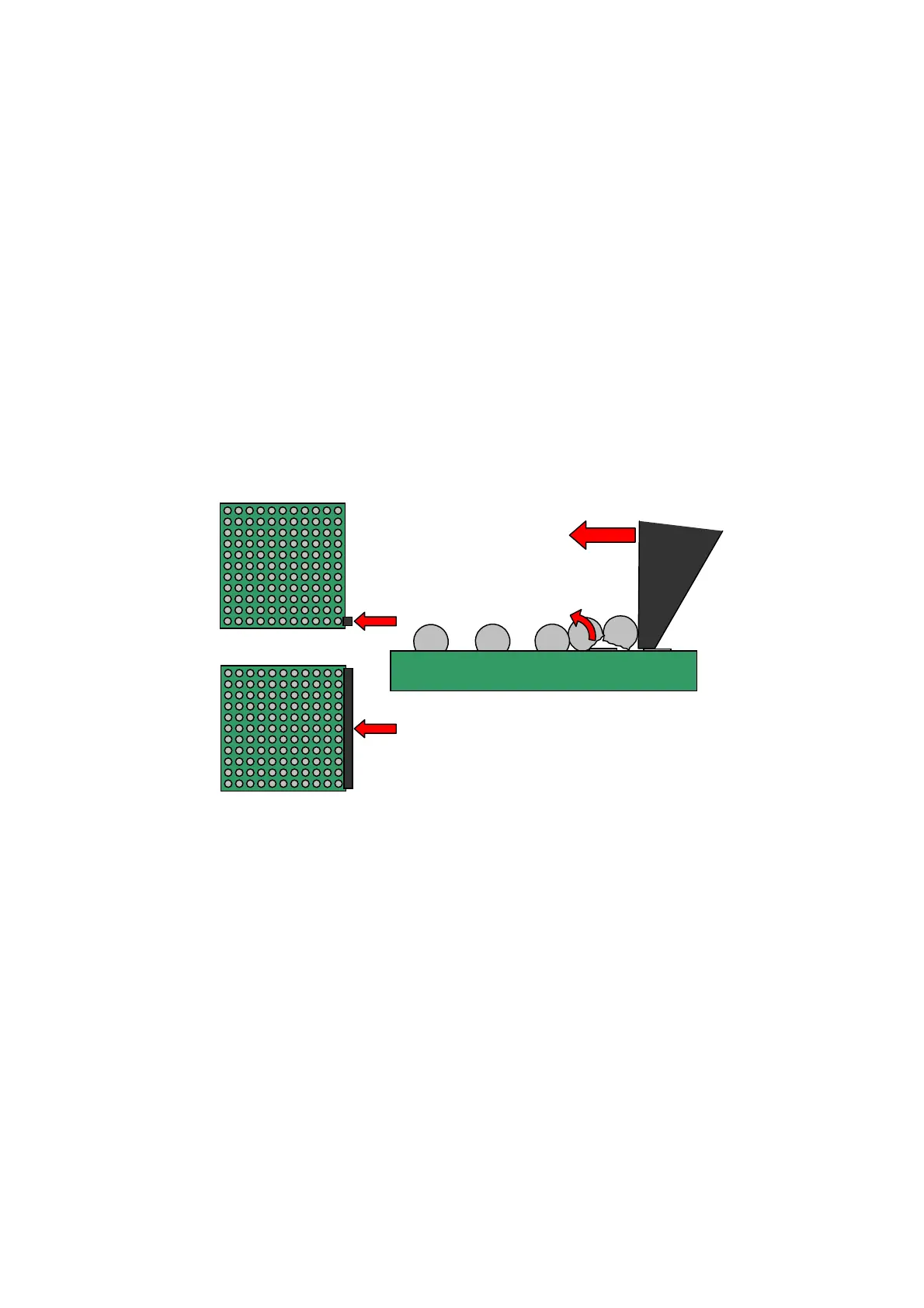
An alternative method to high speed testing zone shear is when many solder balls
are sheared in one pass of a shear tool. Either one row or many rows can be
sheared in one pass as shown below. This can be done at high speed, typically
600mm/s, or at relatively lower speeds such as 5mm/s. In this test balls are
mostly sheared by a ball or balls being driven by the shear tool. Consequently the
loading conditions such as shear height and load direction on each ball is
different and cannot be predicted. Because of this force data has limited value and
failure mode is used to qualify bond integrity.
Samples are inspected after shear. The percentage of bond failure area Vs solder
shear area is used to assess bond strength. Individual bonds are often a mixture of
some solder shear and some bond failure, the percentage of each bond is assessed
to the nearest 10% and added to the averaged total for the sample. Good bonds
will be predominantly solder shear. Bad bonds will typically result in an area of
25% bond failure.
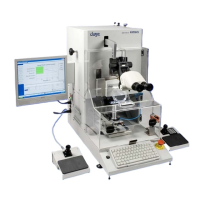
The 4000HS-Z Differs from the 4000HS in three key areas mostly related to the
larger XY table. This requires the guards to be bigger which leads to the
requirement of a stretched keyboard rest. One of the side panels is bulged to
accommodate the larger motor assembly. Despite these changes the functionality
of the machine is essentially the same as the 4000HS.
Shear one row
Shear multiple rows
Figure 4.
Peeling action



 To Next Page