Neptune 5000
© Copyright Datem Limited 2014
31
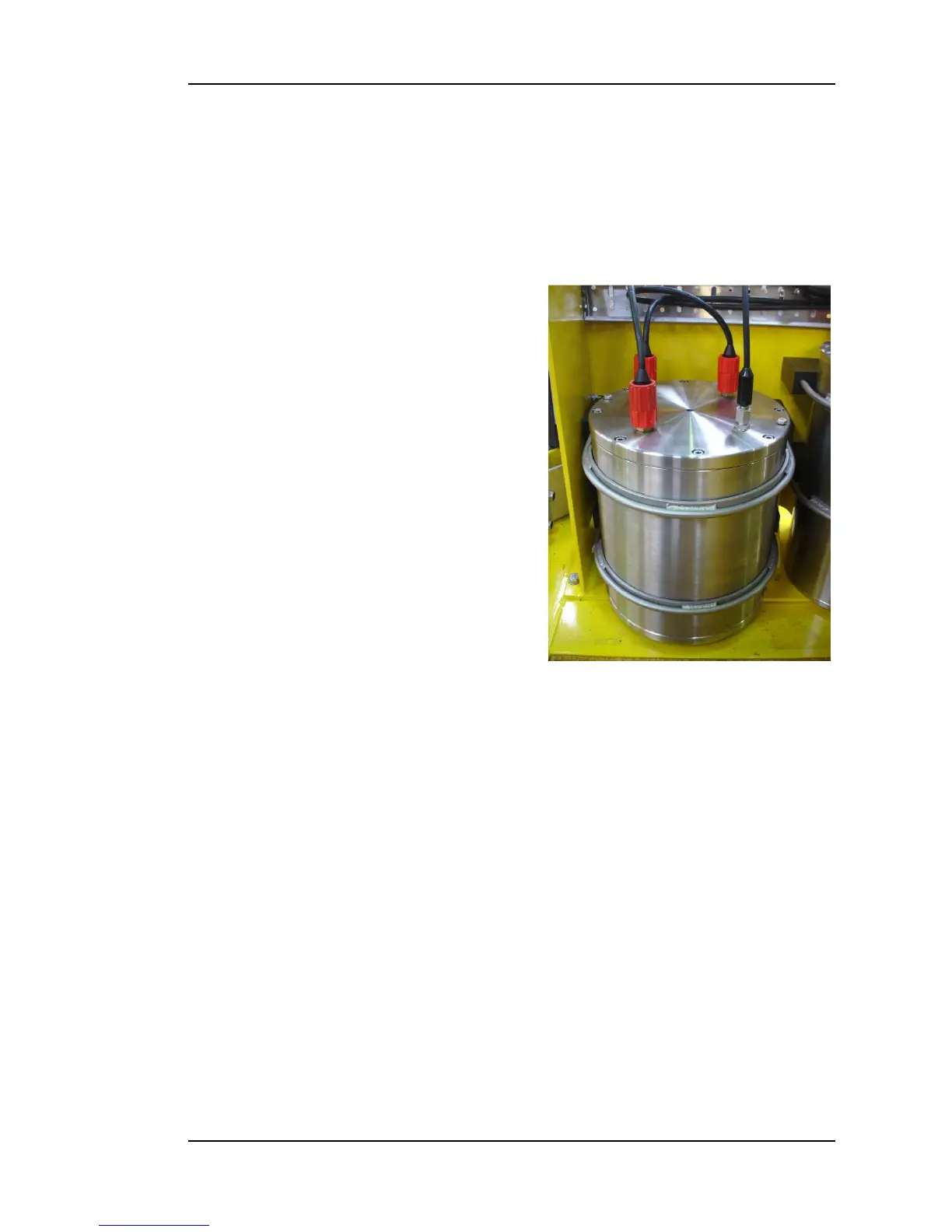
Transformer Pod Assembly
Description
The Transformer Pod’s primary function
is to transform the high voltage power
received from the umbilical connection
down to an operating voltage level that
is appropriate for the subsea electrical
and electronic systems. It also
performs a secondary function of
coupling the data signals on to the
umbilical connection for the
communications.
The pod is manufactured from low
carbon 316-grade stainless steel and is
sealed at atmospheric pressure. There
are three Subconn connectors, and
one coaxial data connector on the top-
cap of the pod for interconnection to
the subsea system.
The high voltage power enters the pod through the two pin Subconn
connector, and passes to the primary winding of the transformer. The
secondary windings of the transformer are connected to a terminal block Link
wires on the terminal block allows for voltage selection from the different
secondary windings. Once the system is commissioned on the umbilical it
should not be necessary to make any changes to this voltage selection.
The power from the secondary winding is used to power the Electronics Pod
and the Inverter Pod. This power leaves the Transformer Pod via the 3 pin
Subconn connectors for the Electronics Pod, and the Inverter Pod.
The Data Coupler PCB superimposes telemetry data onto the high voltage
power line and is connected in series with the high voltage entering the pod. It
provides complete isolation between the high voltage power line and the data
link to the Electronics Pod. Data is passed between the coupling unit and the
Electronics Pod by a coaxial cable fitted to the bulkhead coaxial connector.
The general arrangement and connector details for this pod can be in the
drawing on the following page.


 To Next Page