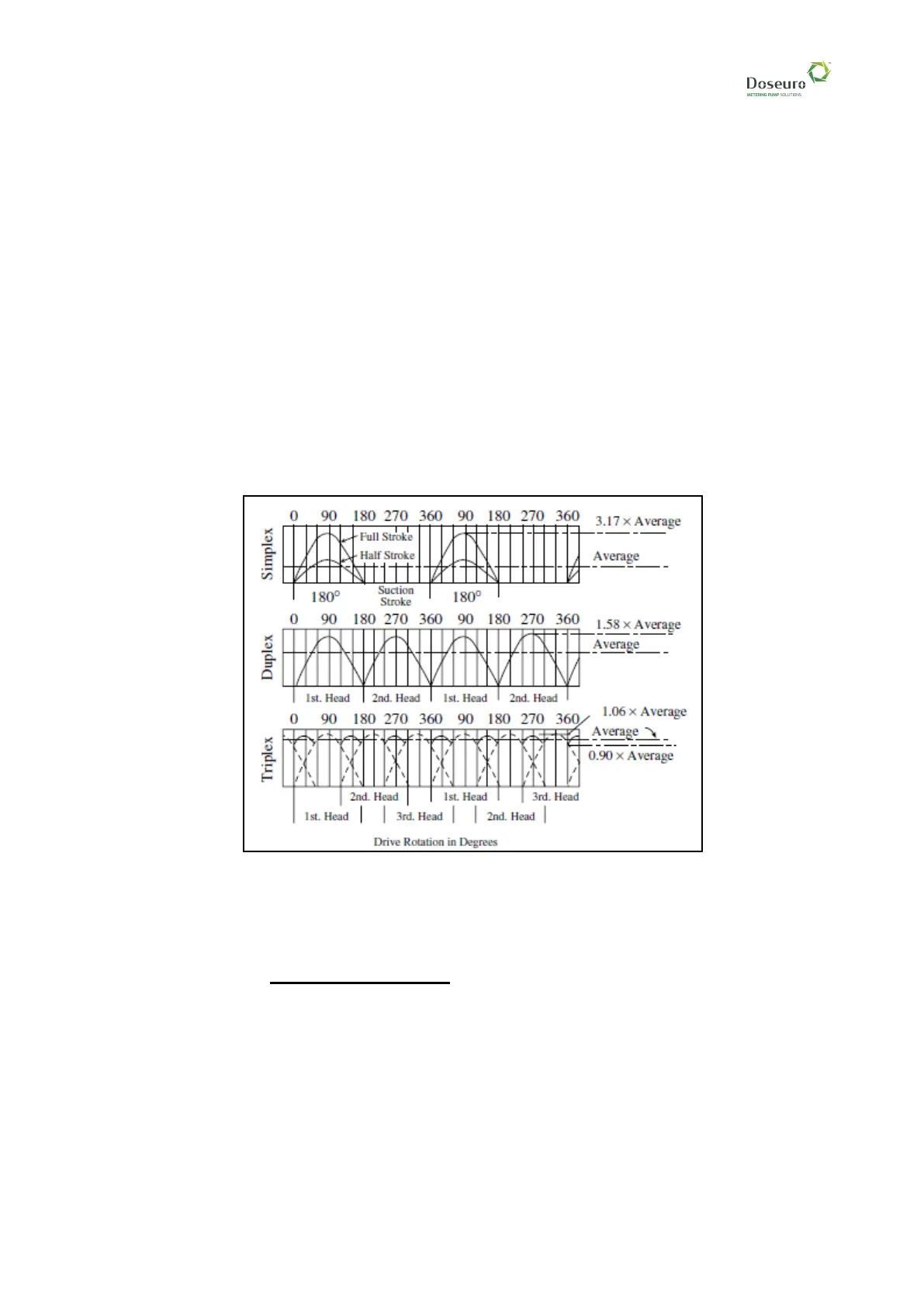
piston/diaphragm stroke. The reciprocating motion of the dosing pump piston/diaphragm determines the
flow thanks to the directional valves located at the pump head's inlet and outlet.
The fluid is pumped in the following phases:
• Suction phase:
During the suction phase, the valve located at discharge closes (sealing the leak) and the valve at
suction opens. The fluid enters the pump head chamber. The theoretical volume is equal to the piston
displacement.
• Pressing phase:
During the compression phase, the valve located at the suction side closes and the valve at the
discharge side opens. The fluid exits the pump head and enters the discharge pipe. The theoretical
volume is equal to the piston displacement.
• Flow rate:
The flow rate value depends on the following parameters:
1 Number of strokes completed by the piston per minute (depends on the chosen pump model).
2 Piston stroke and displacement adjustable on the pump.
4.4.2 - Formula of the theoretical flow rate
The theoretical flow rate expressed (in l/h = litres/hour) is obtained from the operation parameters with the
following formula:
𝑸 =
𝑺 • 𝑪 • 𝑵 • 𝟔𝟎
𝟏𝟎𝟎𝟎
Where the symbols have the following meaning:
Q = Flow rate (in l/h)
S = piston section (in cm
2
)
C = piston stroke (in cm)
N = Number of strokes per minute.
60= hours-minutes ratio
1000= cm
3
– dm
3
ratio



 To Next Page