XMPE0PCG125NST020 1st edition - 2020
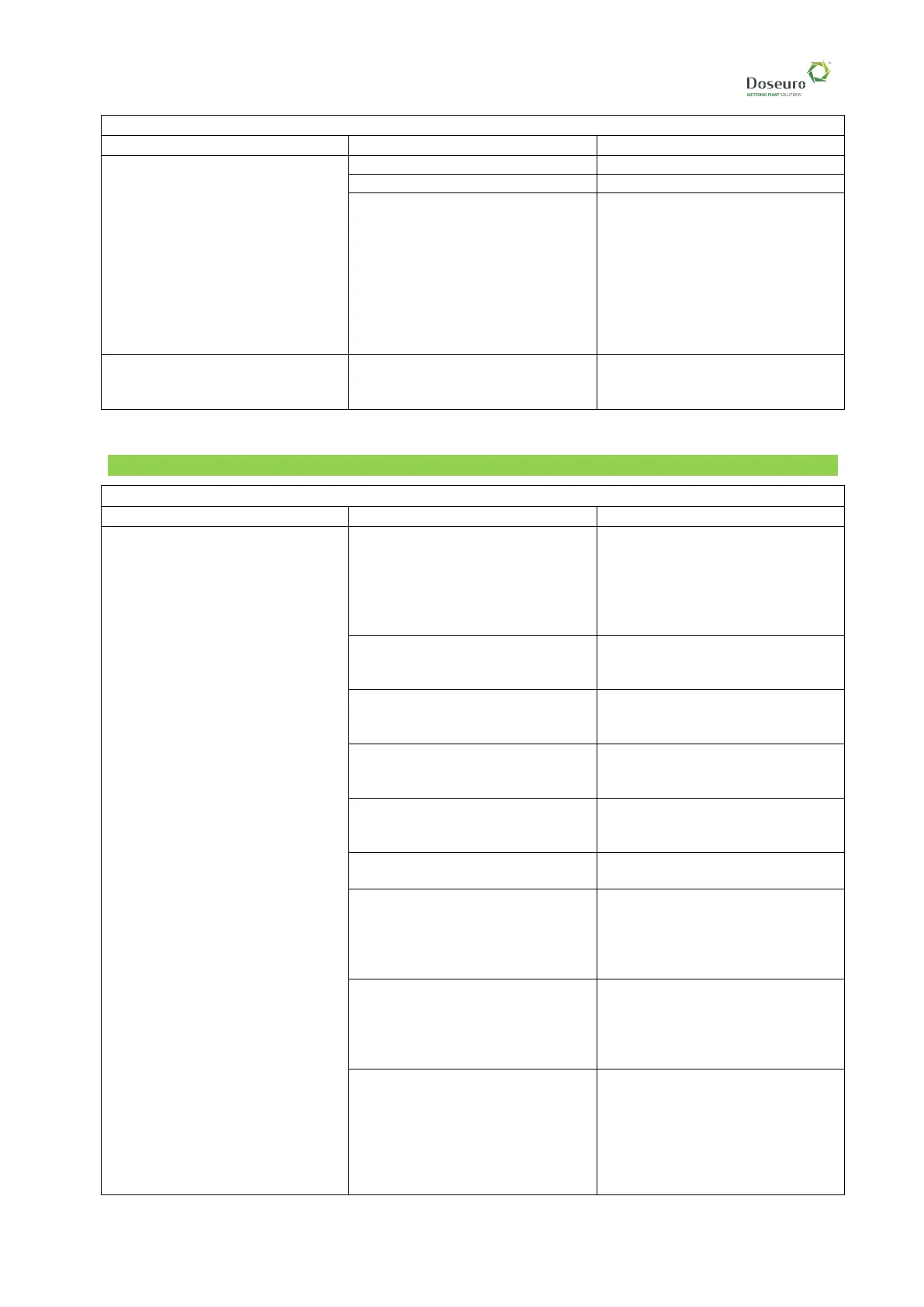
3 - excessive lifting of valves
4 - pressure relief valve or
other accessories in the
discharge pipe causing noise
A quick closing of the valve,
solenoid valve, or cock will
produce a water hammer. This
pressure wave is transmitted to
the pump resulting in noise.
A pulsation dampener before the
back pressure valve may be
required. A different type of valve
may be required.
The liquid pumped leaks from
the hole located under the
lantern
Replace the diaphragm, evaluate
the state of components, replace
if damaged.
20.3- B type pumps with hydraulic diaphragm troubleshooting table
Low discharge pressure
Low flow rate
1 - Clogged suction system:
Clean the suction filter. Check
the suction pipe and the feed
tank for obstructions or partially
closed valves
2 - Worn pressure relief valve
seat:
Check the pressure relief valve, if
the liquid leaks - switch-off the
pump and check
3 - pump not completely
primed (air bubble in the
suction pipe):
Excessive suction height, comply
with the NPSHr value, install a
suction diaphragm
4 – incorrectly connected
motor:
Check the motor plate again for
the correct wiring sequence.
Check the phases.
Inspect valve units. Clean or
replace the components if
required.
6 - Oil leaks through the filler
cap and drain plug
Loose plugs or damaged
gaskets, to be replaced.
7 - Damaged piston seal
gasket.
Air intake in the oil reservoir
through piston seals.
Scratched piston
Replace the seal gaskets or the
piston
8 - insufficient oil in oil
chamber
Insufficient interposed fluid: bring
the piston to 0% FDC by acting
on the adjusting knob, remove
the filler cap and top-up with oil,
reposition the cap.
9 - air entering the pump head
Check the presence of inlet air in
the suction pipe. Check junctions
between pipes, seals around the
valve rods, and the connections
of the instruments.
Check the diameter and piping
route.



 To Next Page