36
RF exposure
CE SAR compliance
This camera meets the EU requirements (1999/519/EC) on the limitation of exposure of the
general public to electromagnetic fields by way of health protection.
The limits are part of extensive recommendations for the protection of the general public.
These recommendations have been developed and checked by independent scientific
organisations through regular and thorough evaluations of scientific studies. The unit
of measurement for the European Council’s recommended limit for mobile devices is the
“Specific Absorption Rate” (SAR), and the SAR limit is 2.0 W/kg (head/body) and 4 W/kg
(limbs) averaged over 10 gram of tissue. It meets the requirements of the International
Commission on Non-Ionising Radiation Protection (ICNIRP).
For body and limbs operation, this camera has been tested and meets the ICNIRP exposure
guidelines and the European Standard EN 50566 and EN 62209-2, for use with dedicated
accessories. Use of other accessories which contain metals may not ensure compliance
with ICNIRP exposure guidelines.
SAR is measured with the device at 0 mm to the body, while transmitting at the highest
certified output power level in all frequency bands of the device.
The maximum SAR value is 2.34 W/kg over 10 gram of tissue.
SAR is measured when the camera is at its highest transmitting power. However, the actual
SAR of your camera is usually below the test level. This is because your camera is designed
to use the minimum power necessary to upload videos.
Caution
Standard 5V/1A charging head required. The power adapter shall be certified according to
IEC/EN 60950-1 and fulfilled the requirement of SELV and LPS.
Limit your exposure to radio frequency (RF)
• Keep your camera from your body while uploading videos.
• You can find more information from the WHO fact sheet N°193 on the WHO home page at:
http://www.who.int/mediacentre/factsheets/fs193/en
Disposal of your old product
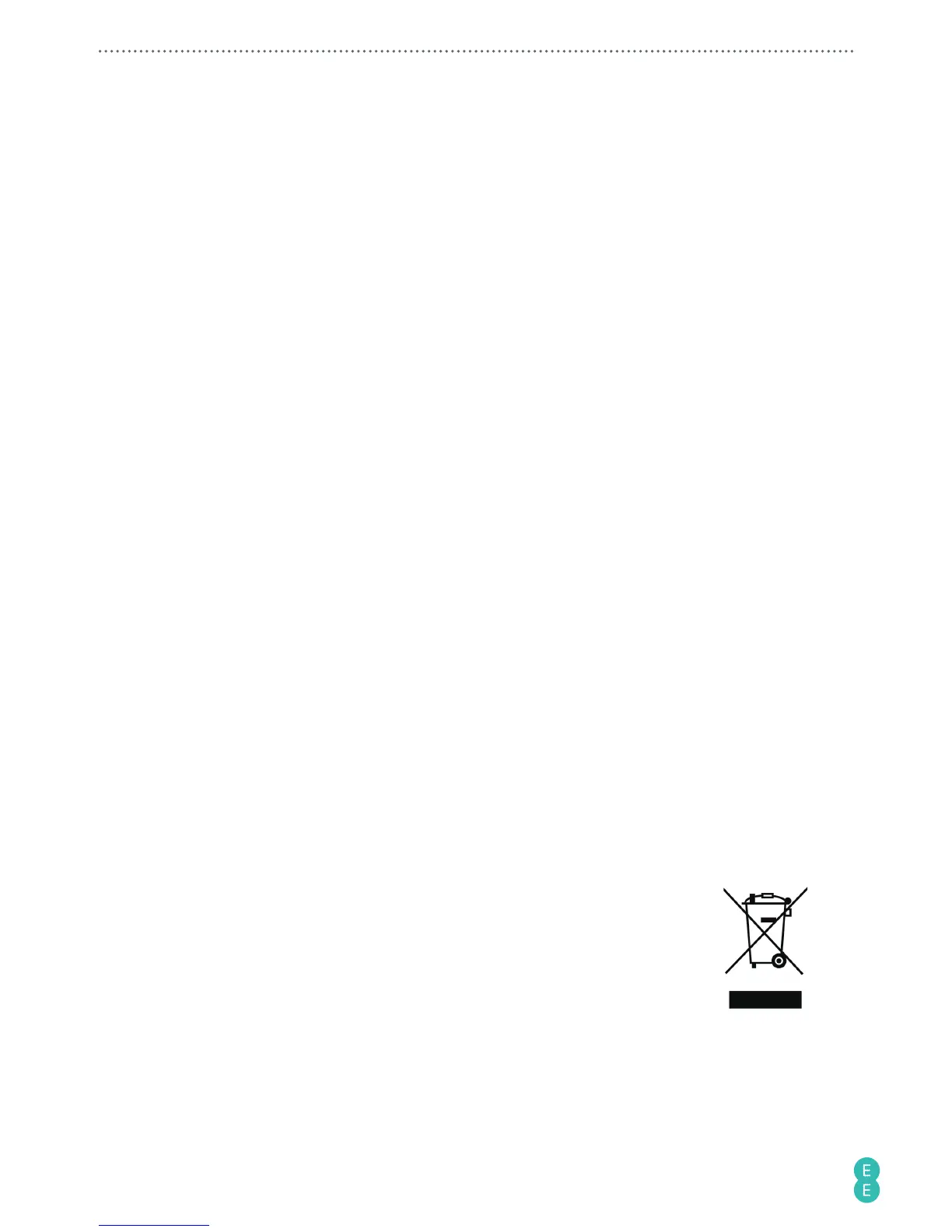
When the crossed-out wheelie bin symbol is marked on a product, it means that
this product is compliant with the European Directive 2012/19/EU.
All electrical and electronic products must be disposed of separately from
household waste, by way of collection sites designated by the government or local
authorities.
The proper disposal of your old product will contribute to preventing any potential
negative impact on the environment and human health.
For more information on the proper way to dispose of your old product, consult your local
authorities, your waste disposal service or the store in which you purchased the product.



 To Next Page