1
WSG-1068 GENERAL INFORMATION
Compression Tests
Compression Gauge Check
1. Make sure the oil in the crankcase is of the
correct viscosity and at the proper level and that
the battery is properly charged. Operate until
the engine is at normal operating temperature.
Turn the ignition switch to the OFF position,
then remove all the spark plugs.
2. Set the throttle plates in the wide-open position.
3. Install a Compression Tester in the No. 1
cylinder.
4. Install an auxiliary starter switch in the starting
circuit. With the ignition switch in the OFF
position, and using the auxiliary starter switch,
crank the engine a minimum of five compression
strokes and record the highest reading. Note the
approximate number of compression strokes
required to obtain the highest reading.
5. Repeat the test on each cylinder, cranking the
engine approximately the same number of
compression strokes.
Test Results
The indicated compression pressures are considered
within specification if the lowest reading cylinder is
within 75 percent of the highest reading. Refer to the
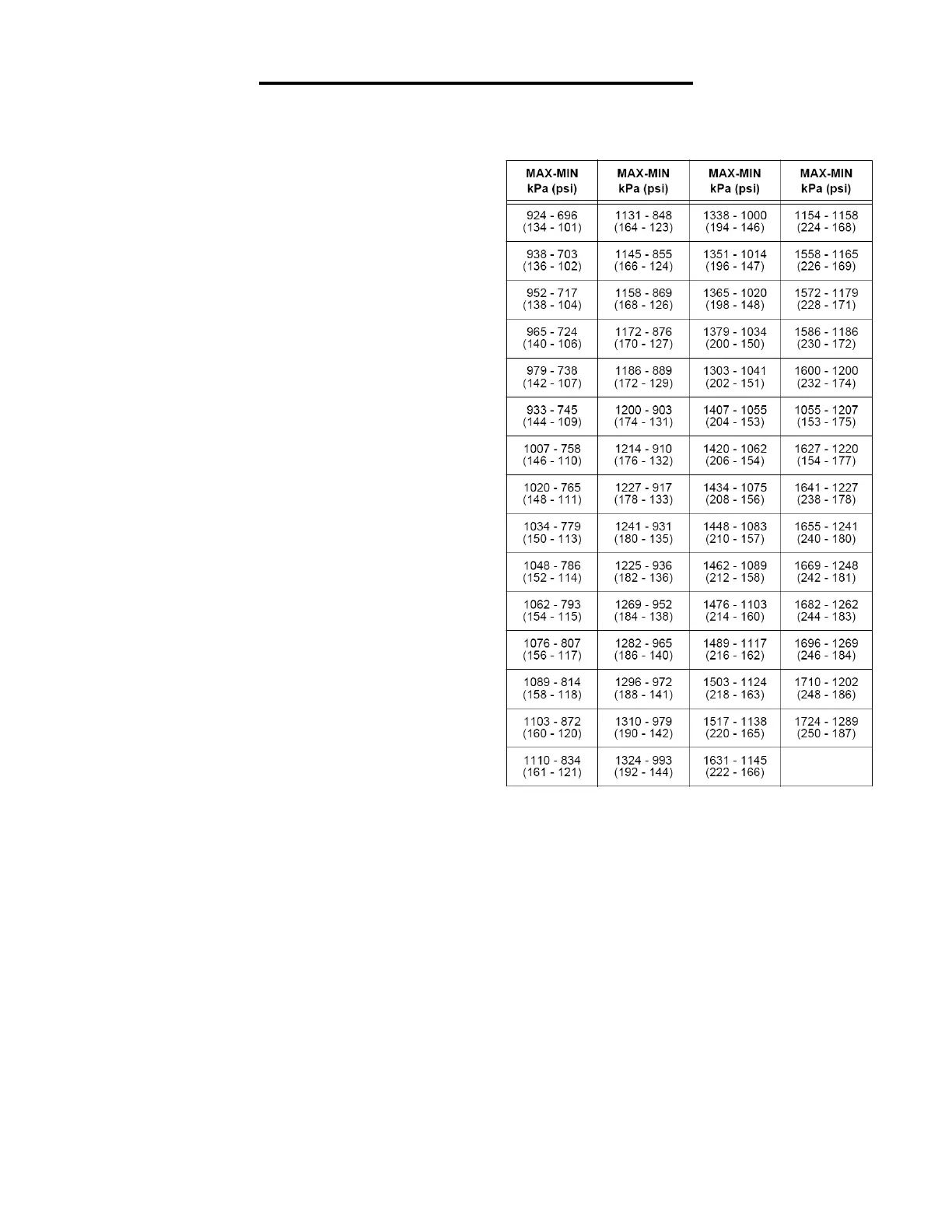
Compression Pressure Limit Chart.
If one or more cylinders reads low, squirt approximately
one tablespoon of clean engine oil meeting Ford
specification ESE-M2C153-E on top of the pistons in
the low-reading cylinders. Repeat the compression
pressure check on these cylinders.
Compression Pressure Limit Chart
Interpreting Compression Readings
1. If compression improves considerably, with the
addition of oil, piston rings are faulty.
2. If compression does not improve with oil, valves
are sticking or seating improperly.
3. If two adjacent cylinders indicate low
compression pressures and squirting oil on
each piston does not increase compression, the
head gasket may be leaking between cylinders.
Engine oil or coolant in cylinders could result
from this condition.
Use the Compression Pressure Limit Chart when
checking cylinder compression so that the lowest
reading is within 75 percent of the highest reading.



 To Next Page