8
WSG-1068 GENERAL INFORMATION
Hydraulic Lash Adjuster
Hydraulic lash adjuster noise can be caused by any of
the following:
excessive collapsed lash adjuster gap
sticking lash adjuster plunger
lash adjuster check valve not functioning
properly
air in lubrication system
leakdown rate too rapid
excessive valve guide wear
Excessive collapsed lash adjuster gap can be caused
by loose rocker arm seat bolts/nuts, incorrect initial
adjustment or wear of lash adjuster face, or worn roller
lash adjusters, push rod, rocker arm, rocker arm seat or
valve tip. With lash adjuster collapsed, check gap
between the valve tip and the rocker arm to determine if
any other valve train parts are damaged, worn or out of
adjustment.
A sticking lash adjuster plunger can be caused by dirt,
chips or varnish inside the lash adjuster.
A lash adjuster check valve that is not functioning can
be caused by an obstruction such as dirt or chips that
prevent it from closing when the camshaft lobe is lifting
the lash adjuster. It may also be caused by a broken
check valve spring.
Air bubbles in the lubrication system will prevent the
lash adjuster from supporting the valve spring load. This
can be caused by too high or too low an oil level in the
oil pan or by air being drawn into the system through a
hole, crack or leaking gasket on the oil pump screen
cover and tube.
If the leakdown time is below the specified time for used
lash adjusters, noisy operation can result. If no other
cause for noisy lash adjusters can be found, the
leakdown rate should be checked and any lash
adjusters outside the specification should be replaced.
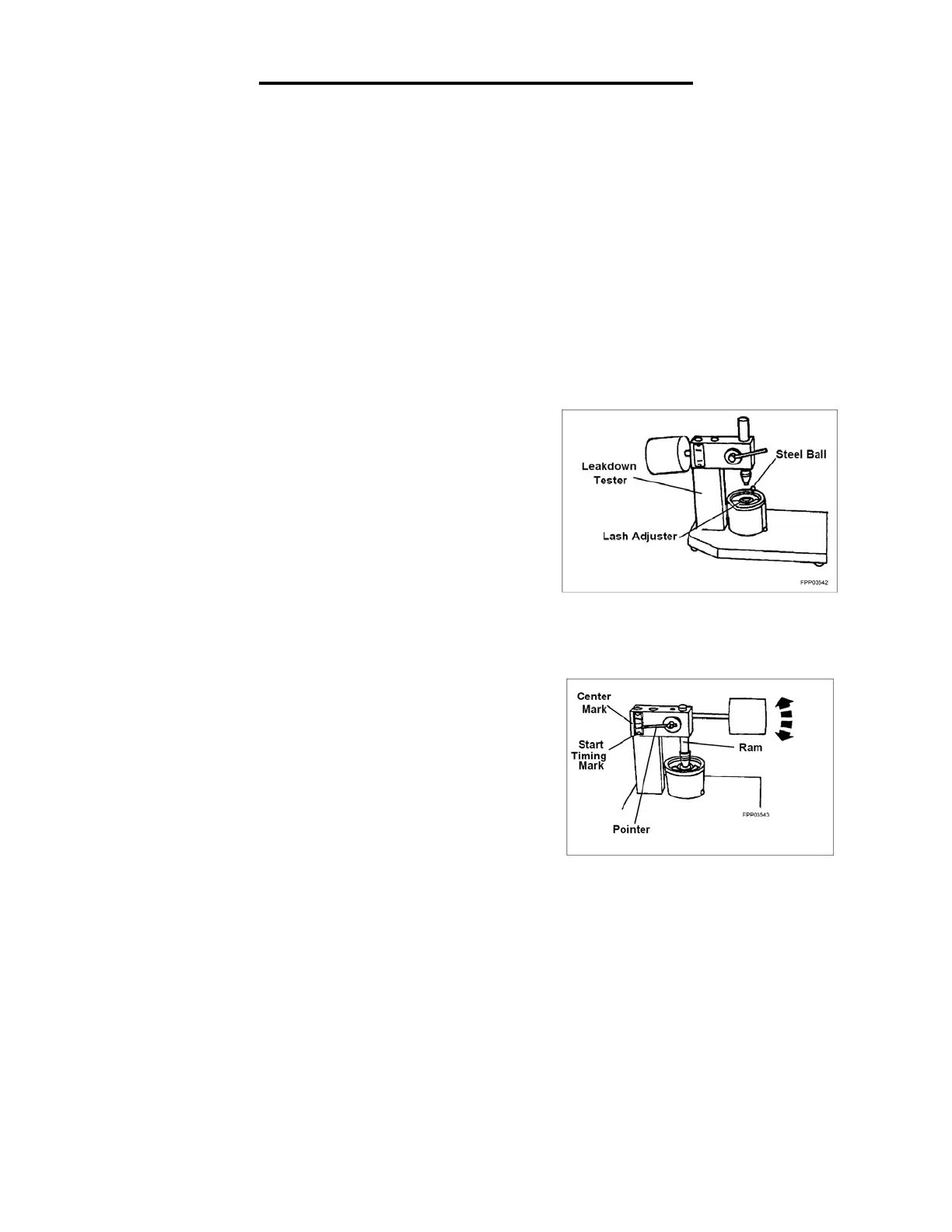
Assembled lash adjusters can be tested with Hydraulic
lash adjuster Leakdown Tester to check the leakdown
rate. The leakdown rate specification is the time in
seconds for the plunger to move a specified distance
while under a 22.7 kg (50 lb.) load. Test the lash
adjusters as follows:
Leakdown Testing
NOTE: Do not mix parts from different hydraulic valve
tappets/lash adjusters. Parts are select-fit and are not
interchangeable.
1. Clean the lash adjuster to remove all traces of
engine oil.
NOTE: lash adjusters/lash adjuster cannot be checked
with engine oil in them. Use only testing fluid. New
hydraulic lash adjusters/lash adjusters are already filled
with testing fluid.
2. Place the lash adjuster in the tester with the
plunger facing upward. Position the steel ball
provided in the plunger cap. Add testing fluid to
cover the hydraulic tappet/lash adjuster and
compress Hydraulic Tappet Leakdown Tester until
the hydraulic lash adjuster is filled with testing fluid
and all traces of air bubbles have disappeared.
The fluid can be purchased from
the tester’s manufacturer. Using kerosene or
any other fluid will not provide an accurate test.
3. Adjust the length of the ram so the pointer is just
below the start timing mark when the ram contacts
the hydraulic lash adjuster. Start Timing as the pointer
passes the start timing mark and end timing as the pointer
reaches the center mark.
4. A satisfactory lash adjuster must have a leakdown
rate (time in seconds) within specified minimum
and maximum limits.
5. If the lash adjuster is not within specification,
replace it with a new lash adjuster. Do not
disassemble and clean new lash adjusters/lash
adjuster before testing because oil contained in
the new lash adjuster is test fluid.
6. Remove the fluid from the cup and bleed the fluid
from the lash adjuster by working the plunger up
and down. This step will aid in
depressing the lash
adjuster plungers when checking valve clearance.



 To Next Page