TR-4800E
Tally Router
Revision 1.1 Page - 1
1 OVERVIEW
The TR-4800E Tally Router is an Ethernet-controlled interface for 32 General Purpose Inputs (GPIs)
and 48 General Purpose Outputs (GPOs). It is the successor to the TR-3200E. All General Purpose
I/O (GPIO) are provided on five, 37-pin D-Sub connectors on the back of the unit. A gigabit 1000baseT
Ethernet connection is used to configure and control the unit. Two RS-232 serial ports are used for
initial configuration and debug, and for optional serial control.
The unit is configured through SNMP using the VistaLINK™ software. Advanced features such as
edge triggering on inputs, and variable-length pulse outputs are easily setup with the graphical user
interface. Each input or output can be set to normal logic (normally-open) or inverted logic (normally-
closed). In addition, the state of the inputs and outputs can be monitored or changed manually for
debugging purposes.
The Tally Router provides wet power on each of the rear 37-pin D-Sub connectors. This can be used to
power passive devices (tally lights, buttons, buzzers, etc) to simplify wiring to GPIs and GPOs. The
Wet power can be configured to come from either the 5V or 12V internal power sources, or from an
external power source that is applied to the rear WET PWR binding posts.
The MAGNUM control system with the MAGNUM-TALLY software module integrates the GPI and GPO
from the Tally Router into a single unified interface. The GPI and GPO of the Tally Router are
represented graphically as a virtual tally pin grid. Each GPI and GPO signal is given a source and
destination name. Custom triggers and behaviors can be easily setup to activate tally lights on
cameras, trigger Under Monitor Displays (UMDs), activate switchers, replay and record systems, and
more.
The TR-4800E is powered from a universal AC power supply that accepts 90V
AC
to 264V
AC
, at 50 or
60Hz. In addition to this, the unit is shipped with a universal external 12V DC power supply that
connects to the 12V DC input on the back of the Tally Router. This provides a second, redundant
power source to allow the Tally Router to perform in critical signal chains.
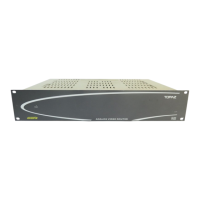
Figure 1-1: Front Panel of the TR-4800E
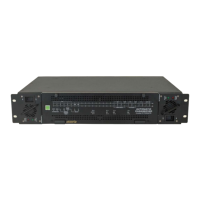
Figure 1-2: Rear Panel of the TR-4800E


 To Next Page