65
SAFETY AND POLLUTION
Accessing the unit
The access to the unit must be granted exclusively to qualified personnel trained to operate on this type of units and provided
with the necessary protection equipment. Moreover such personnel, to operate, must be authorized by the owner of the unit and
recognized by the Manufacturer.
Residual risks
The unit are designed and built in such a way to minimize risks for people and for the place where the unit is installed. The residual
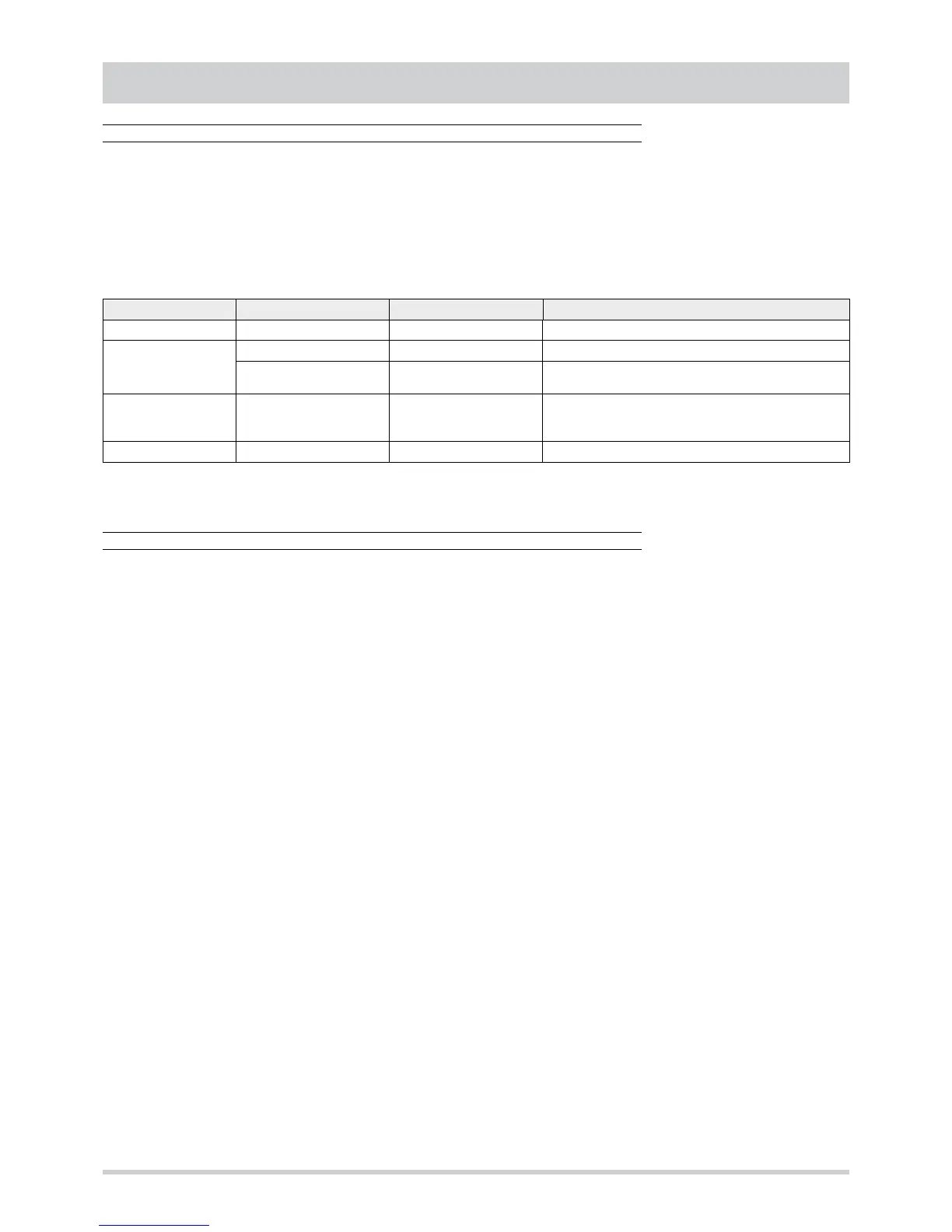
risks, impossible to eliminate during the design process, are reported in the following table along with the indications necessary
for their neutralization.
Considered part Residual risk Mode Precautions
Compressor Burns Contact Use protective gloves
Refrigerant
circuit
pipes
Burns Contact Use protective gloves
Cold burns
Fuoriuscita di refrigerante e
contatto con la pelle
Use protective gloves
Electrical circuit Electrocutions Contact with live parts
Verify the unit earth connection
Disconnect the power supply line before carrying out any
operation inside the unit
Finned coil Cuts Contact Use protective gloves
General considerations
1 SUPPLIER COMPANY AND PRODUCT IDENTIFICATION
Card No. FRIG 8
Product R-410A
Supplier company identification RIVOIRA SpA
2 COMPOSITION / INFORMATION ON INGREDIENTS
Substance / Preparation Preparation
Components / Impurities Contains the following components :
Difluoromethane (R32) 50 % in weight
Pentafluoroethane (R125) 50 % in weight
EEC No. Non-applicable for mixtures
Trade-name / /
3 IDENTIFICATION OF HAZARDS
Identification of hazards Liquefied gas.
The vapours are heavier than air and can cause suffocation, reducing the oxygen available for
breathing.
Rapid evaporation of the fluid can cause freezing.
Can cause cardiac arrhythmia.
4 FIRST-AID MEASURES
Inhalation Do not administer anything if the person has fainted.
Take the person outdoors. Use oxygen or artificial respiration if necessary.
Do not administer adrenaline or similar substances.
Contact with eyes Rinse thoroughly with plenty of water for at least 15 minutes and see a doctor.
Contact with skin Wash immediately with plenty of water. Immediately remove all contaminated garments.
Swallowing
5 FIRE-PREVENTION MEASURES
Specific hazards Increase in pressure.
Dangerous fumes Halogen acids, traces of carbonyl halides.
Fire-extinguishing means usable All the known fire-extinguishing means can be used.
Specific methods Cool the containers/tanks with water sprays.
Special protection equipment Use self-contained breathing apparatus in confined spaces.
6 MEASURES AGAINST ACCIDENTAL SPILLING OF THE PRODUCT
Personal protection Evacuate personnel to safe areas. Provide for adequate ventilation. Use personal protection equi-
pment
Protection for the environment It evaporates.
Product removal methods It evaporates.
7 HANDLING AND STORAGE
Handling and storage Ensure an adequate air change and/or extraction in the workplaces. Only use well-ventilated ro-
oms. Do not breathe vapours or aerosols. Carefully close the containers and keep them in a cool,
dry and well-ventilated place. Keep in the original containers.
Incompatible products Explosives, flammable materials, organic peroxides.
8 CONTROL OF EXPOSURE / PERSONAL PROTECTION
Personal protection Ensure adequate ventilation, especially in closed areas.
Control parameters Difluoromethane (R32): Recommended exposure limits: AEL (8h and 12h TWA) = 1000 ml/m3
Pentafluoroethane (R125): Recommended exposure limits: AEL (8h and 12h TWA) = 1000 ml/m3
Refrigerant safety card
Pollution
The unit contains refrigerant gas and lubricating oil. During discarding such fluids must be recovered and eliminated according to
the regulations in force in the country where the unit is installed. The unit must not be abandoned during discarding.


 To Next Page