96
CHAPTER 9 – TROUBLESHOOTING AND MAINTENANCE
CHAPTER 9 - TROUBLESHOOTING AND MAINTENANCE
ThefollowingtroubleshootinginformationisalsoavailableviatheQ‐Linkmobileapp.Whenafault
occurs,themobileappwillofferthesamepotentialremediesseenbelowforthecorrespondingfaultsin
section9.1.
9.1 Fault Remedy
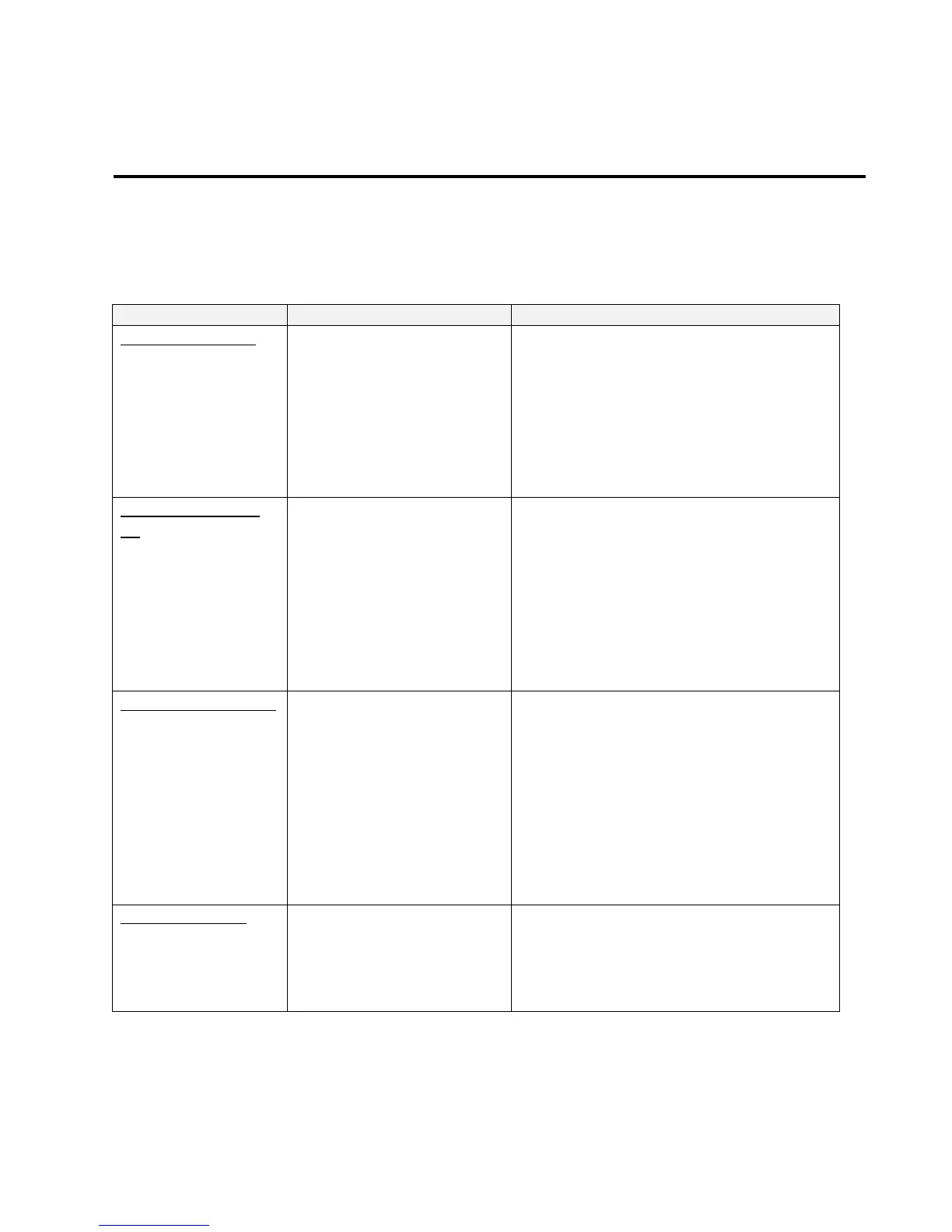
Fault Cause Remedy
MotorOverload(C) Amotoroverloadfault
occurswhentheoverload
seesmorethantheadjusted
percentageoftheFLA
setting.Thisfollowsthe
industry‐standardoverload
tripclasscurve,adjustablein
PROTECTION‐07&08.
CheckthatyourFLAsetti ngin
PRIMARY‐04matchesthemotor
nameplate
Forsubmersiblepumps,checkif
thereisasandinth
ewater.
Checkmotorshaftspinsfreely
Forhighinertialoadssethigher
accelerationtime
MotorOverCurrent
(C)
Amotorovercurrentfault
occurswhentheoverload
seesmorethantheuser‐
definedpercentageofthe
FLAsetting,adjustablein
PROTECTION‐12.Thisfault
willtripafterashortdelay,
adjustableinPROTECTION‐
13.
CheckthatyourACCtimeishigh
enoughtoallowforpropermotor
ramp‐up
Checktha
tyourFLAsettingin
PRIMARY‐04matchesthemotor
nameplate
Verifymotorwindingconnectionsin
junctionboxaccording
manufacturerdrawing.
‐VFDOverCurrent(C) AVFDovercurrentfault
occurswhentheoverload
seesmorethan110%ofthe
VFD’scurrentrating.Thisis
aninstantaneousfault.
CheckthatyourACCtimeishigh
enoughtoallowforpropermotor
ramp‐up
CheckthatyourVFDissized
correctlytothemotorload
Forsubmersi
blepumps,checkthat
yourmotormaxampsdonot
exceedtheVFD’scurrentrating.
Checkforanobstructionatthe
motor
VFDOverHeat(C) AVFDoverheatfaultoccurs
whenVFD’sinternalheatsink
temperaturelimitis
exceeded.Thisisan
instantaneousfault.
CheckthattheVFDfanventsare
freeofdirtanddebris
Checkthattheenclosureis
providingadequatecoolingairflow
totheVFD


 To Next Page