brake system, which could adversely affect brak-
ing.
1.
Drain the brake system air reservoirs (reservoirs
with automatic drain valves only).
NOTE: Battery locations vary between vehicles.
2.
Inspect the batteries.
WARNING
Battery posts, terminals, and related accessories
contain lead and lead compounds, chemicals
known to the State of California to cause cancer
and reproductive harm. To prevent possible per-
sonal injury, always wash your hands after han-
dling battery parts and related accessories.
2.1
Remove the battery box cover and inspect
all visible battery cables for loose wiring or
damage.
2.2
Check that the battery hold-down is se-
cure.
IMPORTANT: Aerodynamic components de-
crease drag force as a vehicle moves, thereby
improving fuel efficiency. If replacement of an
aerodynamic component is necessary, replace-
ment components must meet or exceed the
drag reduction performance of the originally in-
stalled component in order to maintain compli-
ance with greenhouse gas and full efficiency
regulations (GHG14).
3.
Inspect the following aerodynamic components, if
equipped, for structural damage, cracks, or wear.
•
Chassis fairings
•
Roof fairing/deflector
•
Side skirts
•
Cab/sleeper extenders
•
Battery access cover
Engine Compartment Inspection and
Adjustments
IMPORTANT: If replacement of the hood or
bumper is necessary, the replacement compo-
nent must meet or exceed the drag reduction
performance of the originally installed item in
order to maintain compliance with greenhouse
gas and full efficiency regulations (GHG14).
1.
Inspect the bumper and hood for structural dam-
age, cracks, or wear.
2.
Check the hydraulic clutch reservoir, if equipped.
If necessary, add DOT 4 brake fluid.
3.
Inspect the radiator and heater hoses, including
the clamps and support brackets.
3.1
Inspect the radiator and charge air cooler
for damage and accumulated debris.
Straighten bent or damaged fins to permit
airflow across all areas of the cores.
NOTE: When traveling through areas of high
insect concentration, it may be necessary to
clean the exterior of the radiator or the
charge air cooler core as often as every 200
miles (320 km).
3.2
Make sure the radiator inlet and outlet
hoses are pliable and are not cracking or
ballooning.
3.3
Make sure the heater hoses are pliable
and are not cracking or ballooning.
10/11/2001
f461916
1
1
1
2
3
3
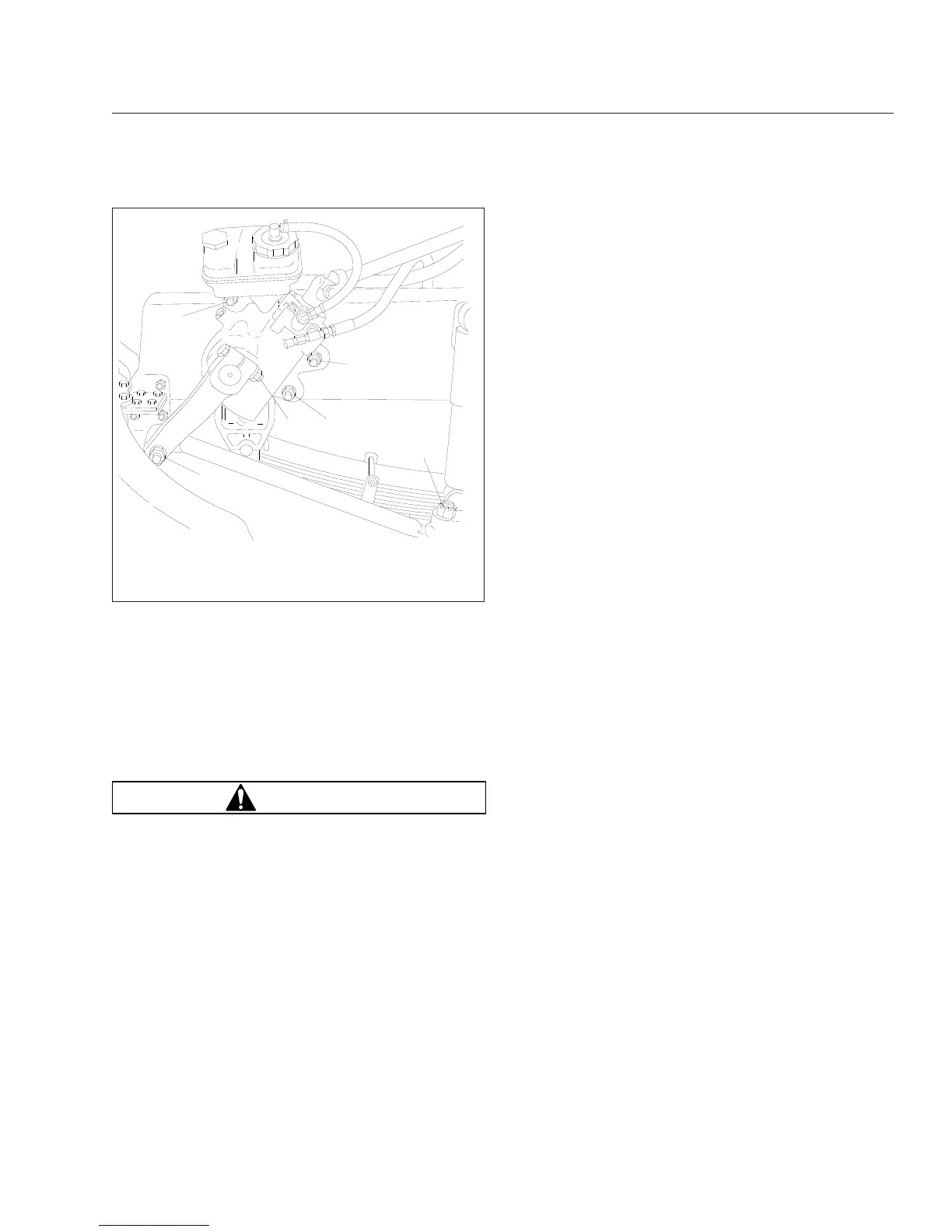
1. Steering Gear Mounting Bolts
2. Pitman Arm Pinch Bolt Nut
3. Drag Link Nut
Fig. 20.12, Integral Steering Gear Fasteners
Pre- and Post-Trip Inspections and Maintenance
20.12






 To Next Page