Need help?
Do you have a question about the GE Monitor UV-900 and is the answer not in the manual?
Covers warnings, cautions, and important notes for safe operation.
Information on CE compliance and proper equipment disposal.
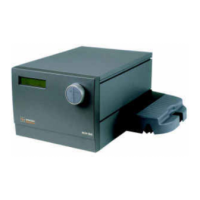
Basic description of the Monitor UV-900 and its applications in chromatography.
Critical safety guidelines and warnings for operating the instrument.
Procedures for unpacking, inspecting, and choosing a suitable installation location.
Detailed steps for installing the UV flow cell and optical fibers.
Connecting power, signal cables, and fluid tubing to the instrument.
Instructions for mounting the cell holder cover for protection.
How to power the instrument on/off and navigate basic menus.
Methods for selecting menus, submenus, and adjusting parameter values.
Overview of main operating menus like setting lamp, autozero, and event marks.
Procedures for setting wavelengths and reading absorbance values.
How to perform autozero calibration and proper storage procedures.
Configuring for chart recorders and applying noise filtering.
Detailed guide for calibrating the UV flow cell for accurate measurements.
Instructions for changing flow cells and recovery after power interruptions.
Recommended intervals and actions for routine instrument upkeep.
Detailed instructions for cleaning the instrument, flow cell, and optical fibers.
Procedures for checking lamp intensity, run time, and flow cell status.
Guidelines for environmentally responsible recycling of the instrument.
Advice for contacting GE Healthcare support and general troubleshooting tips.
Common faults, their possible causes, and recommended solutions.
Explanations of error messages and steps to resolve them.
General description of the Monitor UV-900 and its components.
Technical specifications and design of the UV flow cell.
Explanation of the Xenon flash lamp and detection system operation.
How to access and use the instrument's check functions.
Test function for the chart recorder output.
Accessing instrument service information and settings.
How to configure instrument settings like language and unit number.
Setting up alarms and timers for automated operation and notifications.
Information regarding service displays for authorized personnel.
A visual map of the instrument's complete menu hierarchy.
Detailed specifications on wavelength, accuracy, linearity, and noise.
Technical details of the flow cell, including path length, volume, and materials.
Information on chemical resistance of wetted parts and tubing connection types.
Dimensions, weight, power requirements, and operating environment.
Compliance with safety directives and regulatory standards.
Details on the instrument's compliance with Electromagnetic Compatibility standards.
A comprehensive list of available accessories and replacement parts for the instrument.
 General
| Display | LCD |
|---|---|
| Wavelength Range | 190-1100 nm |
| Detector | Silicon photodiode |
| Interface | RS-232 |
| Power Requirements | 100-240 VAC, 50/60 Hz |

 To Next Page