Chlorine Dioxide Generator Yield
Chlorine Dioxide Generator Yield
50081_ChlorineDioxideGeneratorYield.fm Page 79
Summary of Method
This method is used to determine the yield from a chlorine dioxide generator system and
to optimize the generator performance. Yield is defined as the ratio of chlorine dioxide
produced to the theoretical maximum. The percent yield is calculated as follows:
Most modern generators will have yields of 95% or better.
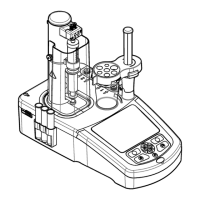
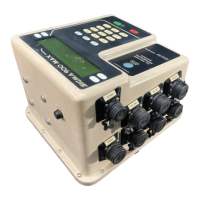
The AutoCAT gives results for chlorine dioxide (ClO
2
), chlorite (ClO
2
–
), and free
chlorine (Cl
2
). Four successive titrations are required:
The AutoCAT 9000 stores all titration results and, after completion, calculates each
analyte value.
This method can be greatly accelerated by purging a sample portion (used for
Titrations 3 and 4) with nitrogen while performing Titrations 1 and 2.
Another measurement used to gauge ClO
2
generator production is the ratio of Titration 2
to Titration 1 results. This provides an estimate of any untreated chlorite or chlorine
feedstock in the generator effluent. This method is only applicable to those generators
using chlorite and gaseous chlorine feeds. Ideally, the optimum ratio of Titration
2/Titration 1 results should lie between 3.9 and 4.05. See Table 1.
Typically, a ratio of less than 3.75 indicates a generator yield of less than 95%.
chlorine dioxide concentration
sum of the total chlor-oxy species concentration
------------------------------------------------------------------------------------------------------------------------------
100× % yield=
Titration 1 Cl
2
1
5
---
ClO
2
+→
Titration 2
4
5
---
ClO
2
ClO
2
–
+→
Titration 3 Cl
2
(not volatilized by a nitrogen gas purge)→
Titration 4 ClO
2
–
→
Table 1 Generator Effluent Condition
Titr 2/Titr 1 Ratio Effluent Condition
Less than 3.9 Unreacted chlorine, possible chlorate contamination
3.9–4.05 Optimum
Greater than 4.05 Unreacted chlorite

 To Next Page
 Loading...