Figures
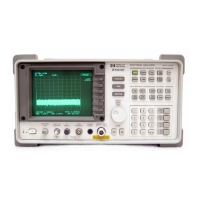
l-l. HP 8590 Series Spectrum Analyzer
.....................
1-2. Setting the Line Voltage Selector Switch
...................
l-3. Checking the Line Fuse
..........................
l-4. Reference Connector
............................
1-5. Example of a Static-Safe Work Station
...................
2-l. Front-Panel Feature Overview
.......................
2-2. Rear-Panel Feature Overview
........................
2-3. Adjusting the Fine Focus
..........................
2-4. Screen Annotation
.............................
2-5. Relationship between Frequency and Amplitude
...............
2-6. Reading the Amplitude and Frequency
...................
2-7. Inserting the Memory Card
.........................
2-8. Memory Card Battery Date Code Location
..................
2-9. Memory Card Battery Replacement
.....................
2-10. Rear-Panel Battery Information Label
....................
3-l. Set-Up for Obtaining Two Signals
......................
3-2. Resolving Signals of Equal Amplitude
....................
3-3. Resolution Bandwidth Requirements for Resolving Small Signals
.......
3-4. Signal Resolution with a 10 kHz Resolution Bandwidth
............
3-5. Signal Resolution with a 30 kHz Resolution Bandwidth
............
3-6. IJsing the Marker Counter
.........................
3-7. After Zooming In on the Signal
.......................
3-8. Peaking Signal Amplitude Using Preselector Peak
..............
3-9. Using Marker Tracking to Track an Unstable Signal
.............
3-10. Viewing an Unstable Signal Using Max Hold A
................
3-l 1. Viewing an Unstable Signal With Max Hold, Clear Write, and Min Hold
....
3-12. Placing a Marker on the CAL OUT Signal
..................
3-13. Using the Marker Delta Function
......................
3-14. Using the Marker to Peak/Peak Function
..................
3-15. Frequency and Amplitude Difference between Signals
............
3-16. Low-Level Signal
.............................
3-17. Using 0
dB
Attenuation
..........................
3-18. Decreasing Resolution Bandwidth
......................
3-
19. Decreasing Video Bandwidth
........................
3-20. Using the Video Averaging Function
....................
3-2 1. Harmonic Distortion
............................
3-22. RF Attenuation of 10
dB
..........................
3-23. No Harmonic Distortion
..........................
3-24. Third-Order Intermodulation Equipment Setup
...............
3-25. Measuring the Distortion Product
......................
3-26. Viewing an AM Signal
...........................
3-27. Measuring Modulation in Zero Span
.....................
3-28. Using Harmonic Lock
...........................
3-29. Harmonic Locking Off
...........................
4-l. FFT Annotation
..............................
4-2. Percent Amplitude Modulation Measurement
................
l-l
1-4
1-5
1-8
l-11
2-2
2-5
2-9
2-10
2-14
2-15
2-19
2-20
2-21
2-22
3-2
3-3
3-4
3-5
3-5
3-6
3-7
3-8
3-10
3-11
3-11
3-12
3-13
3-13
3-14
3-15
3-16
3-16
3-17
3-19
3-20
3-21
3-21
3-22
3-23
3-25
3-25
3-27
3-27
4-2
4-5
Contents-7


 To Next Page