7. Always start with a low settings level to check patient tolerance. Test, watch
epidermal response, and increase or decrease settings gradually. Darker skin is
safer to treat with Long pulse width. Larger veins that are typically deeper
require higher fluence to be eliminated.
Stronger cooling allows better epidermis protection but may compromise
results on very superficial vessels. Reduce fluence on thin skin and in bone
proximity along with a thicker layer of gel.
8. Apply to the treated area ensuring a contact with minimal pressure, depress
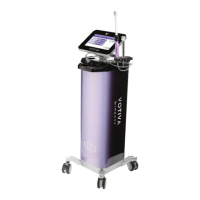
foot switch and press hand-trigger button to deliver Vasculaze diode laser
pulse.
9. Move along the blood vessel with gaps up to 1cm until the full length is
covered. Pulse Mode may vary from Off (single pulse) or 1pps, depending on
speed of operator's hand movement and convenience.
10. If end-points of erythema and/or edema along the vessel are not obvious,
perform another pass. Occasionally, a third pass on selected sites is applied on
light skin. Ensure that there is a delay of a few minutes between passes (after
the whole area is treated) before applying additional pass.
When the site of perforating vertical feeder veins is not apparent, attempt
at joint points few vessels.


 To Next Page