Chapter: Preparing the System
2-8 M10-16245-EN
• Progress messages - various messages indicating progress, for example “Opening”,
“Closing” and “Generating”.
Assemble the Load String
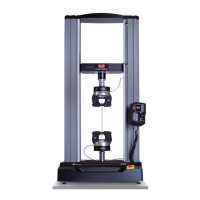
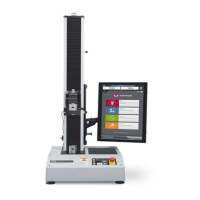
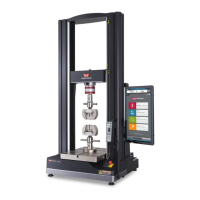
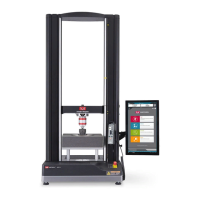
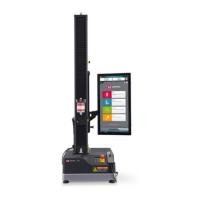
The load string consists of all the hardware components between the crosshead and the base
of the testing machine. It includes the load cell, the grips, the specimen and any adapters that
allow you to connect all of these components together.
The service engineer will set up the testing machine during the installation, but you may
need to change one or more of these components for different types of testing.
Select a Load Cell
If you know the approximate tensile or compressive strength of the material that you are
testing, use these guidelines to choose a load cell:
• The minimum test load must be greater than the smallest load cell capacity range shown
in the specifications for your machine.
• If there is a choice between two different load cells because of overlapping ranges:
• select a higher capacity load cell when you require minimum deflection
• select a lower capacity load cell when you require maximum long term balance or
stability
If you don’t know the tensile strength of the material, refer to a Properties of Materials
handbook to obtain an approximate strength. To calculate the tensile strength in force units
for a specimen, use the following equation:
tensile strength x cross-sectional area
When creating a load string, keep in mind the maximum capacity for all the components
making up the load string. The expected test load should not exceed the maximum capacity
of any load string component including, but not limited to:
• load frame
• load cell
• adapters
• grips or fixtures



 To Next Page