CS3000, Users
Rev A, January, 2011
Page 26 of 35
Troubleshooting
Problem Table
The following table describes some symptoms with possible causes and solutions.
Symptom No power up, nothing on display
If any power reaches the control panel, the display driver turns on some random segments. Since we are not seeing
this we will assume that no power is reaching the scale circuitry.
Some possible causes:
Defective wiring harness: Inspect for damaged wiring.
Defective battery pack: Measure battery voltage, charge or repair as needed.
Defective ON switch: Bridge switch to see if unit turns on.
Defective circuitry: Replace control panel.
The power supply may be delivering power, but it might be eaten up with a defective circuit board or cable. Unplug
the load cell cable. If the scale turns on at this point, a load cell lead is shorted. Turn the power off and try each cell
lead in turn. If it is the load cell cable, look for a crushed cable.
Symptom Power up to random display
We know that some power is reaching the display driver circuit, but the control panel is not working correctly. Test
for low battery voltage. Inspect for visible damage. If this fails replace the control panel.
Symptom Scale shuts off
If the scale turns off IMMEDIATELY after you take your finger off the off button, you may have very low batteries. If
this is not the cause replace the control panel.
Symptom "Locks up"
The scale may be programmed incorrectly. This can be corrected by restoring the correct control parameters. If the
Average Rate setting is very high, an active load may not update the display quickly which may be interpreted as a
lock up
Symptom No backlight
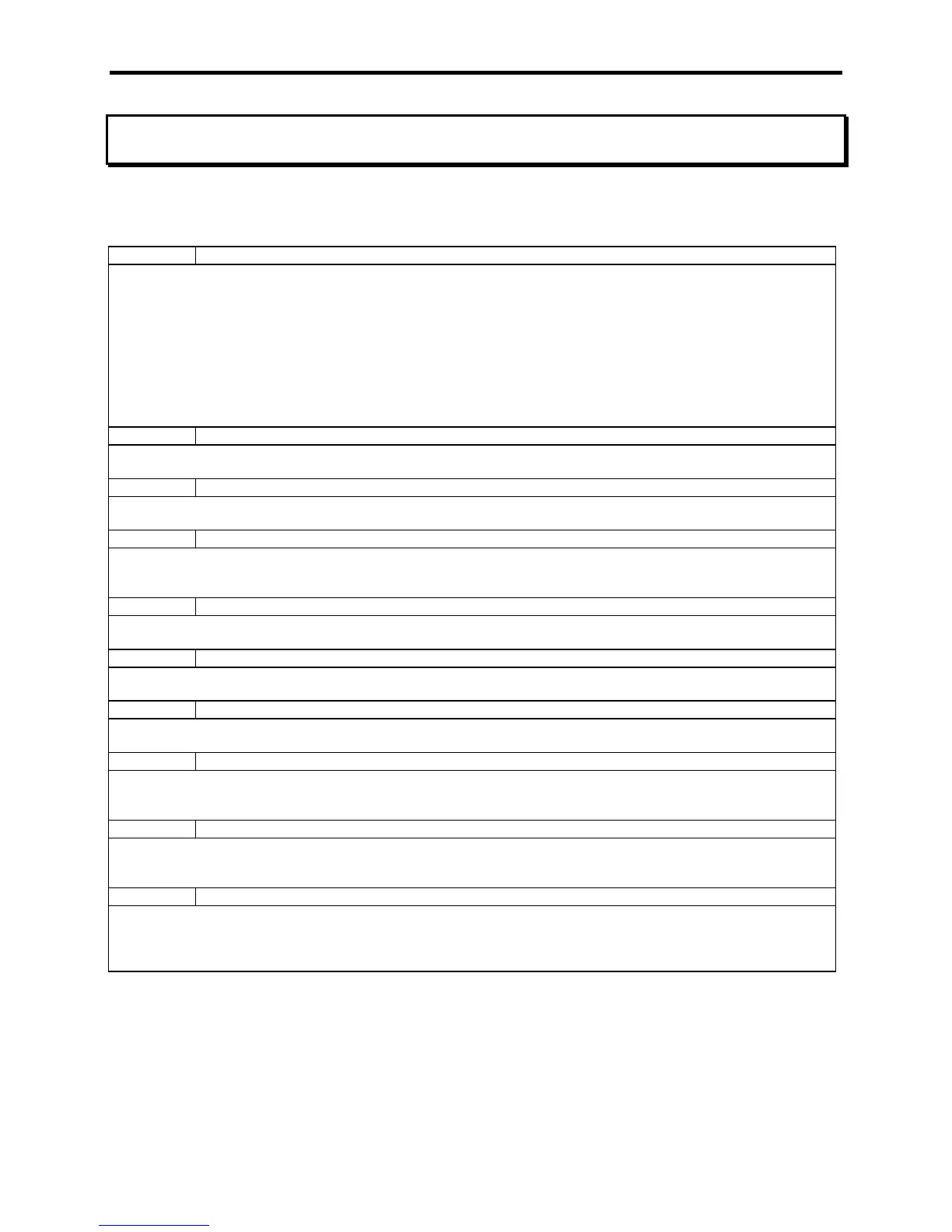
Cover the light sensor window. If the light does not turn on, replace the control panel. Please note that the light is not
visible in bright sunlight.
Symptom Slow operation
This may be caused by a programmed change in the filter setting. There is a tradeoff between speed and stability of
the display reading. This can be tuned by changing the “Average Rate” setting.
Symptom Low battery indicator won't turn off
It is possible that the battery output is very low. Check battery voltage level and replace if needed. If the battery
voltage is correct then you will need to replace the control panel.
Symptom Jumpy or drifty weights
This can usually be traced to contamination on circuit boards or a bad load cell. This can also be caused by a rapid
change in temperature. The scales need at least one-hour acclimation time for each 10 degrees Fahrenheit of
temperature change. Another possibility is powerful radio interference.
Symptom No response to one or more keys
The switch may be defective. The control panel may be defective. The zero button does not function while the scale
is in motion, this is not a defect. Also, the scale may be programmed to ignore the zero button if there is more than a
certain amount of weight on the platform.
Symptom "Bad" weights
First, check weighing technique. Is the scale set on the wrong units settings? Is the reference scale correct?
Assuming all this, is the scale spanned correctly? If the reading is exactly 3/4 of the expected value, one of the cells
leads may not be providing signal. This would probably be in the load cell or control circuit. The interconnecting
wiring or cables may be pinched, cut or crushed.
Caution: Changing any circuit board or load cell will affect the calibration. The
calibration should be checked after any repairs.


 To Next Page