USING YOUR DEVICE | IPG PHOTONICS
Operation Modes
In both control modes (LOCAL and REMOTE), there are two main modes of laser emission - continuous
(CW) and pulsed (QCW):
Pulse Mode (for QCW models only, PULSE mode enabled) laser internally generates sequence of
pulses. Pulse duration and pulse repetition rate can be configured by:
sending corresponding commands via RS-232 interface, or
using Pulse Settings sub-menu on the touch-screen
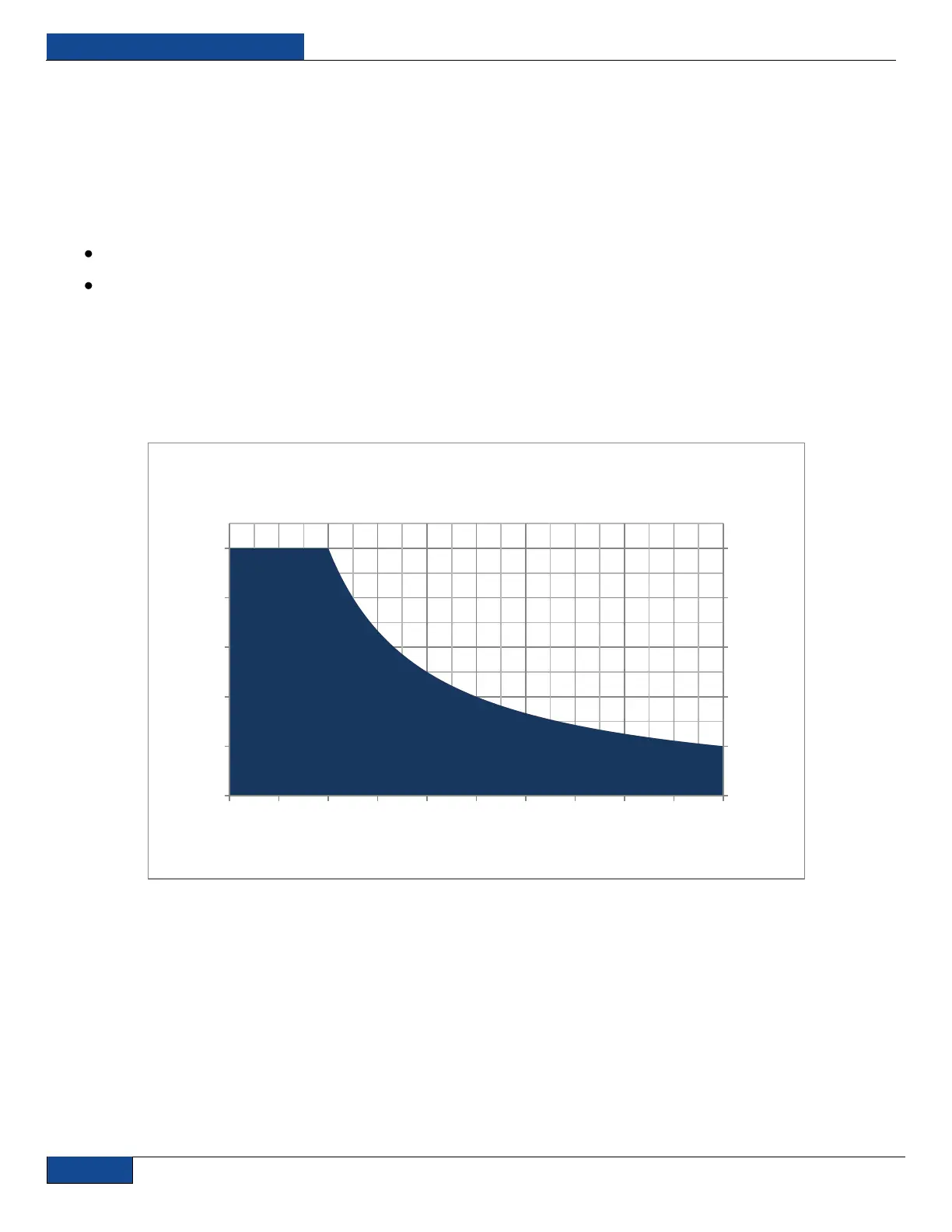
The main difference between PULSE and CW modes is that in PULSE mode the maximum peak power is
considerably higher than in CW but the maximum pulse duration as well as the maximum duty cycle are
limited to certain values (refer to “Specification” and Figure 12) while in CW however, maximum pulse
duration and duty cycle are not applicable..
Figure 12: QCW Pulse Operational Range
Pulse Duration & Duty Cycle vs. Peak Power
Constant Average Power /
Constant Pulse Energy
For each mode of laser emission (CW or PULSE), there are four sub-modes: Standalone, Modulation,
Gate and External (Analog) Power Control. The main difference between sub-modes of operation is how
the laser power is set and the laser emission is switched on/off:
Continuous Mode (PULSE mode disabled) laser generates CW emission (except for Gate mode).


 To Next Page