32
Cold Weather Usage
When used in freezing or below freezing temperatures, the precautions should be taken:
Fresh water and drainage systems - preparations to avoid freeze-ups.
Propane gas (if so equipped) and sucient power is needed for protection from
possible freeze-ups on the propane gas regulator. Keep in mind that more frequent
furnace operation will substantially increase battery draw and propane gas use.
During cool weather usage, ventilation or addition of a dehumidier may be re-
quired to reduce condensation.
Check outside extrusions on compartment doors, locks, slide outs, windows,
vents, etc., for frozen moisture before operating to avoid damage to parts.
Continuous or permanent living in your recreation vehicle may aect your
warranty coverage and may void the “Limited Warranty” applicable to your
vehicle.
Condensation
Condensation is a natural phenomenon. The amount of condensation will vary with climate
conditions, particularly the relative humidity. Condensation occurs because there is water
vapor present in the air. When the temperature reaches the “dew point” the water vapor in
the air condenses and changes to a liquid form.
Condensation may cause dampness, mildew, mold, staining and, if allowed to
continue, it may result in damage to the recreation vehicle (damage caused by
condensation is not warrantable). It can also lead to mold or mildew issues,
which could be a health hazard.
Extended Or Full Time Usage
Your new recreation vehicle has been built for enjoyment in a recreational manner. It is not
intended for use as full-time quarters or a permanent residence. Continuous living in your
vehicle could cause accelerated wear and damage to the various components.
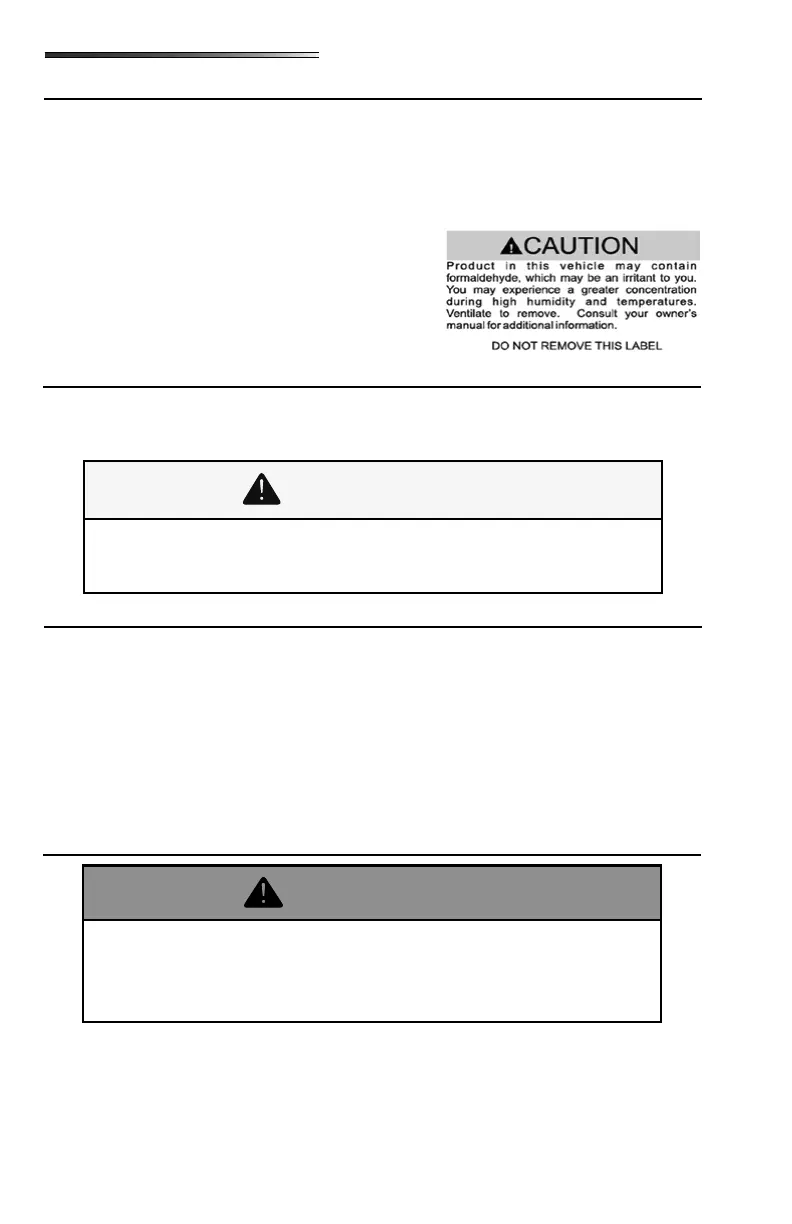
Formaldehyde
Some components in the recreation vehicle contain formaldehyde-based adhesives that may
release formaldehyde fumes into the air for an unknown period of time. Individuals who are
allergic to formaldehyde gas fumes may experience irritation to eyes, ears, nose and throat.
Indoor air quality may also be aected by leaving your vehicle closed for a period of time.
To aid in dissipation, ventilate the recreation vehicle by opening all windows and circulate
the air with a fan.
This label is located inside the vehicle near the entry
door.



 To Next Page