6 Calibration test
The effective seed output may be affected by a change of the
specific gravity and/or size of the seeds. It is therefore
recommended to carry out a calibration test before
proceeding to the application of a new lot of seeds.
A calibration test is carried out as follows:
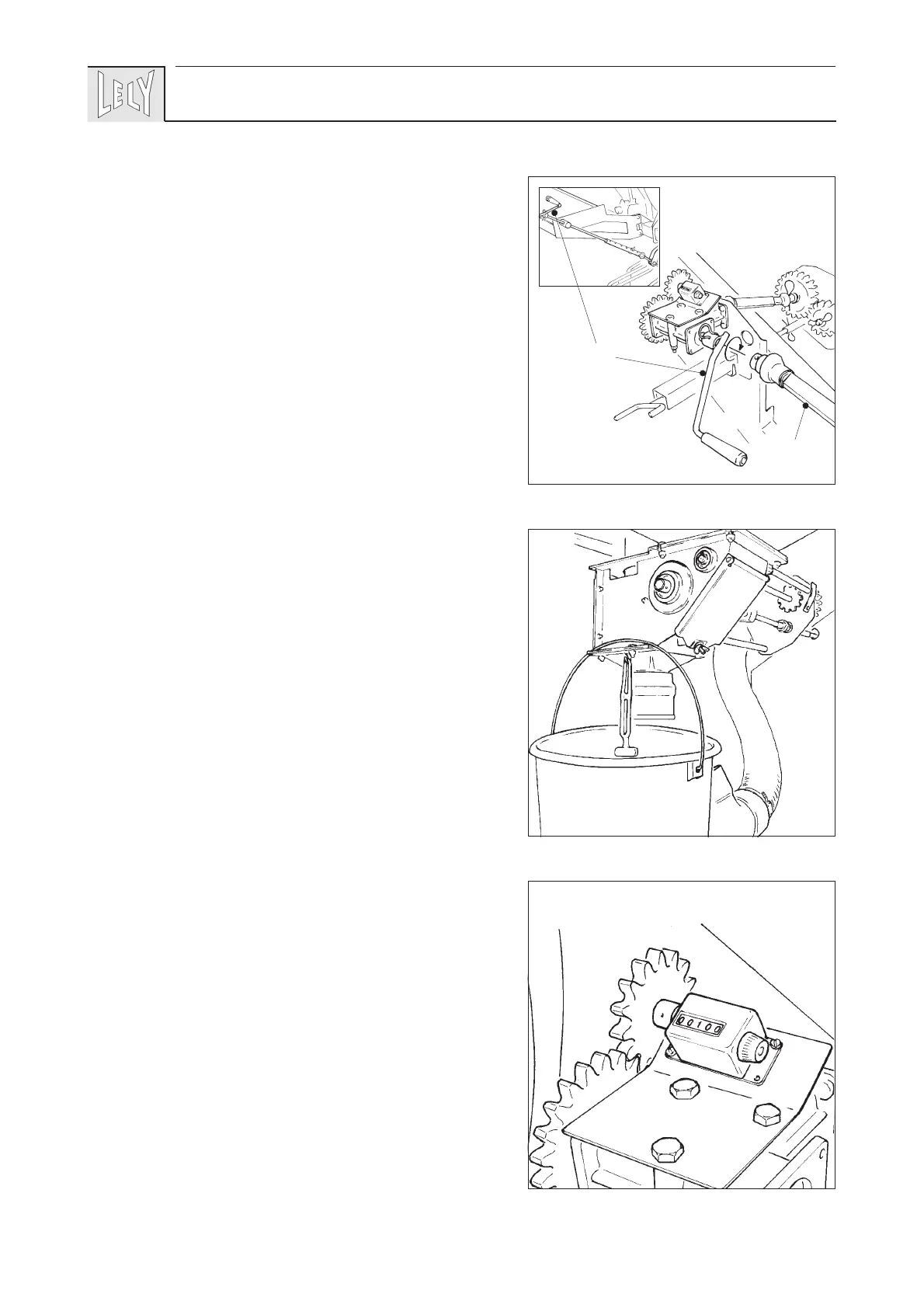
- Dismount the drive shaft A (fig. 25) from the square
gearbox.
- Fit the handle B for coulter pressure adjustment onto the
gearbox.
- Remove the air supply hose from the metering device.
- Set the indicator of the metering device at the value shown
for the output required in the calibration chart, or at such a
value as was established during a previous calibration test.
If the metering device contains seeds and you have to adjust
down to a lower value, you will have to turn the handle
simultaneously to prevent damage to the metering unit.
- Fill the hopper.
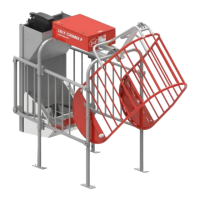
- Place an empty bucket underneath the metering device (fig.
26).
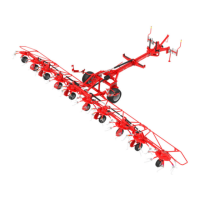
- Set the hectare counter at zero.
- Turn the handle round (not too fast - say 1 rotation per
second) until the hectare counter (fig. 27) indicates 00100
(=0,1 ha).
If the POLYMAT does not have a hectare counter, the
number of rotations of the handle has to be counted. Turn
the handle 68 times (= 0,1 ha).
Compensate a different slip, if any, of the metering wheel
(see paragraph 5.2.2).
Turn the handle until the hectare counter shows the different
value, rather than the normative 00100.
- Weigh the quantity of seed caught in the bucket. Ensure
that an accurate weighing device is used.
- Multiply this quantity by 10. This is the output per hectare.
- Establish the difference (%) between this quantity and the
output required.
- Adjust the position of the indicator accordingly.
Output too low à higher indicator position
Output too high à lower indicator position
49
!
25
B
A
26
27


 To Next Page