First Level Menu
Ambient noise suppression
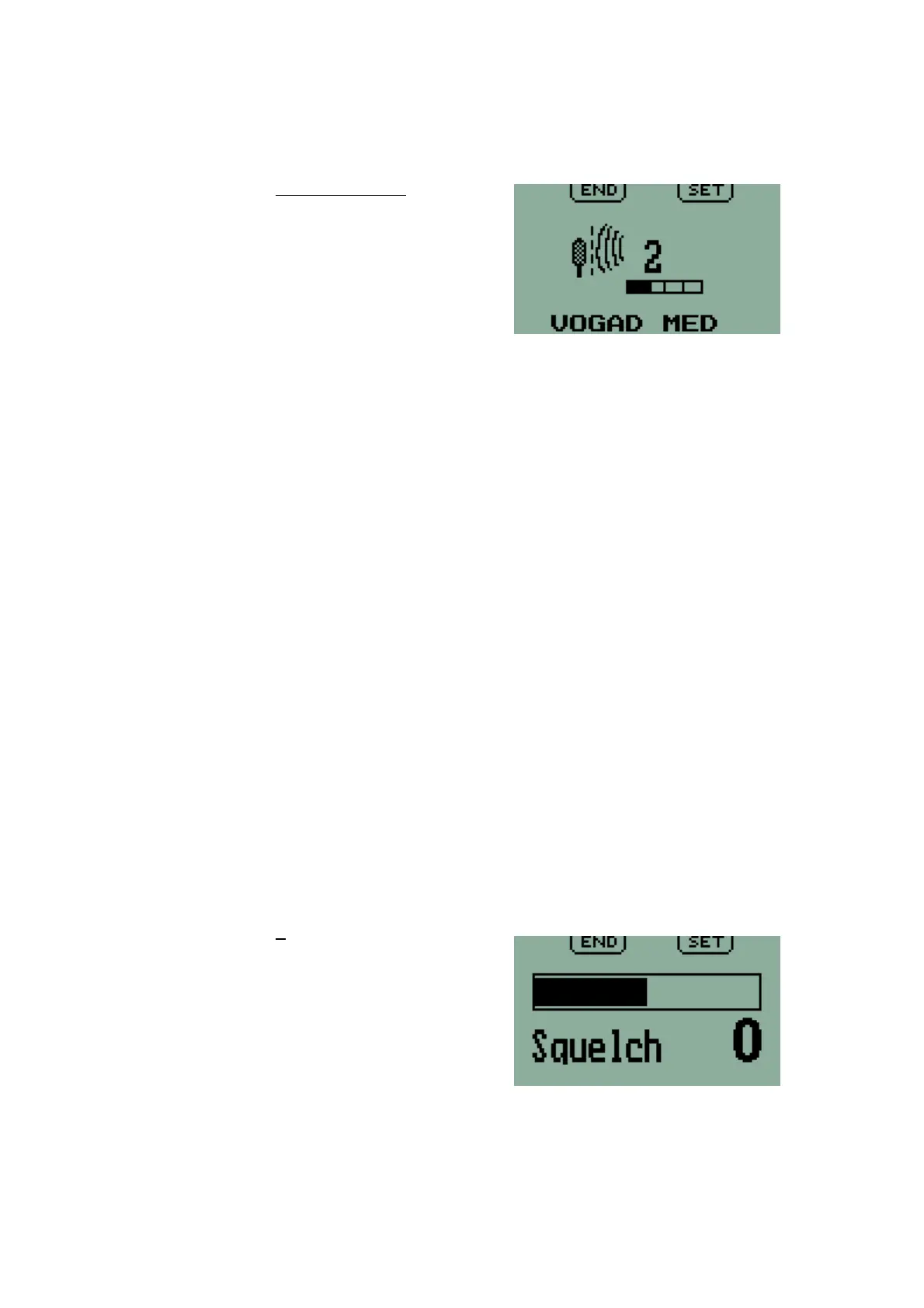
Factory Default: VOGAD MED 2
The V6 Transceiver provides four different
ambient noise suppression systems.
Pressing the FREQUENCY knob (or the
ACTIVE button) cycles through the four
types. Rotating the knob adjusts the level or
'strength' for the selected type.
●
VOGAD (three types)
This is a proprietary VOGAD system developed by MGL Avionics. It
uses gain shaping with digital processing of the audio signal from the
microphone. The voice signal envelope is detected and used to
modulate microphone gain. Three types are provided – LOW,
MED(ium) and HIGH. The type should be selected depending on noise
level in the aircraft. Most general aviation aircraft will use a medium
setting. Each VOGAD type has up to 8 levels. As the level is
increased, gain falls more sharply below a threshold as set by the
VOGAD type.
It is important not to set the microphone level too high. This must be
correctly matched to the selected type. If the microphone level is too
high ambient noise may exceed the threshold for that type.
With the VOGAD system set up correctly, the microphone will seem to
be highly directional so that it must be placed directly in front of the
mouth.
A suggested starting point is VOGAD MED(ium) level 2.
●
VOX
This type simply switches off the microphone if sound is below a preset
threshold. Switching is done in a digitally controlled “soft” manner so
no sharp clicks are audible. Adjust the level so that ambient noise is
just below that required to switch on the microphone. If the level is set
too high, part of the first syllable may be 'lost'.
Squelch adjustment
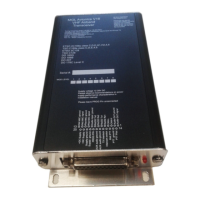
Factory Default: 0
The display provides a large bargraph and
number for reference when setting the
squelch level. Pressing the FREQUENCY
knob (or the ACTIVE button) activates the
Squelch adjustment function. This is
indicated by the reference number flashing.
Rotating the FREQUENCY knob adjusts the
level between limits of -16 and +15. Adjust the squelch level so that static
noise from the receiver is just 'squelched' out. Too high a level may result in
weak transmissions not being received. Too low a level may result in noise
breaking though. A setting is accepted by pressing the FREQUENCY knob.
13


 To Next Page