•
Have a trained and qualified person interpret
instrument readings.
•
Do not replace alkaline cells in a combustible atmosphere.
•
Do not recharge NiMH battery packs in a combustible
atmosphere.
•
Do not alter or modify instrument.
INCORRECT USE CAN CAUSE SERIOUS PERSONAL INJURY
OR DEATH.
Safety Limitations and Precautions
Carefully review the following safety limitations and precautions
before placing this instrument in service:
•
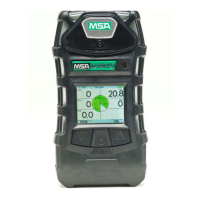
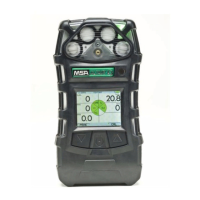
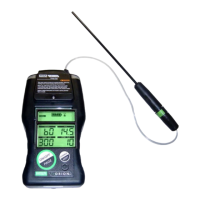
The Orion Multigas Detector is designed to:
•
Detect gases and vapors in air only
•
Detect only specified toxic gases for which a sensor
is installed.
•
Perform the following checks before each day’s use to verify
proper instrument operation:
•
Calibration check (see Calibration Check section). Adjust
calibration if the readings are not within the specified limits.
•
Check pump (if used) for proper operation
(see "Verifying Pump Operation" section). Have pump
serviced if necessary.
•
Check calibration more frequently if the unit is subjected to
physical shock or high levels of contaminants. Also, check
calibration more frequently if the tested atmosphere contains
the following materials, which may desensitize the combustible
gas sensor and reduce its readings:
•
Organic silicones
•
Silicates
•
Lead-containing compounds
•
Hydrogen sulfide exposures over 200 ppm or exposures
over 50 ppm for one minute.
•
The minimum concentration of a combustible gas in air that can
ignite is defined as the Lower Explosive Limit (LEL). A
combustible gas reading of "100" indicates the atmosphere is
Chapter 1, Safety Limitations and Certifications Operating Manual
1-2


 To Next Page