EasyManua.ls Logo

Neoway WM620 - RF Features; Transmitting Power and Receiving Sensitivity

Neoway WM620
46 pages
Print Icon
To Next Page IconTo Next Page
To Previous Page IconTo Previous Page
Loading...
WM620 Hardware User Guide
Copyright © Neoway Technology Co., Ltd
30
4 RF Features
4.1 Work Band
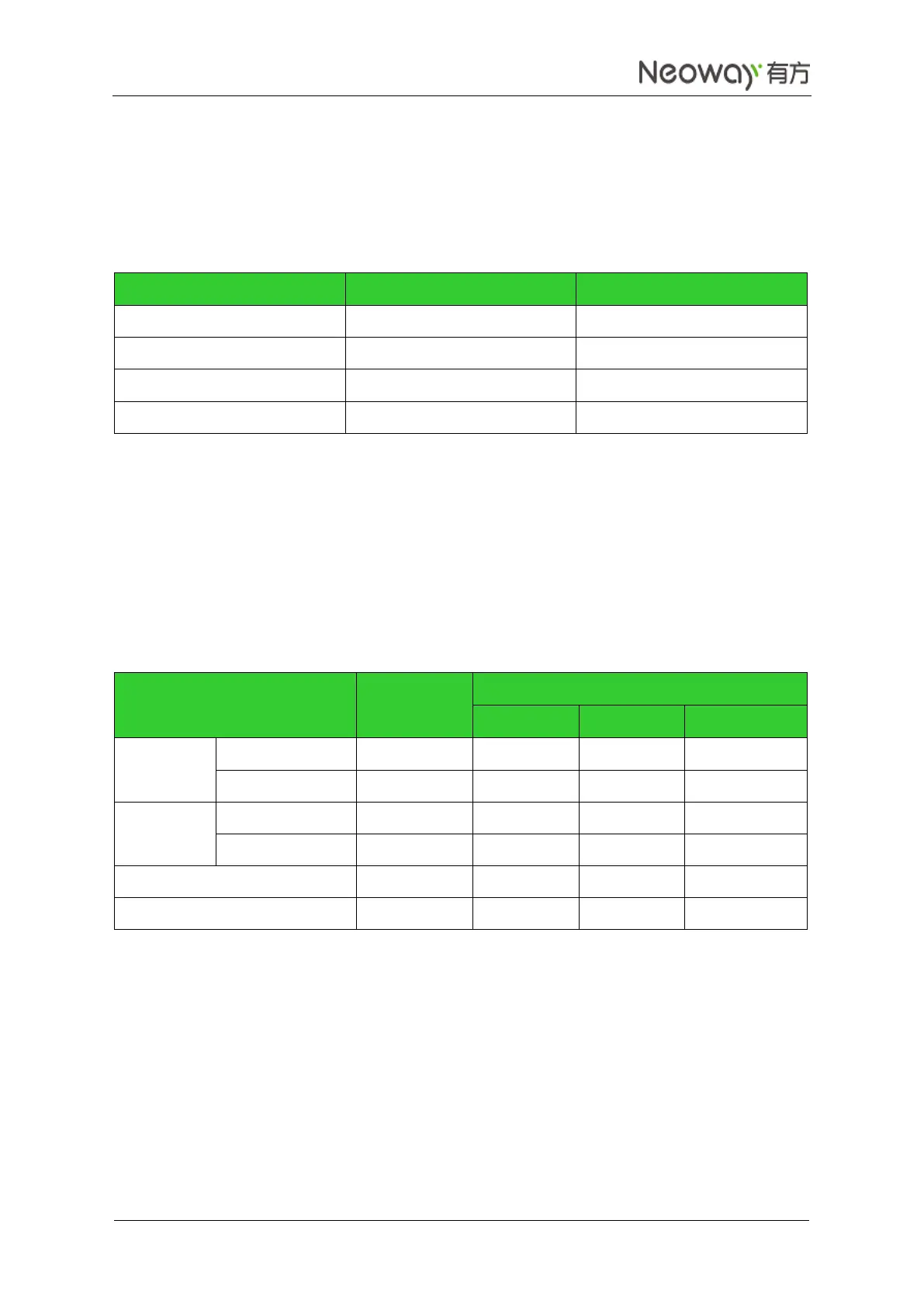
Table 4-1 Work band
Work Band
Uplink
Downlink
UMTS 2100 (Band I)
1920–1980 MHz
2110–2170 MHz
UMTS 900 (Band VIII)
880–915 MHz
925–960 MHz
GSM 900
880–915 MHz
925–960 MHz
GSM 1800 (DCS)
1710–1785MHz
1805–1880 MHz
4.2 Transmitting Power and Receiving Sensitivity
4.2.1 Transmitting Power
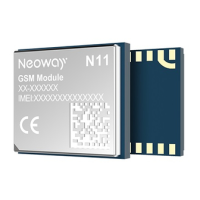
Transmitting power is an important indicator of the module performance. Table 4-2 shows the maximum
working power of WM620 and the corresponding 3GPP standards.
Table 4-2 Transmitting power (unit: dBm)
Work Band
3GPP (dBm)
Testing Value (dBm)
Min.
Typical
Max.
GSM900
GMSK(1Tx Slot)
31~35
31
32.5
34
8PSK(1Tx Slot)
24~30
25.5
27
28.5
GSM1800
GMSK(1Tx Slot)
28~32
28
29.5
31
8PSK(1Tx Slot)
23~29
24.5
26
27.5
Band I (2100 MHz)
21~25
21.5
23
24.5
Band VIII (900 MHz)
21~25
21.5
23
24.5
4.2.2 Receiving Sensitivity
Receiving sensitivity is another important performance indicator of the wireless modules. It measures the
module's capability to receive weak signals. Table 4-3 lists WM620 data obtained in lab tests for different
bands and corresponding 3GPP standards.

Table of Contents