AIR SYSTEM
5
Air Gauges and Air Leaks
Your vehicle comes with air pressure
gauges for two separate systems,
Primary and Secondary: the Primary
gauge indicates pressure in the rear
braking system; the Secondary gauge
indicates pressure in the front braking
system. Each gauge indicates the
amount of air pressure in pounds per
square inch (psi).
WARNING!
Do not operate the vehicle if leakage
in the air system is detected. Con
-
duct the following procedure and con-
tact an authorized dealer (or any other
properly equipped service center) if
a leak is detected. Failure to check
the brakes or follow these procedures
could cause a system failure, increas
-
ing the risk of an accident and may
result in death, personal injury, equip
-
ment or property damage.
If the light and alarm do not turn off at
start-up, do not try to drive the vehicle
until the problem is found and xed. If
the pressure in either or both systems
is too low for normal brake operation,
i.e., the pointer of one gauge falls
below 65 psi (448 kPa), a warning light
on the gauge will glow and the audible
alarm will sound.
NOTE
Park brakes
lock up at 60 psi (414
kPa), the audible alarm will sound at
65 psi (448 kPa).
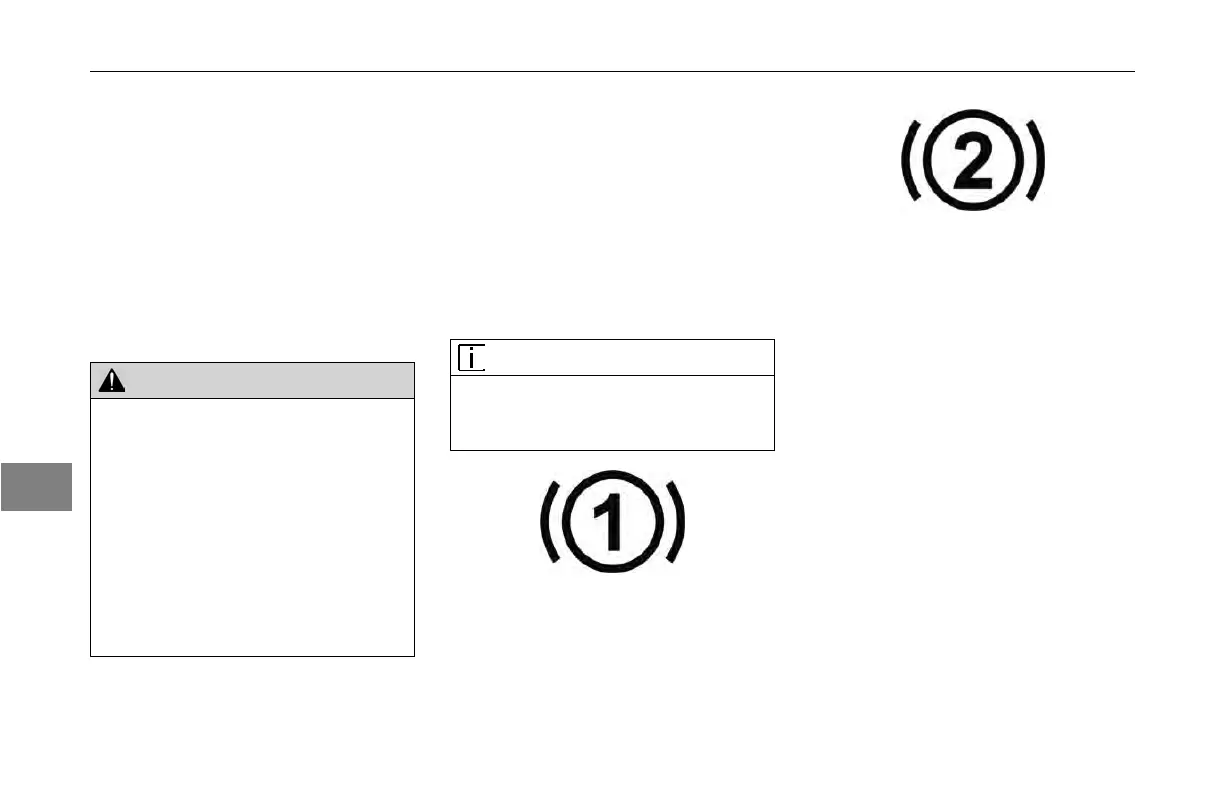
Primary Air Pressure Gauge
Secondary Air Pressure Gauge
Follow the
procedure below to
check the compressed air system
for leaks:
1. Periodically,
or after maintenance
or replacement of air system
components:
2. Build up
air pressure in the system
to the governor cutout point or until
120 psi (827 kPa) is reached.
3. Stop the
engine and release the
service brakes.
4. Without applying
the brake pedal,
observe the rate of air pressure
drop. This rate should not exceed
2.0 psi (14
kPa) per minute.
5-54
Y53-6047–2C (04/13)



 To Next Page