TIRES AND WHEEL
Wheel Mounting
and
Fastening
After the vehicle travels about 50 to 100
miles (80 to 160 km), wheel mountings
seat in and will lose some initial torque.
Check hub/wheel mountings after this
initial period and retighten.
Wheel Cap Nut Torque
WARNING!
Never use oil or grease on studs or
nuts; improper torque readings will
result, which could cause improper
wheel clamping and could lead to a
wheel failure resulting in an accident.
Failure to comply may result in death,
personal injury, equipment or property
damage.
Wheel Cap
Nut Torque
At the
rst scheduled lube interval,
have all wheel cap nuts torqued to
their specied
value listed in Wheel
Cap Nut
Torque on page 5-141. After
that, check
wheel cap nuts at least
once a week. Contact an authorized
dealer for information on the proper
installation procedure for the wheels
on your truck. This is a job you may
not be able to do yourself. You need
the right torquing equipment to do it.
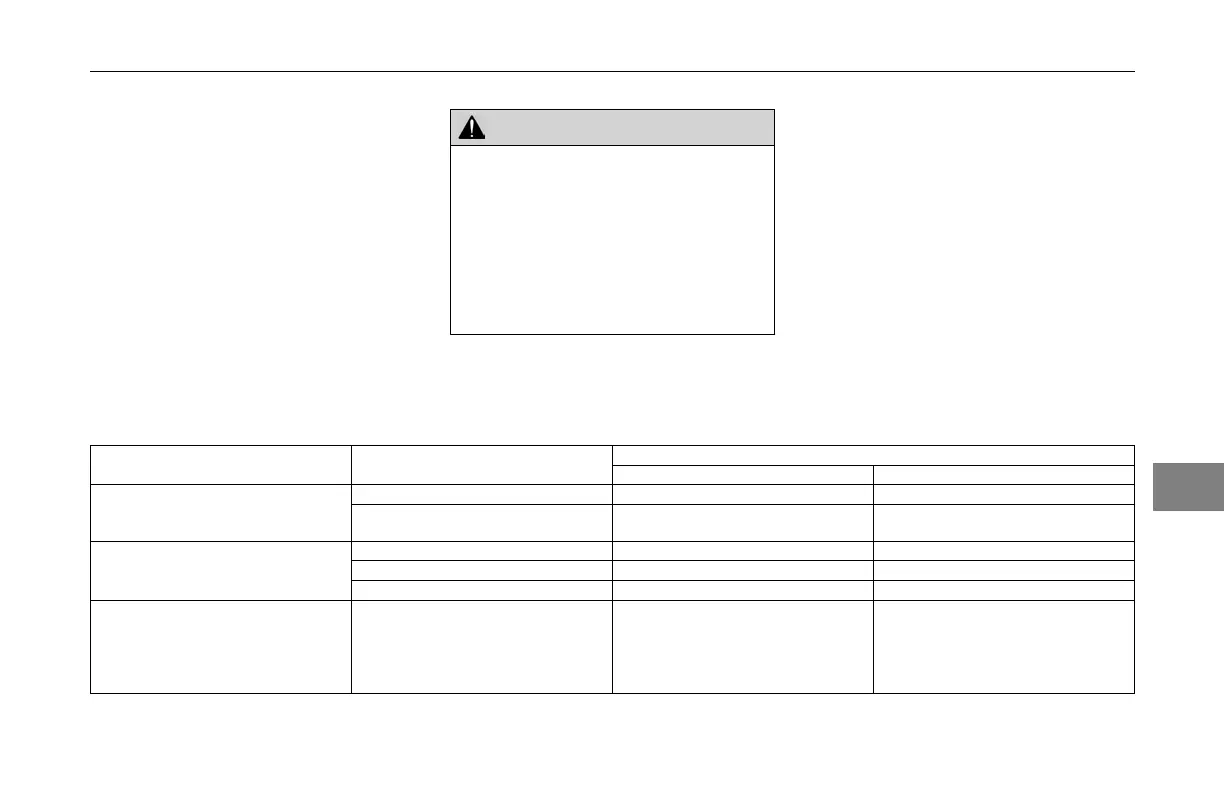
WHEEL and NUT
STUD SIZE TORQUE FOR INNER and OUTER CAP NUTS and RIM CLAMP NUTS
CONFIGURATION
Nm Lb-Ft
Steel or
Aluminum Disc-Type
Wheel; Double Cap Nut Mounting;
Standard 7/8 Radius Ball Seat
3/4-16
610-680 450-500
1-1/8-16
610-680 450-500
Heavy-Duty Steel Disc-Type Wheel;
Double Cap Nut Mounting;
15/16-12
1,020-1,220 750-900
1-1/8-16
1,020-1,220 750-900
1-3/16 Radius
Ball Seat:
1-15/16-12
1,020-1,220 750-900
Hub-Piloted Disc-Type
Wheel
w/Two Piece Flanged Cap Nuts:
Steel or Aluminum Wheel
PHP-10; Budd Uni-Mount-10;
WDH-8
M22-1.5 610-680 450-500
5
(04/13) Y53-6047–2C 5-141



 To Next Page