COOLING SYSTEM
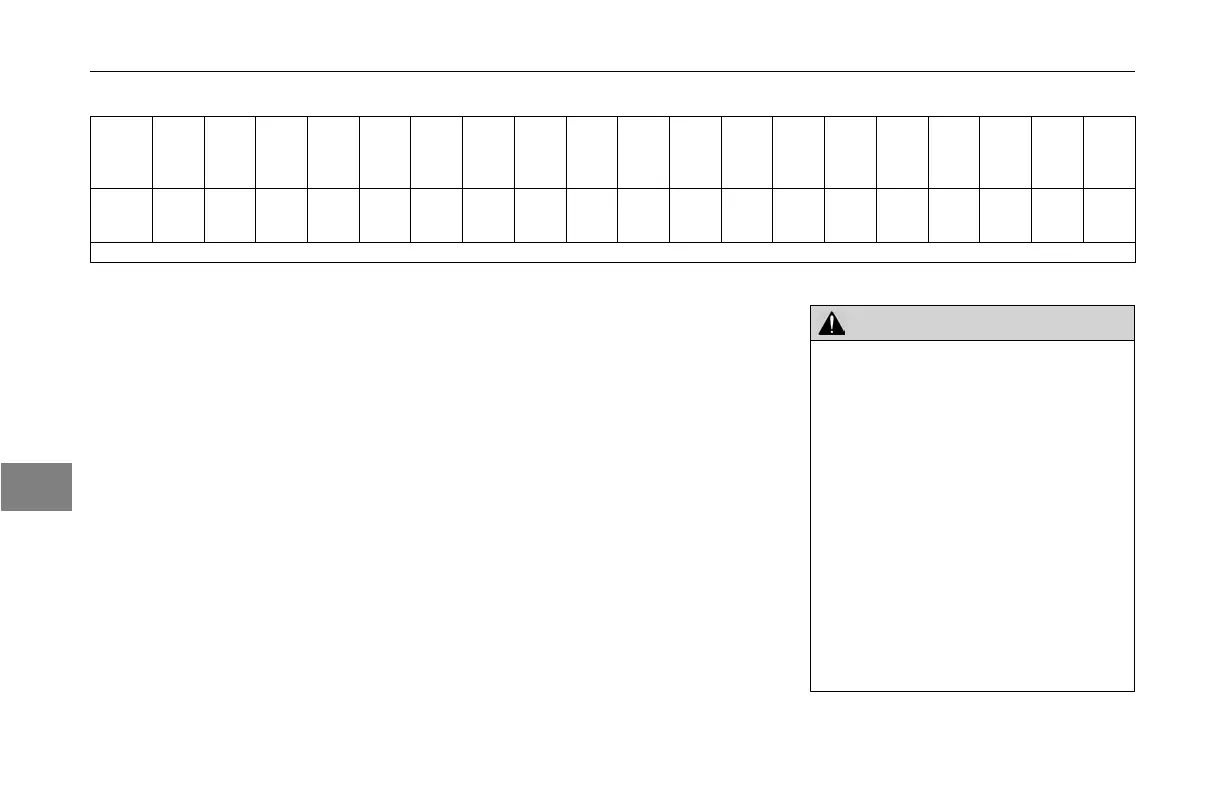
Desired
ELC/
Water
ratio:
0% 10% 15% 20% 25% 30% 35% 40% 45% 50% 55% 60% 65% 70% 75% 80% 85% 90% 100%
Freeze
point
°F
(°C)
+32
(0)
+25
(-4)
+20
(-7)
+15
(-9)
+10
(-12)
+5
(-15)
-5
(-21)
-12
(-24)
-23
(-31)
-34
(-37)
-50
(-46)
-65
(-54)
-75
(-59)
-84
(-64)
-70
(-57)
-55
(-48)
-43
(-42)
-30
(-34)
-5
(-21)
Items in
bold are the recommended levels of concentration.
5
ELC Condition (Contamination and
Inhibitor Concentration)
Perform a
visual inspection of the
ELC. It should have no cloudiness
or oating debris. Determine the
chemical inhibitor concentration level
by using an ELC-specic test kit or
test strips. Inhibitor concentration level
determines corrosion protection. If you
are concerned about possible coolant
quality, contamination, or mechanical
problems, submit a coolant sample for
analysis. Improper maintenance may
cause coolant degradation and could
result in damage to the cooling system
and engine components. Consult
your dealer or the ELC manufacturer’s
representative for recommended ELC
test kits,
test strips, and laboratory
sample procedures.
ELC Extender
Add ELC
extender if necessary at the
maintenance interval under “Cooling”.
Coolant Filter
If your
vehicle came with a
non-chemical lter (“blank lter”),
replace it only with a blank lter at the
interval specied
in the Preventive
Maintenance Schedule
on page 5-12.
Never use
lters that contain SCAs in
an ELC-lled system.
Topping
Off
WARNING!
Removing the ll cap on a hot engine
can cause scalding coolant to spray
out and burn you badly. If the en
-
gine has been in operation within the
previous 30 minutes, be very care
-
ful in removing the ll cap. Protect
face, hands, and arms against escap
-
ing uid and steam by covering the
cap with a large, thick rag. Do not
try to remove it until the surge tank
cools down or if you see any steam
or coolant escaping. In any situation,
remove the cap very slowly and care
-
fully. Be ready to back off if any steam
or coolant begins to escape.
5-72 Y53-6047–2C (04/13)



 To Next Page