VEHICLE RECOVERY AND SPRING BRAKES
Always secure the vehicle with wheel
chocks, chains, or other safe means to
prevent rolling before manually releas
-
ing the spring brakes. Releasing the
spring brakes on an unsecured vehicle
could lead to an accident. The vehicle
could roll, which may result in death,
personal injury, equipment or property
damage.
WARNING!
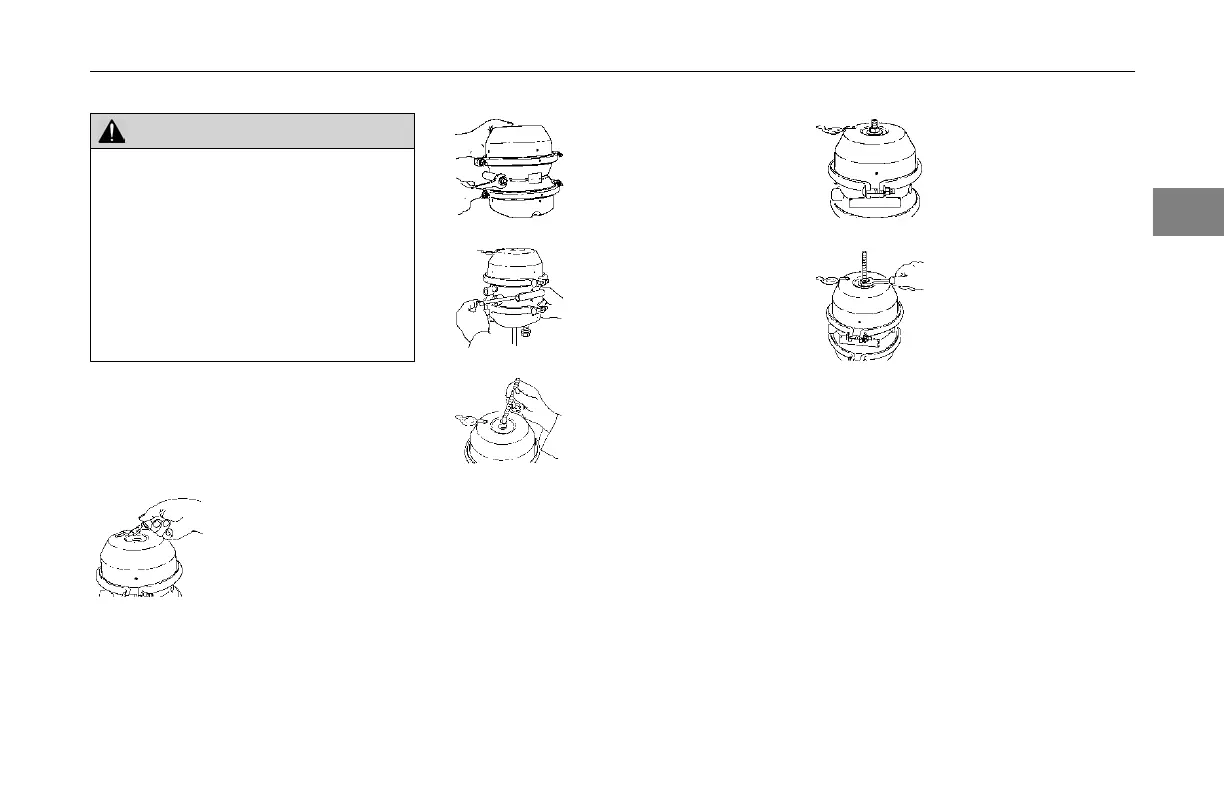
To move a vehicle immobilized by
the spring brakes due to loss of air
pressure in the brake system, perform
the following procedure:
1. Remove the cap from
the spring chamber.
2. Remove the release
stud assembly from the
side pocket, and remove
the release nut and
washer from the release
stud.
3. Slide out
the release
stud.
4. Insert the
release stud
through the opening in
the spring chamber
where the cap was
removed. Insert it into
the pressure plate. Turn
the release stud 1/4
turn clockwise in the
pressure plate. This
secures the cross pin
into the cross pin area of
the pressure plate and
locks it into the manual
release position.
5. Assemble the release
stud washer and nut on
the release stud.
6. With a
wrench,
turn the release stud
assembly nut until the
compression spring is
90-95 percent caged.
While doing this, check
to make sure the push
rod (adapter push
rod or service push
rod) is retracting. Do
not over-torque the
release stud assembly.
(S-Cam type maximum:
50 lb-ft, Wedge type
maximum: 30 lb-ft).
The spring brake is now
mechanically released.
2
(04/13) Y53-6047–2C 2-21



 To Next Page