Procedure
1. Unscrew and remove the higher filler screw from the operating fluid pump.
2. Use the syringe and the operating fluid from the turbopump shipment.
3. Place a container below the filling port.
4. Fill in operating fluid until it overflows at the filling port.
–
Maximum volume 50 ml.
–
In vertical mounting orientation, the filling volume is a little lower.
5. Seal the filler screw.
–
Tightening torque: 3 Nm
5.4 Connecting the fore-vacuum side
WARNING
Danger to life from poisoning where toxic process media leak from damaged connections
Sudden twisting of the turbopump in the event of a fault causes fittings to accelerate. There is the risk
of damaging on-site connections (e.g., fore-vacuum line) and resulting leaks. This results in leakage
of process media. In processes involving toxic media, there is a risk of injury and danger to life due to
poisoning.
►
Keep masses connected to the turbopump as low as possible.
►
Use flexible lines to connect to the turbopump where necessary.
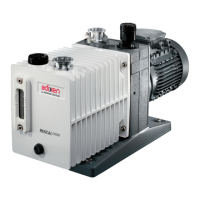
Suitable backing pump
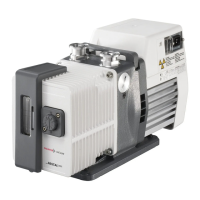
Use the turbopump only in combination with a suitable backing pump that can deliver up to
the required maximum fore-vacuum pressure. To achieve the fore-vacuum pressure, use a
suitable vacuum pump or a pumping station from the Pfeiffer Vacuum range.
In this case, the backing pump is also controlled directly via the turbopump electronic drive
unit interfaces (e.g., relay box or connection cable).
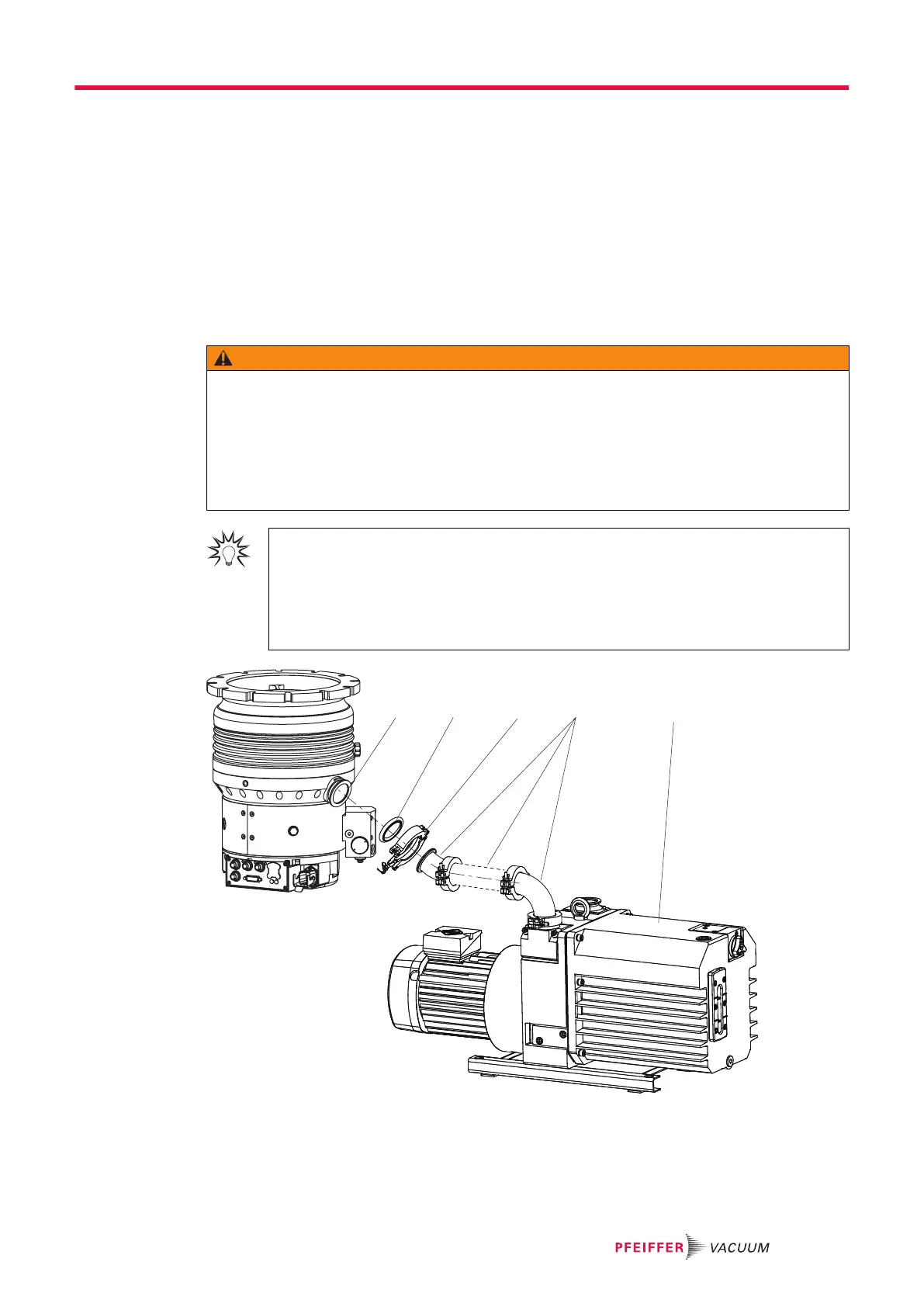
Fig. 22: Example of fore-vacuum connection
1 turbopump fore-vacuum connection 4 Vacuum components DN 40 ISO-KF
2 Centering ring 5 Backing pump (e.g. two-stage rotary vane pump)
3 Circlip
Installation
35/74




 To Next Page