7.3 Changing the operating fluid
WARNING
Risk of poisoning from contact with harmful substances
The operating fluid and parts of the turbopump may contain toxic substances from pumped media.
►
Decontaminate affected parts before carrying out maintenance work.
►
Prevent health hazards or environmental impacts with adequate safety precautions.
►
Observe the operating fluid safety data sheet.
►
Dispose of the operating fluid according to locally applicable regulations.
WARNING
Danger of poisoning from toxic vapors
Igniting and heating synthetic operating fluid generates toxic vapors. Danger of poisoning if inhaled.
►
Observe the application instructions and precautions.
►
Do not allow tobacco products to come into contact with the operating fluid.
You can find the safety data sheet in the Download Center.
Prerequisites
●
Turbopump switched off
●
Turbopump cooled down
●
Vacuum system vented to atmospheric pressure
●
Electric supply interrupted
●
All cables removed from electronic drive unit
●
All openings sealed with original protective covers and screw plugs, if needed
7.3.1 Draining the operating fluid
Required tools
●
Allen key, size 5
●
Calibrated torque wrench (tightening factor ≤ 1.6)
Required aids
●
Suitable vessel for collecting the operating fluid
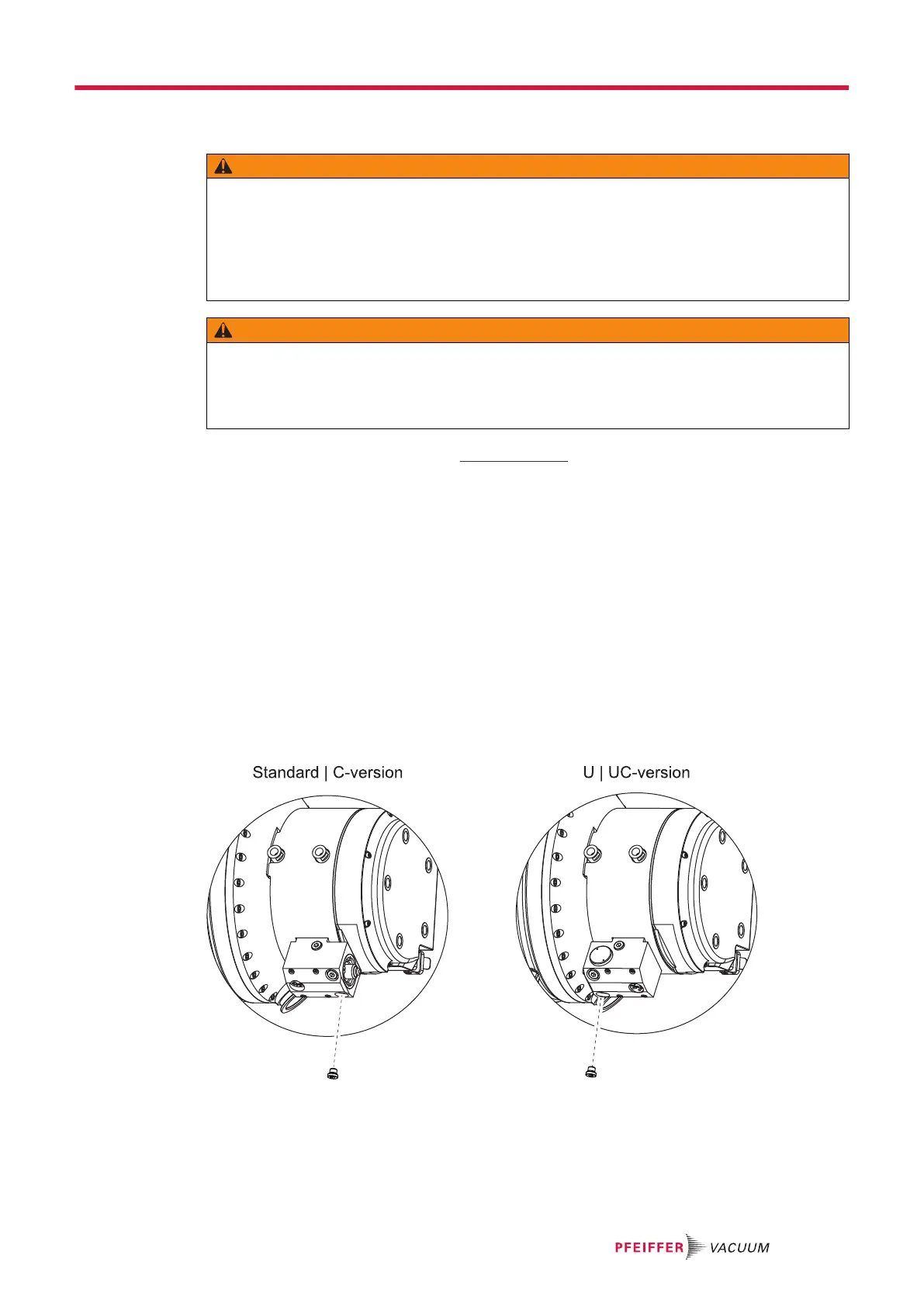
Fig. 25: Examples: Draining operating fluid for the standard and U versions
Procedure
1. Place a suitable vessel under the operating fluid pump of the turbopump.
2. Unscrew the lower drain plug from the operating fluid pump.
Maintenance
47/74




 To Next Page