Circuit Descriptions, Abbreviation List, and IC Data Sheets
EN 218 JL2.1E AA9.
9.12.5 Temporal Upconversion For SD Signals
Only necessary with film input, not for video.
9.12.6 Vertical And Horizontal Scaling
Necessary when we have progressive frames on the correct
output rate, but still not the correct resolution. This requires
spatial horizontal and vertical upscaling to the correct output
resolution.
9.12.7 PixelPlus 2 Processing
The Pixel plus 2 core consists out of different modules and
each of them help us to create a sharper image.
• Vertical LTI and horizontal LTI, CTI.
• Vertical and horizontal peaking.
• Skin tone depending peaking.
• Colour features.
• Peaking dependent colour saturation.
9.13 VIPER 2 (PNX 8550)
9.13.1 Introduction
The PNX8550 is a highly integrated media processor intended
for deployment in analog, digital, and hybrid TV receivers. It
can be used for 100 Hz interlaced as well as 60 Hz progressive
screens. It is fully capable of performing advanced video
improvement algorithms, such as Digital Natural Motion™, on
Standard Definition analog or digital sources. It includes an HD
capable de-interlacer for converting interlaced HD
transmission signals to progressive output for driving wide-
XGA class Plasma or LCD displays. Two 32-bit 240 MHz VLIW
media processors, referred to as the TriMedia TM3260 CPU
core, carry out the advanced video improvement processing as
well as all audio operations. Fixed hardware functions perform
stable core video functions, such as picture level MPEG2
decoding, scaling, image composition and pixel post
processing.
The PNX8550 provides a primary digital (YUV or RGB) output
to connect to the display specific output processor. In addition,
a secondary analog video output (CVBS or S-Video) for a VCR
is available. This is the so-called DENC-out. It can operate
either in analog PAL/NTSC or digital mode.
9.13.2 Block Diagram
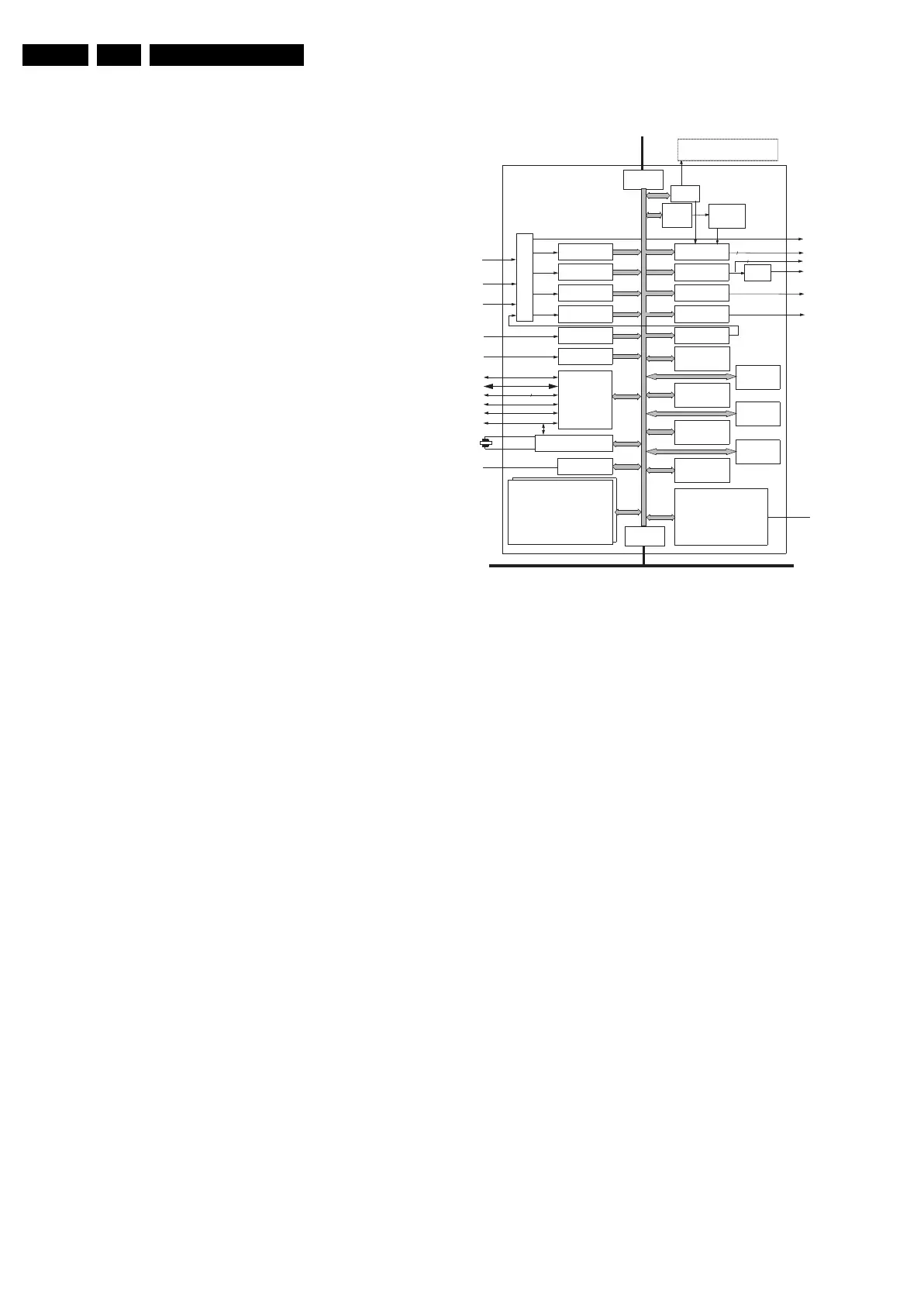
Figure 9-33 VIPER 2 internal block diagram
Control
An embedded MIPS32 processor (PR4450) running at 266
MHz is available to run the Operating System. The PR4450
processor is primarily responsible for running the demand
paged graphics-intensive operating system, while the TM3260
media processors are responsible for running all real-time
media functions. All hardware resources inside the PNX8550
are accessible by both the MIPS processor and the TM3260
CPUs. A "'sandbox" style system protection provision ensures
that selected MIPS memory regions and critical peripherals
cannot be corrupted or inspected.
VIP (Video Input Processor)
The Video Input Processors (VIP) handles incoming digital
video and processes it for use by other components of the
PNX8550. It provides the following functions:
• Receives 10-bit YUV4:2:2 digital video data from the
selected DVx video port (input signal coming from the AVIP
or Columbus IC output). The data is dithered down to in-
memory 8-bit data format.
• Performs horizontal down scaling or up scaling by 2x (not
available in HD video capture mode).
• Provides an internal Test Pattern Generator with NTSC,
PAL, and variable format support.
• Acquire VBI data using a separate acquisition window from
the video acquisition window.
• ANC header decoding or window mode for VBI data
extraction.
• Interrupt generation for VBI or video written to memory
input mode.
• Colour space conversion (mutual exclusive with horizontal
scaling).
• Raw data mode captures of 8- or 10-bit data.
MBS (Memory Based Scaler)
The PNX8550 contains a Memory Based Scaler that performs
operation on images in main memory. The MBS can either be
controlled task by task by a TM3260, or it can be given a list of
E_14700_076.eps
091104
PCI
33 MHz, 32-bit PCI 2.2
MMI
2xTM3260 Media Processor
5 issue, 240 MHz
64 kB
128 32-bit regs
VIP1
VIP2
MSP1
MSP2
retuor 656 & st
DV1 656/TS
656
656
TS
TS
QVCP1
QVCP2
AI1-2
I
2
S audio
SPDI 1-2
SPDIF audio
AO1-2
SPDO
misc. I/O,
UART1-2
Gen. Purpose I/O
16
MBS
2x225 MHz, 32-bit wide DDR
JTAG
27 MHz
xtal
DV2* 656/TS
DV3 656/TS
(includes NAND/nor flash, IDE drive and 68k peripheral capability)
USB host i/f (2 port)
bound. scan
Smartcard1-2
PR4450 MIPS CPU
250 MHz
16 kB
MMU
EJTAG debug
TSDMA
boot, reset, clock
VMPG
DE (2D)
E-DMA
I
2
C (4x)
16 kB 2-port
16 kB
(1 HD or 2 SD)
QTNR
VLD2
DVD-CSS
Remote Control
I
2
S audio
SPDIF audio
QVCP5L_OUT
QVCP2L_OUT
TS_OUT
656/HD/VGA
DENC
656
analog Y/C,cvbs
30
10
8 ch + 8 ch
PNX8550
timers/
counters,
semaphores
TM-DBG (2x)
Tunnel
Optional external coprocessors
Peak rate: 12bit/cycle each way
including video enhancement chip
V Peaking
MBS2






 To Next Page