17
www.powerbox-systems.com
3.4.3. Range check
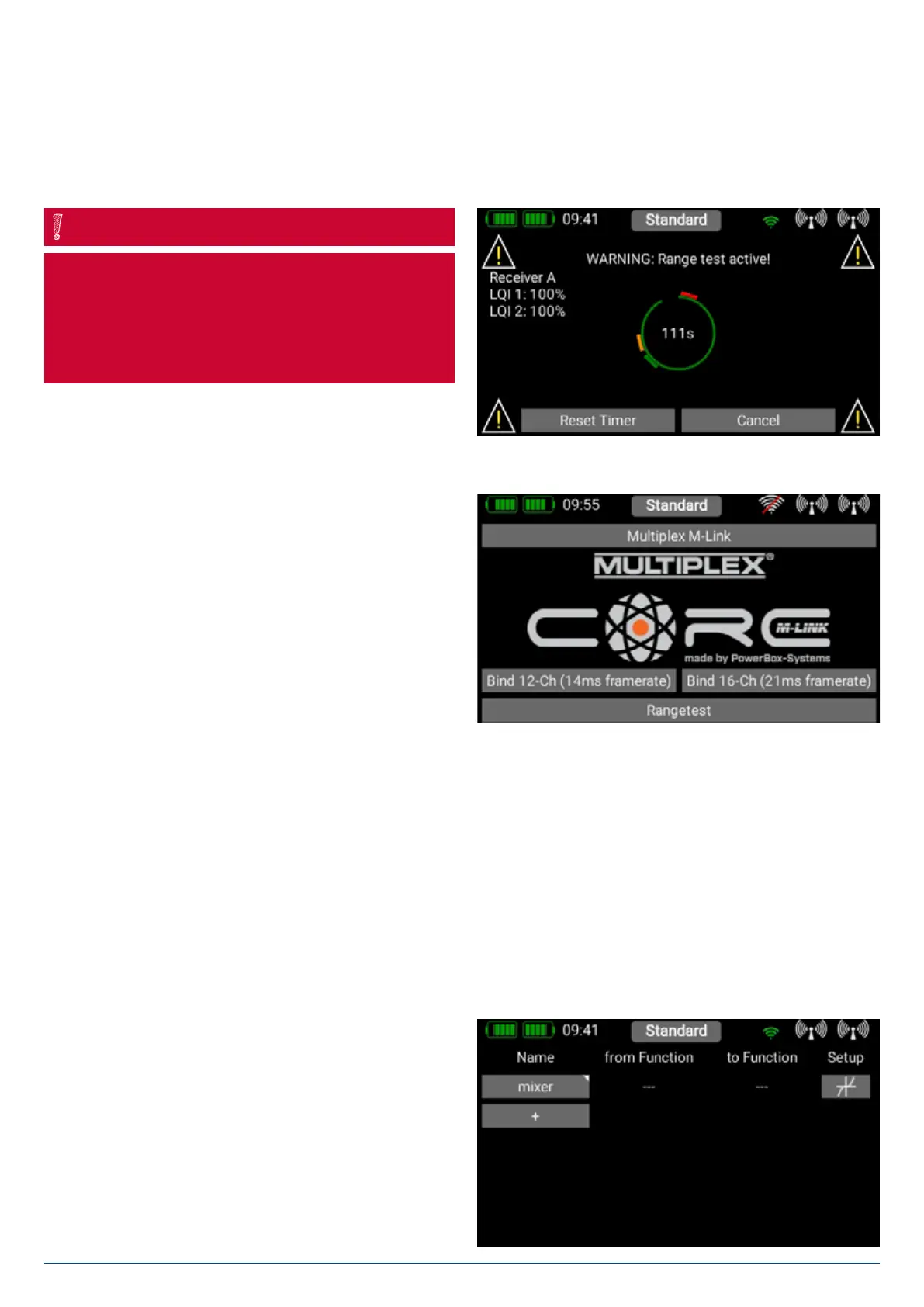
The Range check function reduces the transmitter’s output power, thereby simulating a large distance between transmitter and
model. This enables you to determine any possible weaknesses in reception in the receivers. In range check mode all the con-
trols should work perfectly at a range of at least 50 m. During the Range Test you can see the values for Link Quality (LQI). This
enables you not only to see whether the radio link is working, but also the quality of the link. This can be helpful in determining the
optimum aerial positions in the model before you fly it.
It is possible to adjust settings such as channel shift, frame
rate, iGyroSAT and others at the receiver itself. These
settings are usually accessed using a Telemetry widget, but
are also available if you press the receiver image in the Bind
menu.
NOTE
3.4.4. Selecting CORE/M-Link
If your transmitter is equipped with a supplementary Multi-
plex M-Link aerial, you will find the button for switching from
the CORE system to the M-Link system right at the top.
The M-Link system offers two binding modes:
• Bind 12K
14ms frame rate, 12 channels
• Bind 16K
21ms frame rate, 16 channels
Choose your setting. If you do not need more than twelve channels, you should always give preference to Option 12K, as the
servos are addressed at a higher rate in this mode. This can be advantageous in respect of smooth running, transit speed and
precision. In contrast, Option 16K offers sixteen channels and a slower frame rate; this is the best choice for use with older
servos.
Your choice applies to the current model, and is stored in the model file together with the relevant Bind information. If you change
the setting for a model which has already been bound, you will need to re-bind the receiver!
3.5 Mixer
Die The free servo mixers represent an additional method of
mixing functions with each other. Servo mixing by servo as-
signment has already been described in the Function menu,
but this option also enables you to mix functions with each
other with a response curve.


 To Next Page