N93-572-88 Issue 12 NH Page 25 of 52 © Protec Fire Detection plc 2020
7.7 Talking Sounder Programming Considerations
The 6100 supports Protec talking sounders and special consideration must be given to them when
programming. Talking sounders contain several pre-set messages that the control panel activates
when required.
Talking sounders and non-talking output devices must not be mixed in the same
output groups.
Talking sounders have a message synchronisation rate that is determined by programming at
commissioning time. The typical synchronisation time is 20 seconds, which is sufficient to allow the
longest standard audio message to be reproduced.
When the pulsing electronic bell sound is specified from a talking sounder ( using setup features
available in the Windows programming software ) the standard system pulse rate is adopted.
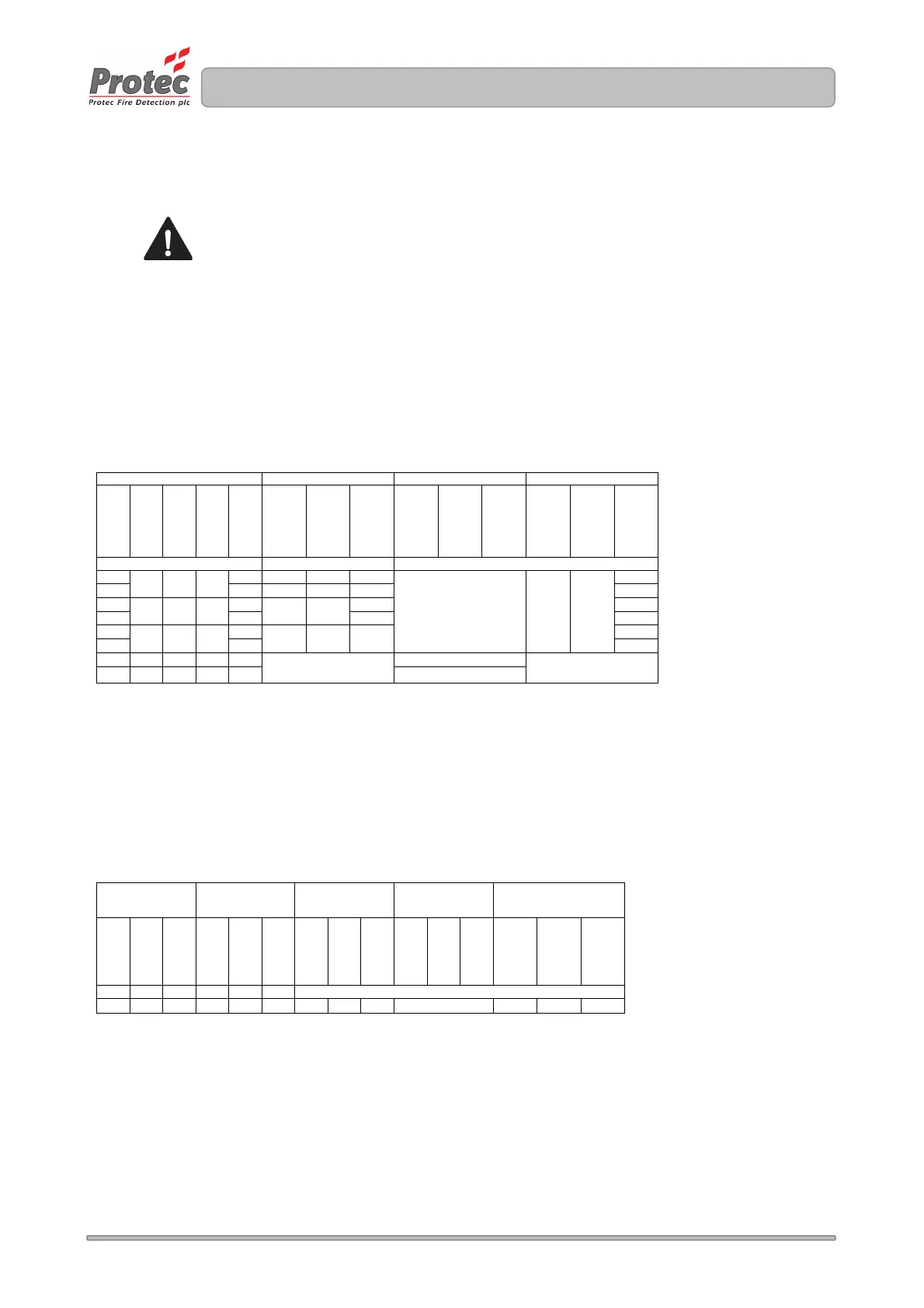
Table 7.1 details how talking sounders operate with various panel activations.
Table 7.1 Talking Sounder Programming table
Key
Ö Option selected
Off Option not selected
X Option selection does not matter
Notes
1. The Class Change messages do not function in a Fire Alarm condition.
2. The pulsing rate for message 14 is determined by the Pulse Times programmed.
Table 7.2 details how talking sounders operate with various panel activations with Dutch software.
Table 7.2 Talking Sounder Programming table ( For Dutch panels only )
Sound Alarms
(User code
entered)
Key
Ö Option selected
Off Option not selected
Notes
1. The Class Change messages do not function in a fire alarm condition.
2. The pulsing rate for message 14 is determined by the pulse times programmed.
3. Pressing Sound Alarms while in engineer or advanced engineer code produces message M4. If ‘Sound Alarms’
is pressed during a fire condition then test message M4 will replace the fire message.
4. Pressing Sound Alarms while in user exchange code produces message M7 however if a fire event occurs then
‘Sound alarms’ is cancelled and the appropriate fire message M1, M2 or M3 is output. If ‘Sound Alarms’ is
pressed during a fire condition then, to avoid replacing the fire message with message M7, the output message
will be determined by the cause and effect programming of the fire event and the sound alarms input group.
M1 Female Evac 1
M2 Female Alert
M3 Female Evac 2
M4 Female Test
M5 Male Evac
M6 Male Alert
M7 Male Test
M8 Bell
M9 No message
(used to mute the sounder)
M10 Unused
(defaults to M1)
M11 Electronic Warble
M12 Electronic Alert
M13 Electronic Continuous
M14 Intermittent Bell
M15 Continuous Bell
M1 Fire Message
M2 M1
M3 M1
M4 Test Message
M5 M1
M6 M1
M7 Health and Safety Message
M8 Bell
M9 No message
(used to mute the sounder)
M10 M1
M11 Electronic Warble
M12 Electronic Alert
M13 Electronic Continuous
M14 Intermittent Bell
M15 Continuous Bell


 To Next Page