5.20.1 Drying the grinding jars
After cleaning, the grinding jars can be dried in the drier cabinet at the temperatures specified
below.
5.21 Opening and Closing the Grinding Jar
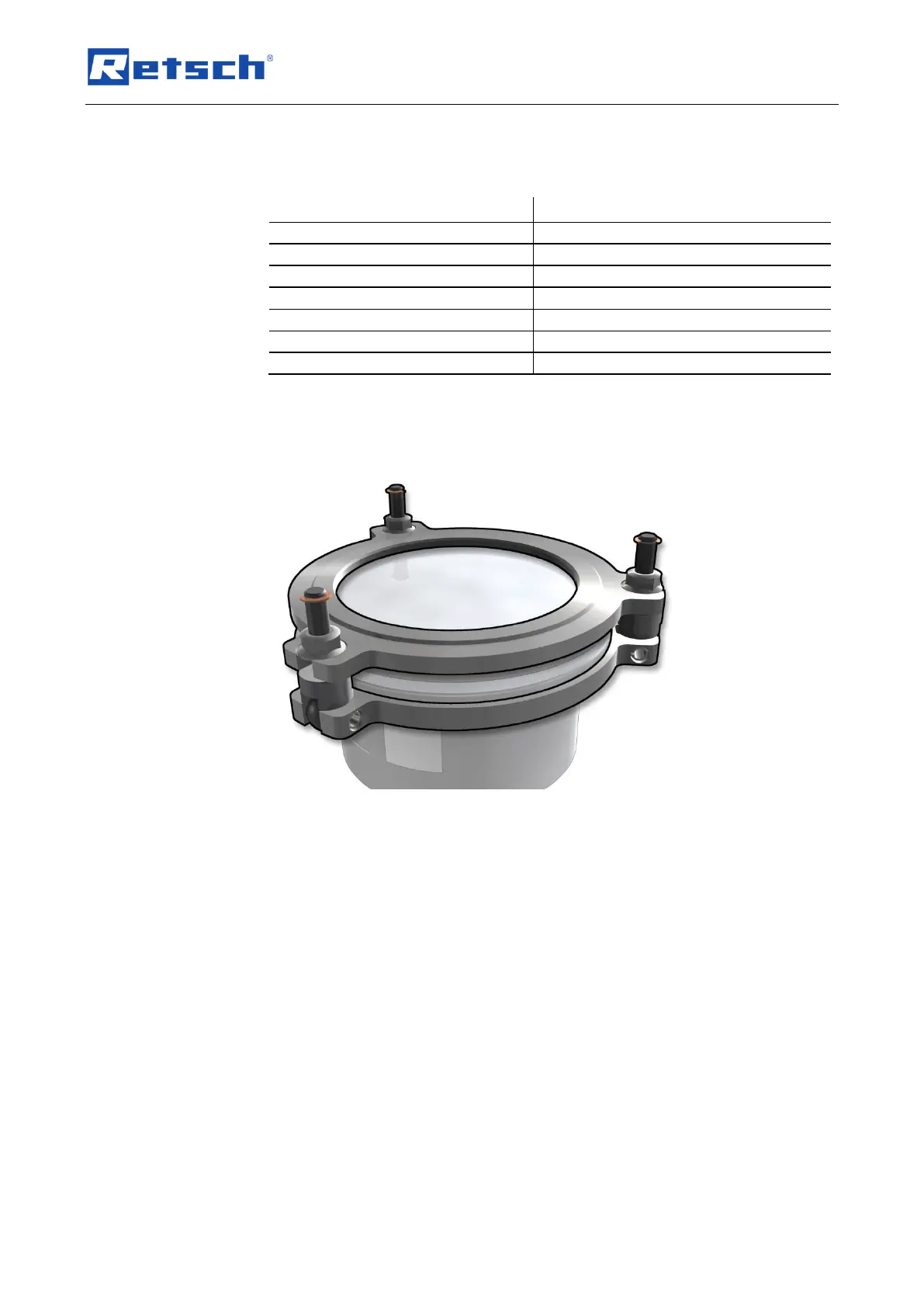
After filling the grinding jars, they should be closed using the locking mechanisms available as
an accessory.
Fig. 31: Locking mechanism
In the case of grinding jars with material inserts made of ceramics or TC, only use locking
mechanisms that support the material insert in the grinding jar lid. This is essential due to the
expected internal pressure.
NOTICE
During wet grinding in grinding jars with material inserts, do not use the older locking
mechanisms. Older locking mechanisms only clamp the gripping flanges of the grinding jars,
which means that the material inserts may be pushed out if internal pressure arises.
Use of agate grinding jars for wet grinding with solvents should in particular be reconsidered
because of the internal pressure that arises and the inhomogeneous material properties of a
natural product.
Tighten the clamping screws on the locking mechanism to 2.5 Nm. Only with this initial tension
are internal pressures of up to 5 bar permissible.
NOTICE
Damage to the grinding jar lid and the device
The three screws on the safety clip of the aeration cover may become loose and damage the
inside of the device.
After tightening the safety clamping device, check that the three screws on the safety clip are
still screwed tight.


 To Next Page