SmartSMS User Manual Soft dB inc.
User Manual p. 89
10. Design of the Sound Masking System
The Smart Sound Masking System is an zone-based system. Loudspeakers are connected in
groups to a specific output channel. Each channel, or zone, is fully adjustable in frequency
response and volume level, but loudspeakers in a common zone cannot be adjusted individually.
Thus, the design of the speaker network is critical to obtain a homogeneous sound masking level
and spectrum everywhere in the building. This section presents many parameters of which the
importance must be understood for designing a good working system.
10.1 Loudspeaker Frequency Response
The frequency response of a loudspeaker can be defined as the sound level produced by a
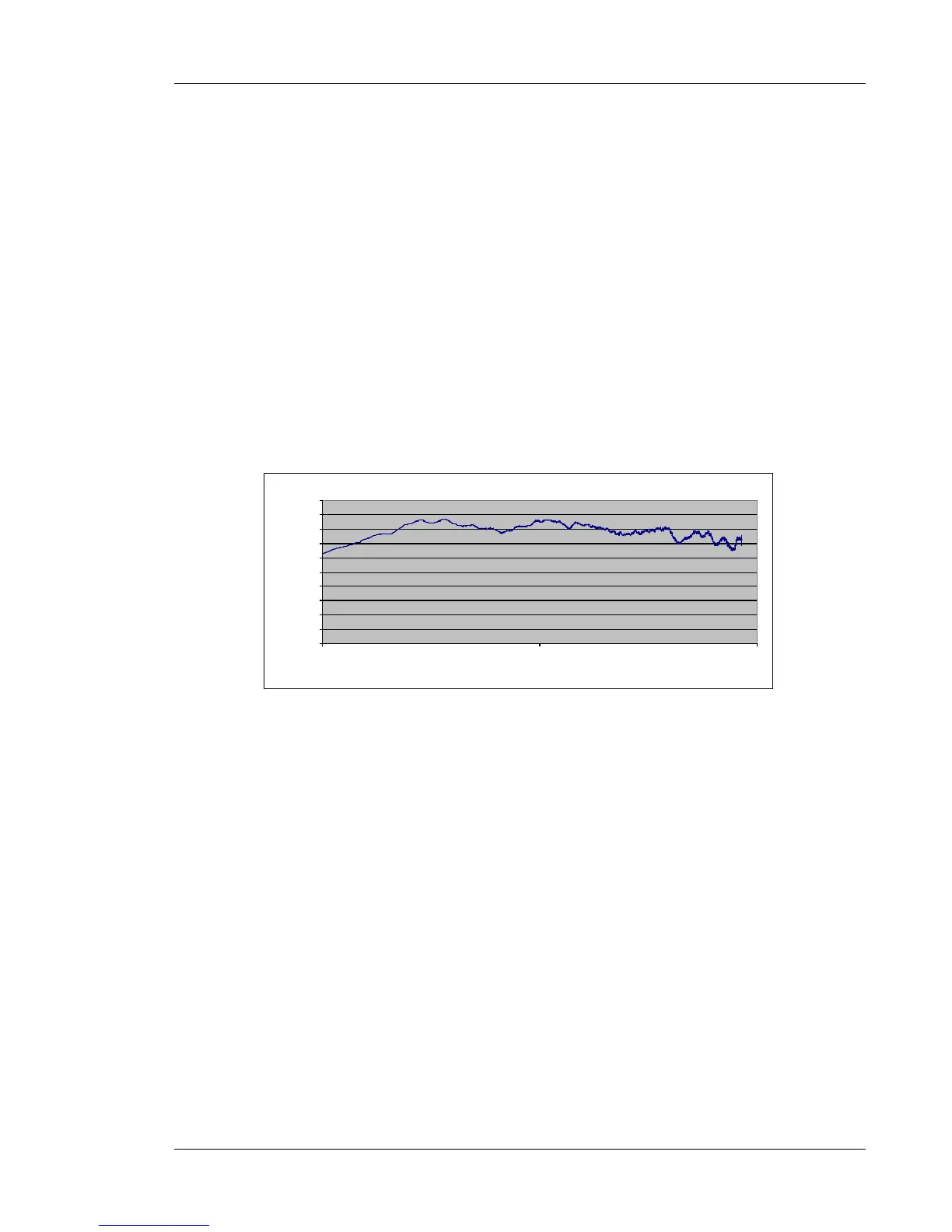
loudspeaker at every frequency in the audio band for a given input voltage. The figure below shows
a typical frequency response graph for a sound masking loudspeaker.
Typical Frequency response
0
10
20
30
40
50
60
70
80
90
100
100 1000 10000
Frequency Hz
SPL dB (2.83Volt/1m)
Figure 82 : Typical loudspeaker frequency response
The different loudspeaker brands and models can have quite different frequency responses. The
SmartSMS system can correct and compensate the masking sound for most loudspeakers to obtain
the desired target for each channel, regardless of the loudspeaker frequency response. However,
on a given channel, all loudspeakers are connected together and frequency response modifications
are applied to all the loudspeakers. Thus, every loudspeaker on a single channel must be of a
similar model to offer a similar frequency response.
10.2 Acoustic Room Response
The sound produced by a sound masking loudspeaker in a room depends on the specific acoustic
environment in which the loudspeaker is installed. This is called Acoustic Room Response. For
example, a loudspeaker installed in a resonant room (ceramic floor, hard walls, etc.) will produce a
different sound level and sound spectrum than a loudspeaker installed in an absorbent room.



 To Next Page