120-6 January, 2016
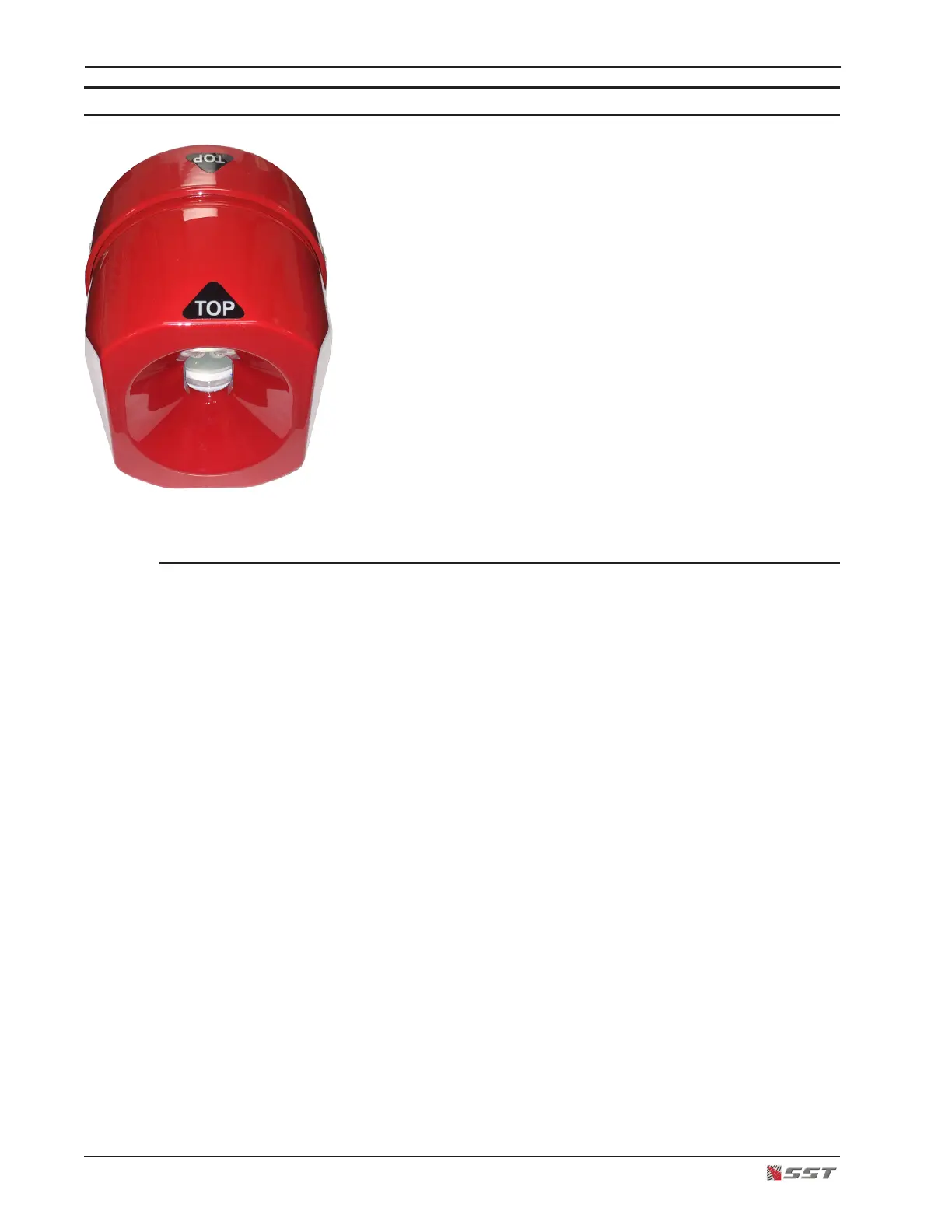
Model F120 UV/IR Flame Detector
GENERAL DESCRIPTION
A re is composed of heat and light, both visible and
invisible. And during the combustion process, smoke
may be generated. A re will emit specic radiation in the
infrared and ultraviolet spectrum. A ame detector uses
specialized sensors to detect these radiations to report
and conrm a re.
The protection of onshore and offshore hydrocarbon
process and handling facilities against any loss from
res requires positive and fast-responding optical ame
detectors, with no tolerance for false alarms or nuisance
alarms caused by either EMI, lighting, x-rays, gamma
radiation, arc welding, reected sunlight, or any light source
such as mercury or quartz iodine ood lights. Traditional
UV and UV/IR detectors can be blinded by precombustion
smoke, thus rendering the detector useless under these
conditions. Also, oil mist or oil deposits on the quartz
lens of a UV detector or single mode UV/IR detector will
seriously diminish the response to a re. Therefore, we
do not recommend using these types of detectors in a
hydrocarbon environment.
Triple Mode UV/IR
Safety Systems Technology’s Model F120 “Triple-Mode” UV/IR Optical Flame Detector uses
the latest state-of-the-art microprocessor and circuity, eliminating the shortcomings of currently
available UV/IR detectors which are subject to the aforementioned interferences.
The F120 ame detector monitors for specic radiation emitted by a re through the use of 3
sensors - one UV (ultraviolet) sensor and two IR (infrared) sensors. The UV sensor provides
the shortest response time in detecting radiation from a re. However, in some cases, dense
precombustion smoke may blind the UV sensor. In other cases, false alarm sources such
as arc welding and lightning emits UV radiation which can trigger a UV sensor. The Model
F120 requires two of its three sensors to signal an alarm. Should the UV sensor be blinded
by dense smoke, the two IR sensors will still detect the infrared radiation emitted by a re.
Likewise, the use of three sensors to conrm a re allows the detector to reduce false alarms
from other sources of radiation.
Outputs are either voted automatically, or can be manually selected by the end-user. Selected
outputs can either be for UV only, IR icker only, IR icker and Temperature, or any two out of
three combination. The ame detector’s “Triple-Mode” operating principle or “voting” capability
is what sets this detector apart from any other UV/IR detector. This detector will see a re,
while other manufacturer’s detectors may not. To insure reliable operation, the detector is
equipped with an automatic Optical Self-Checking feature which continuously checks the
optical viewing window for cleanliness and conrms operation of the detector circuits.


 To Next Page