www.stryker.com 1079-009-005 REV E 1-15
Return To Table of Contents
English
Operation Guide
MATING
BED
MATING
BED
MATING
BED
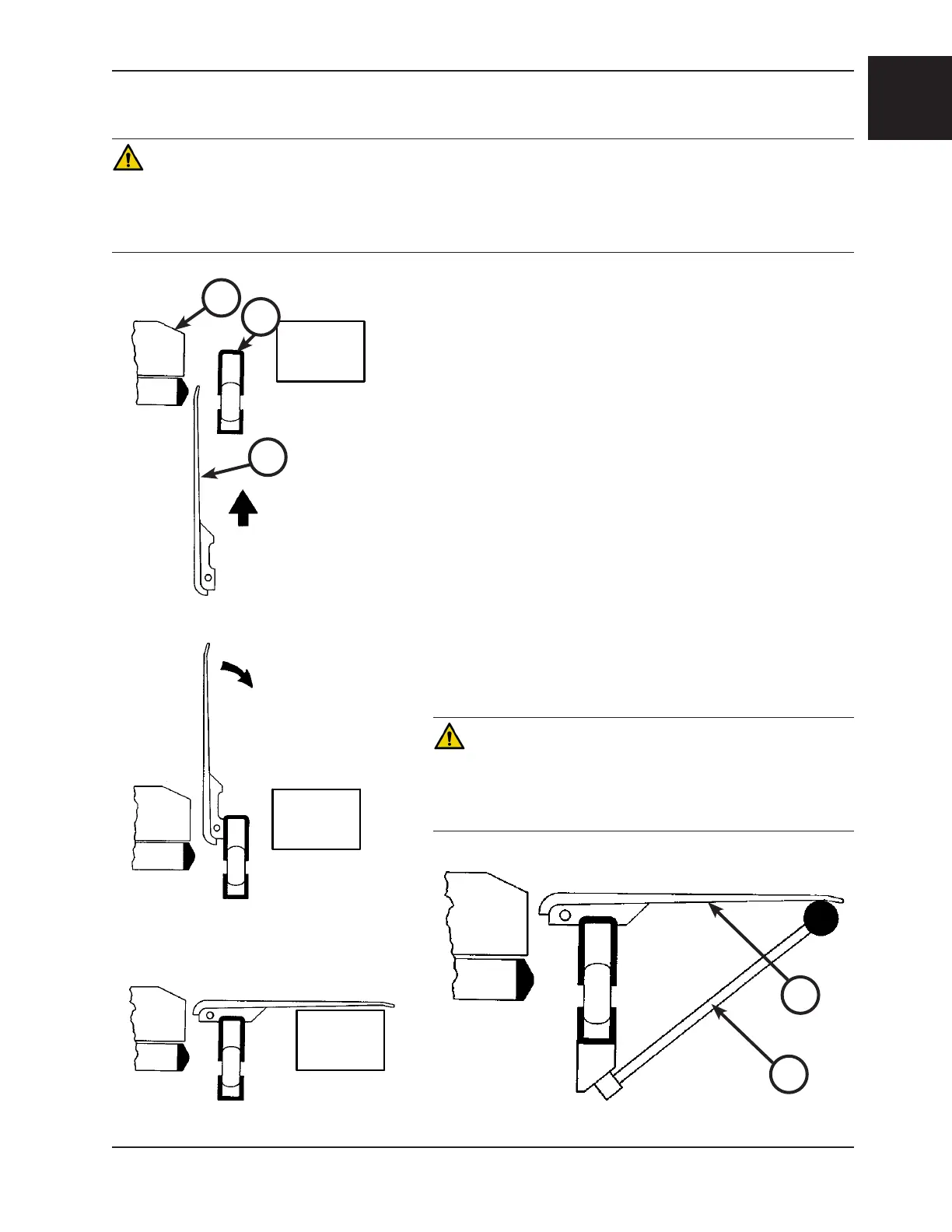
Figure 5: Transfer Board
A
B
C
Figure 6: Transfer Board as an Armboard
TRANSFERRING A PATIENT WITH THE OPTIONAL PATIENT TRANSFER BOARD
WARNING
When using the transfer board to transfer a patient from one patient support platform (for example, bed, stretcher, gurney,
operating table) to another, always lock the brakes on both patient support platforms. Make sure that the transfer board
is placed securely on the surface of the patient support platforms. The patient support platforms and surfaces must be
at the same height before the patient is transferred.
To transfer a patient with the patient transfer board:
Note: The transfer board (C) is located between the siderail (A)
and the mattress (B) as shown in Figure 5.
1. Lower siderail (A) to full down position.
2. Raise the transfer board (C) from the bot-
tom while lifting from the top.
3. When the transfer board is fully raised, it can be pivoted
downward onto the surface of the mating bed or stretcher.
Note: Make sure that the brakes have been applied on both the
stretcher and the mating bed or stretcher before beginning step 4.
4. Using a sheet, draw the patient onto the mating bed or stretcher.
USING THE PATIENT TRANSFER BOARD AS AN
ARMBOARD
To use the transfer board as an armboard (Figure 6):
1. Raise the support post (D) to the up position.
2. Raise the transfer board (C) from the bottom while lifting from
the top.
3. When the transfer board is fully raised, it can be pivoted downward
onto the support post (D).
CAUTION
When the transfer board is being used to transfer a patient, the
support post (D) must be in the stored (down) position. Damage
to the support post will occur if it is pushed up against a stretcher,
table, etc.
D
C


 To Next Page