2. If the end of the rope is welded, the welded end should be cut off. This will allow the
distortions of the rope strands, caused by the sharp bend around the wedge, to adjust
themselves at the end of the line. If the weld is not cut off, the distortions will be
forced up the working line. This may result in the development of high strands and
wavy rope.
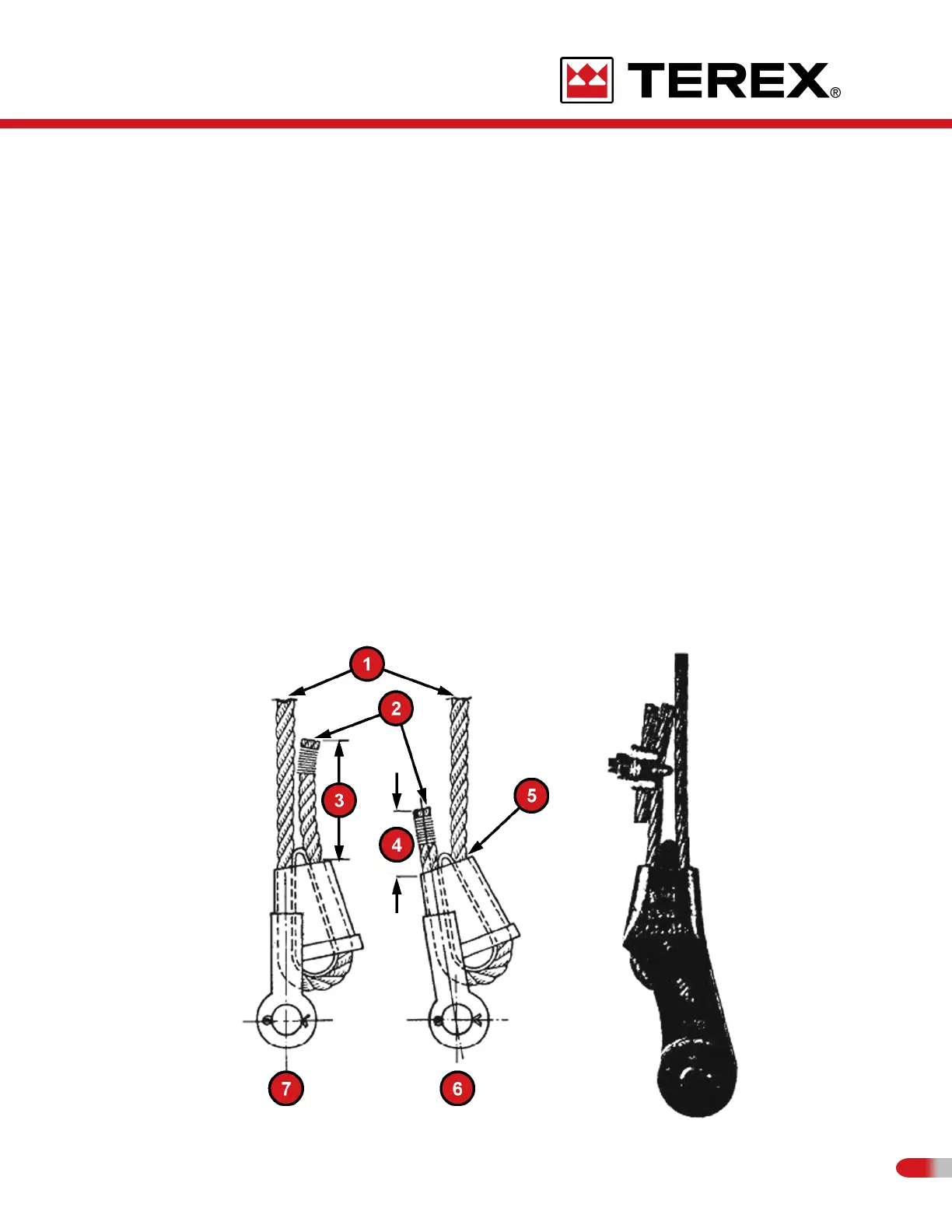
3. Place the socket in an upright position and bring the rope around in a large, easy to
handle, loop. Care must be taken to make certain hat the live-loadedside of the rope is
in line with the ears (Fig. 25).
4. The dead end of the rope should extend from the socket for a distance approximately
nine times the rope diameter. The wedge is now place in the socket, and a wire rope
clip is placed around the dead end by clamping a short, extra piece of rope to the tail.
(Do not clamp to the live part.) The U-bolt should bear against the tail; the saddle of
the clip should bear against the sort extra piece.
5. Secure the ears of the socket to a sturdy support and carefully take a strain on the live
side of the rope. Pull the wedge and rope into position with tension sufficiently right to
hold them in place.
6. After final pin connections ar mad, increase the loads gradually until the wedge is
properly seated. Avoid sudden shock loads.
The foregoing is the recommended procedure. If variations are made to suit special
conditions, they should be carefully evaluated beforehand.
309
REVISED:


 To Next Page