EasyManua.ls Logo

Trio CS-2100A - User Manual

Trio CS-2100A
42 pages
Print Icon
To Next Page IconTo Next Page
Loading...
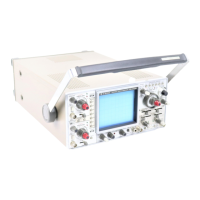
CS-2100A
100MHz
4-CHANNEL
OSCILLOSCOPE
INSTRUCTION MANUAL
TRIO-KENWOOD CORPORATION
Question and Answer IconNeed help?

Do you have a question about the Trio CS-2100A and is the answer not in the manual?

Summary

SPECIFICATIONS

CONTROLS AND INDICATORS

Front Panel Controls

Identifies and describes controls on the front panel, including vertical axis adjustments.

Horizontal Axis Controls

Details controls for horizontal sweep, position, and timebase settings.

Trigger Source Controls

Explains controls for selecting trigger source, coupling, and level.

OPERATION

Normal Sweep Display Operation

Step-by-step guide for basic waveform display setup.

Delayed Sweep Operation

How to use A and B sweeps for magnified viewing.

APPLICATION

Probe Compensation

Procedure for adjusting probe compensation for accurate measurements.

Time Measurements

Measuring time intervals between points on a waveform.

Frequency Measurements

Determining frequency by measuring waveform period.

Pulse Width Measurements

Measuring the duration of pulse signals.

Pulse Risetime and Falltime Measurements

Measuring signal transition times (10% to 90%).

Time Difference Measurements

Measuring time skew between synchronized signals.

Phase Difference Measurements

Determining the phase shift between two signals.

Pulse Jitter Measurements

Measuring variations in pulse timing.

Pulse Width Measurements Using Delayed Sweep

High-accuracy pulse width measurement using delayed sweep.

Frequency Measurements Using Delayed Sweep

Determining frequency with delayed sweep.

BLOCK DIAGRAM

MAINTENANCE

Summary

SPECIFICATIONS

CONTROLS AND INDICATORS

Front Panel Controls

Identifies and describes controls on the front panel, including vertical axis adjustments.

Horizontal Axis Controls

Details controls for horizontal sweep, position, and timebase settings.

Trigger Source Controls

Explains controls for selecting trigger source, coupling, and level.

OPERATION

Normal Sweep Display Operation

Step-by-step guide for basic waveform display setup.

Delayed Sweep Operation

How to use A and B sweeps for magnified viewing.

APPLICATION

Probe Compensation

Procedure for adjusting probe compensation for accurate measurements.

Time Measurements

Measuring time intervals between points on a waveform.

Frequency Measurements

Determining frequency by measuring waveform period.

Pulse Width Measurements

Measuring the duration of pulse signals.

Pulse Risetime and Falltime Measurements

Measuring signal transition times (10% to 90%).

Time Difference Measurements

Measuring time skew between synchronized signals.

Phase Difference Measurements

Determining the phase shift between two signals.

Pulse Jitter Measurements

Measuring variations in pulse timing.

Pulse Width Measurements Using Delayed Sweep

High-accuracy pulse width measurement using delayed sweep.

Frequency Measurements Using Delayed Sweep

Determining frequency with delayed sweep.

BLOCK DIAGRAM

MAINTENANCE

Trio CS-2100A Specifications

General IconGeneral
TypeOscilloscope
Bandwidth100 MHz
Number of Channels2
Frequency RangeDC to 100 MHz
Input ConnectorBNC
Trigger ModesAuto, Single
CRT Size6 inches
CRT Accelerating Voltage2 kV
Resolution BandwidthNot applicable for Oscilloscope
Displayed Average Noise LevelNot applicable for Oscilloscope
Power Supply50/60 Hz
Input Impedance1 MΩ ±2%, approx. 25 pF

Related product manuals